
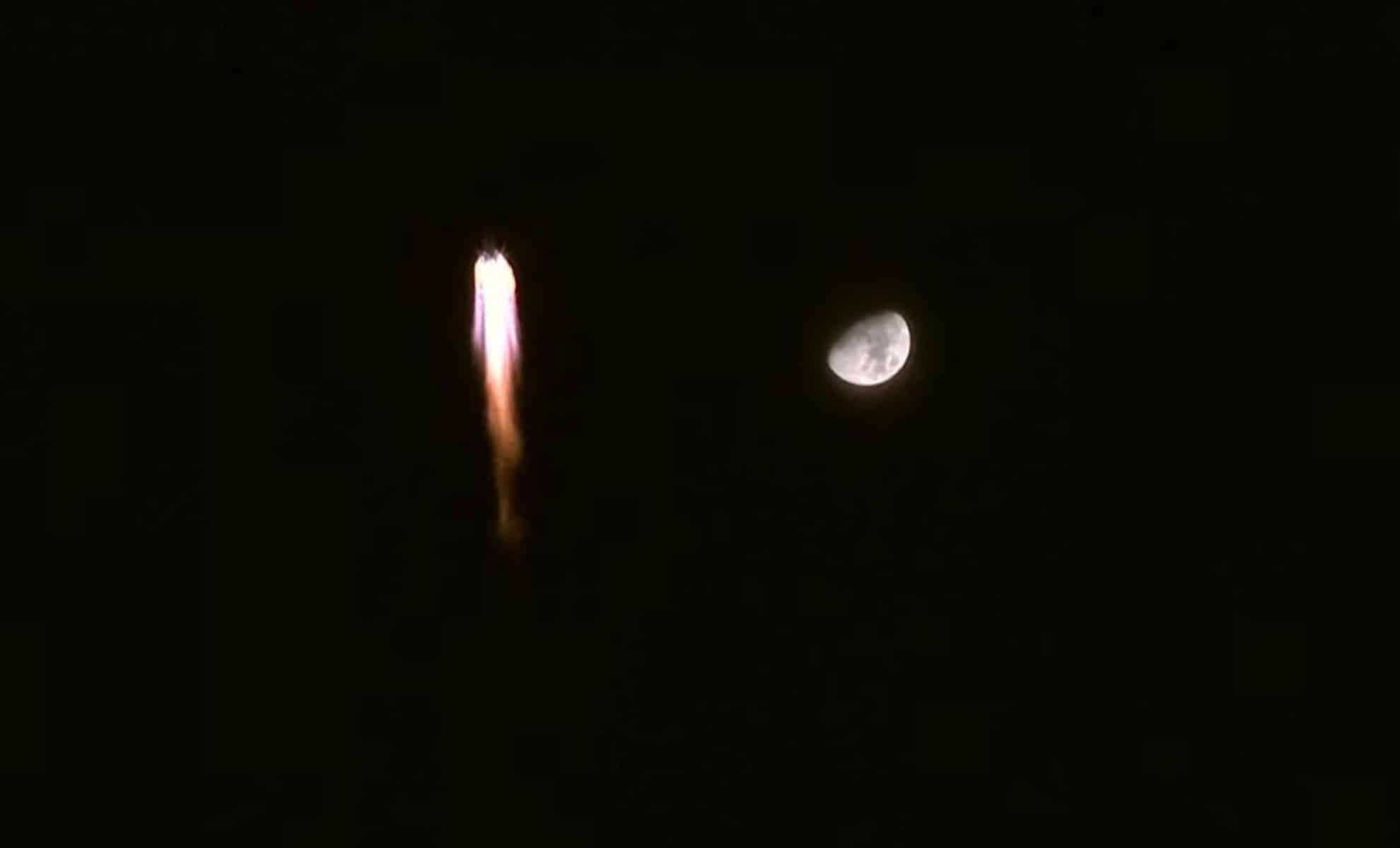
Recently, a Chinese-operated spaceplane deployed an unidentified object into Earth's orbit, sparking curiosity worldwide. Launched on December 14, 2023, the mission's classified details and vague objectives have fueled speculation about the spacecraft's true role and the nature of the released item.
Overview of the Mission and Global Monitoring
The spacecraft was sent into orbit atop a Long March 2F carrier rocket, initially orbiting at roughly 333 km perigee and 348 km apogee, with a 50-degree inclination. During its operation, the vehicle executed multiple orbital adjustments, eventually elevating its trajectory to about 602 by 609 kilometers.
The mysterious object was set free on May 24, 2024, and its presence was first detected by Jonathan McDowell from the Harvard-Smithsonian Center for Astrophysics, a well-known expert tracking space operations. Subsequent verification was provided by the U.S. Space Force’s domain awareness teams, which officially cataloged it as object 59884 (international ID 2023-195G).

A new object (59884/2023-195G) has been cataloged associated with the Chinese CSSHQ spaceplane in a 602 x 608 km x 50.0 deg orbit. It seems to have been ejected about 1900 UTC May 24.
— Jonathan McDowell (@planet4589) May 26, 2024
Confidentiality and Theories Behind the Mission
Chinese officials have offered little information on the spaceplane's aims, aside from a brief launch note indicating it supports reusable technology testing and scientific research in space.
The restricted disclosure has prompted various hypotheses. Experts like McDowell speculate the object might be a deployed subsatellite or hardware ejected before the craft's return. Another idea is that it serves in proximity operations or capture trials, capabilities demonstrated on earlier flights.
Parallel to the U.S. X-37B Program
Comparisons are frequently drawn between China's spaceplane and the U.S. military’s X-37B, an unmanned reusable vehicle active since 2010. Similarities in design and capability hint that China aims to create a parallel platform.
The Long March 2F launcher, capable of lifting just over eight tons to low Earth orbit, aligns with this, supported by payload fairing wreck images from the spaceplane’s prior launch shared on Sina Weibo, which offer insights into its form and size.
Past Flights and Technological Progress
This marks the third mission for China’s spaceplane. The inaugural flight in 2020 lasted two days, while the second in 2022 spanned 276 days. Both missions also involved releasing objects into orbit, similar to the current operation.
The ongoing third mission, which launched in December 2023, has been active for 164 days when the object was released and features complex orbital maneuvers, highlighting the spacecraft’s advanced performance.
Implications for Strategy and Innovation
China's work on reusable spaceplanes signals major strides in its aerospace capabilities. These vehicles promise lower mission costs and increased launch frequency, paving the way for more sustainable space activity.
Releasing and potentially recapturing orbital objects introduces opportunities for satellite maintenance, repairs in orbit, and debris management—key to ensuring long-term orbital safety.
Nonetheless, the mission’s opaque nature raises concerns about dual-use technology. While official sources emphasize peaceful uses, such maneuverability and object handling could have military applications, including surveillance and offensive operations in space.
Worldwide Responses and Looking Ahead
Global space agencies and governments are closely observing China’s spaceplane developments. Its resemblance to the U.S. X-37B underscores the technology’s strategic importance amid growing competition in space capabilities. As China refines these systems, its role in space exploration and operations is expected to expand significantly.
Future considerations include how China will deploy this technology and how other nations might react. Greater openness and collaboration could ease tensions and encourage the peaceful use of orbit. However, current trends suggest an increasingly competitive environment, with reusable spaceplanes central to this new frontier.
The release of this enigmatic object underscores fast-paced innovations and the complex geopolitical landscape of contemporary space ventures. With more mission details forthcoming, global stakeholders remain attentive to what this means for space security and exploration.
- Categories:
- Astronomy ,
- News ,
- Space ,
- Aircraft







0 comments
Sign in to Comment