

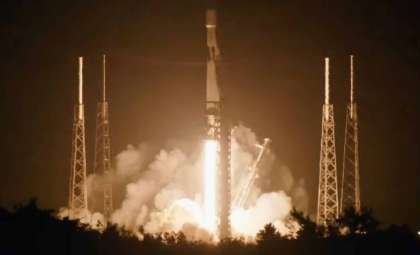
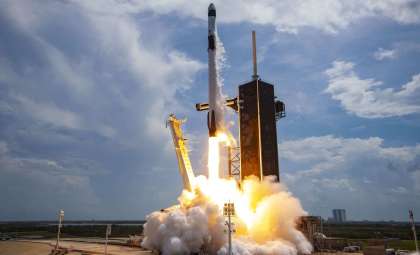
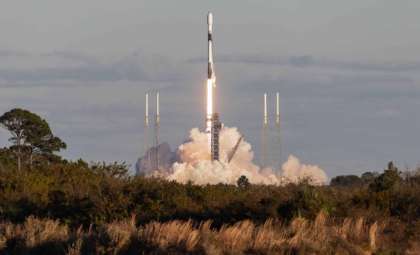
On July 3, 2024, SpaceX successfully sent 20 Starlink satellites into orbit from Cape Canaveral Space Force Station after a brief postponement.
This flight represents a crucial step in growing the Starlink satellite network, designed to deliver worldwide internet access, particularly boosting connectivity for isolated and rural communities.
Details of the Dawn Launch
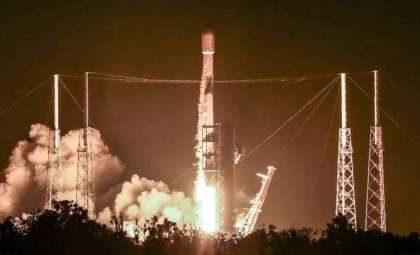
The Falcon 9 rocket carrying the 20 Starlink satellites took off at 4:55 a.m. EDT (0855 UTC), following a two-hour hold due to technical checks. Among these, 13 satellites featured direct-to-cell technology, enabling them to operate as space-based mobile towers. This advancement helps eliminate coverage blackspots without necessitating special user devices or apps, greatly improving mobile communications where traditional infrastructure is limited.

Despite the delay, the Falcon 9 first stage executed a flawless landing roughly eight minutes after launch, touching down on the drone ship “A Shortfall of Gravitas” stationed in the Atlantic. This marked the 16th successful flight and recovery of this booster, which has logged 15 prior missions, including 10 Starlink deployments. Reusing boosters remains central to SpaceX’s plan to lower launch costs and increase launch frequency.
Growing the Starlink Network
The upper stage of Falcon 9 continued delivering all 20 satellites into low Earth orbit, deploying them about 61 minutes post liftoff. This was the 67th Falcon 9 mission in 2024, with over 70% dedicated to expanding the Starlink constellation.
Currently, the Starlink network consists of more than 6,150 operational satellites, each playing a vital role in the mission to provide global broadband coverage. Starlink's impact is especially significant in areas lacking established internet services, offering fast and reliable connectivity through an extensive satellite mesh.
A Stunning Skyward Spectacle
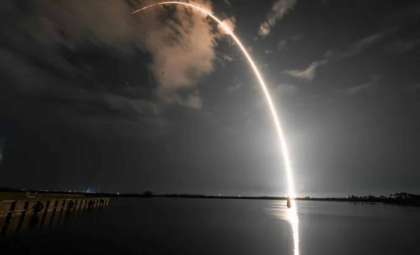
The launch created an extraordinary sight for residents along Florida’s Space Coast, with the rocket’s brightness surpassing typical fireworks, lighting the early morning sky vividly. The booster made its ground return illuminated by dawn’s first rays, enhancing the breathtaking event.

Witnesses reported the Falcon 9’s vapor plume lingered in the sky for over an hour, underscoring the impressive power and scale of the launch. Events like these not only mark technological milestones but also ignite public enthusiasm for space exploration.
Looking Ahead: SpaceX’s Upcoming Ventures
SpaceX is preparing numerous upcoming launches, including more Starlink missions, along with flights of the mighty Falcon Heavy and ongoing trials of the Starship. The Starship, designed for deep space missions, will play a key role in lunar and Martian exploration. These advancements highlight SpaceX's ongoing efforts to transform space travel and enable human life beyond Earth. Deploying Starlink satellites represents just one facet of a larger goal to establish sustainable human presence across the solar system.
In addition, NASA has entrusted SpaceX to launch the COSI telescope, a gamma-ray observatory aimed at unraveling cosmic mysteries involving antimatter and stellar phenomena. This mission is slated for a Falcon 9 launch in August 2027. Continuous innovation in aerospace technology promises a thrilling new era of scientific discovery, with SpaceX at the forefront.
- Categories:
- Astronomy ,
- News ,
- Space ,
- Aircraft






0 comments
Sign in to Comment