
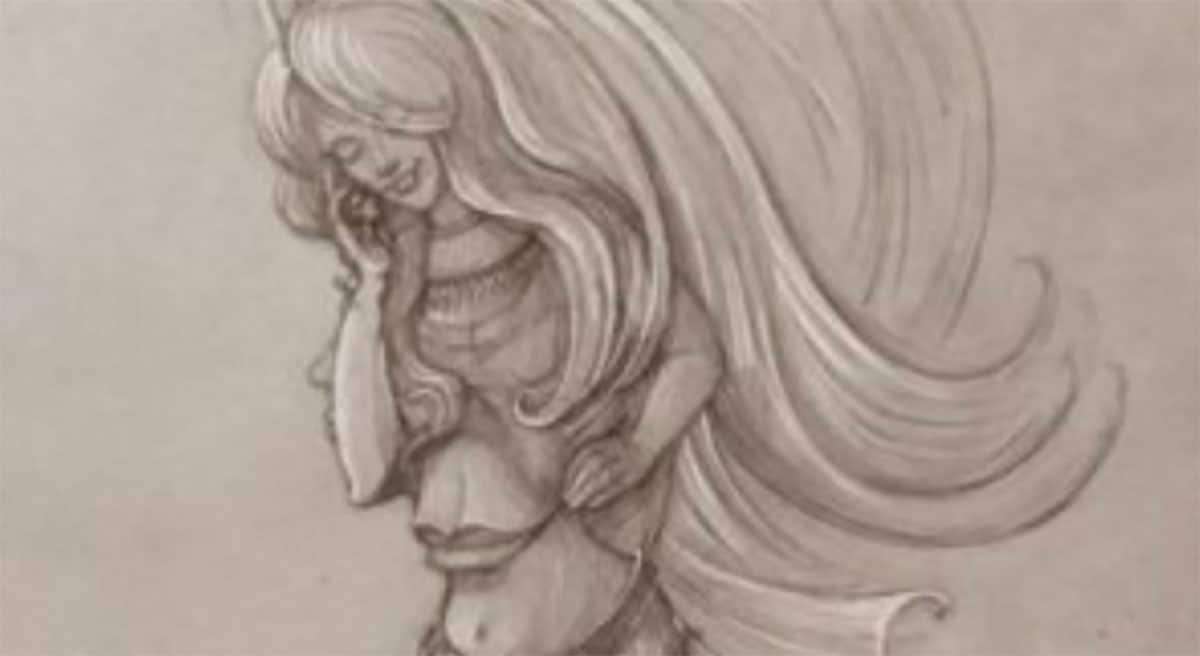
Ukrainian artist Oleg Shupliak, famed for his mesmerizing optical illusions, has unveiled a new intricate piece titled “Four Women.” This artwork invites viewers to identify hidden female faces interwoven within what looks like a straightforward portrait, showcasing the artist's talent while engaging our visual perception skills.

Spotting the Secret Faces Embedded in Shupliak’s Artwork
At first sight, the illustration appears to portray a single cheerful woman with flowing hair. Yet, upon closer inspection, three additional female faces emerge concealed within the composition. Identifying each requires sharp observation and careful scrutiny.

Here are some pointers to help you reveal all four women:
- Focus on the space between the main figure’s cheek and hand
- Observe the profile contours of the principal woman's face
- Notice the delicate shapes within the figure’s arm
- Check for subtle features around the woman’s midsection
Patience is essential in this visual challenge; the hidden faces may not be obvious at first glance, but uncovering each one delivers a rewarding sense of accomplishment.
Shupliak’s Expertise in Optical Illusions
Internationally acclaimed for his spellbinding optical illusions, Oleg Shupliak often incorporates iconic figures like Van Gogh and Shakespeare into his artwork. His skillful manipulation of visual perception places him among the leading contemporary artists today.
His creations challenge our usual ways of viewing images, urging us to look beyond initial impressions and unravel deeper layers. This process not only entertains but also boosts cognitive engagement, fostering creative thinking and innovative problem-solving.
The “Four Women” piece is a prime example of Shupliak’s deft control over visual deception, proving how a single illustration can hold multiple meanings. Such complex artwork encourages mental agility and sharpens observational skills in everyday life.
How Optical Illusions Enhance Brain Function
Optical illusions, like Shupliak’s “Four Women,” extend beyond amusement and offer notable cognitive advantages. They act as mental workouts by enhancing diverse brain functions:
Cognitive Skill Benefit Lateral thinking Fosters inventive problem-solving techniques Visual perception Improves interpretation of complex images Attention to detail Sharpens observation and focus Cognitive flexibility Encourages adaptable thought patterns
Regular interaction with such illusions can help preserve mental sharpness and may delay cognitive decline associated with aging. By challenging visual processing, these puzzles strengthen neural pathways and support overall brain health.
The Science Behind Visual Perception and Illusions
Shupliak’s “Four Women” stimulates exploration of how our brains decode visual information. Our minds rapidly interpret images, often relying on past knowledge and assumptions. Optical illusions expose the complexities and occasional errors in this perceptual process.
The understanding gleaned from illusions is useful in disciplines including:
- User interface design
- Marketing and advertising
- Architecture and urban development
- Visual communication
Delving into these illusions enhances appreciation for the sophisticated mechanisms underlying our vision, as well as the creative ways these mechanisms can be influenced.
As you engage with Oleg Shupliak’s “Four Women” and similar optical illusions, remember that each encounter enriches both cognitive ability and artistic appreciation. Whether you identify every hidden face or simply enjoy the challenge, the experience stimulates your mind and imagination alike.
- Categories:
- Trends

















0 comments
Sign in to Comment