
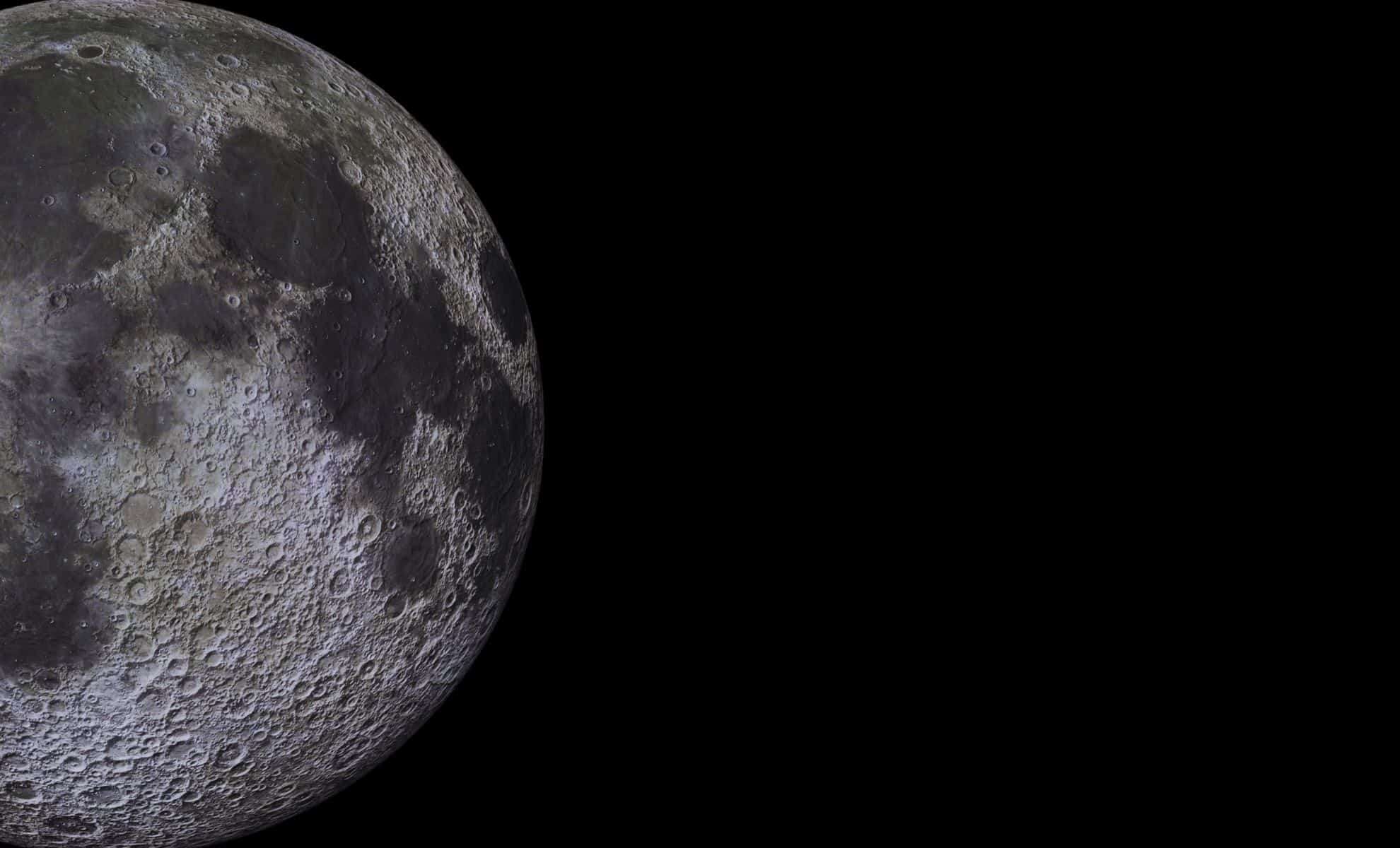
On July 5, skywatchers were treated to an extraordinary lunar spectacle known as the “Golden Crescent” visible across the Moon’s face. This mesmerizing effect occurred when sunlight highlighted the Montes Jura mountain range, forming a luminous golden arc that could be admired from Earth. If you missed this rare lunar display, here is a detailed overview of what took place.
Understanding the Golden Crescent
The “Golden Handle” is a visual optical phenomenon produced when sunlight strikes the peaks of Montes Jura, a rugged mountain chain bordering Sinus Iridum, a large, circular lunar plain. This spectacle appears when the moon’s day-night boundary, known as the terminator, is positioned just to the west of Sinus Iridum. On July 5, the sun’s rays perfectly illuminated the eastern edges of Montes Jura, creating a glowing arc of gold.
The sunlight reflecting off these mountainous peaks forms a striking contrast with the darker lunar plains nearby. This ephemeral glow inspired the name “Golden Handle,” reflecting both the shape and the shimmering hue produced by the sunlight.

Viewing the Golden Crescent
The “Golden Handle” appeared during the Moon’s waxing gibbous phase as it climbed above the southern horizon amid the stars of Libra. This radiant crescent was located just west of the terminator, hovering above the dark expanse of Mare Imbrium (Sea of Showers), an extensive plain shaped by ancient volcanic lava.
Observers could enjoy the sight by locating Montes Jura near the terminator and watching the golden arc’s glow. Those with 15×70 binoculars on a steady tripod gained a wide view of the display, while telescopes with a minimum aperture of 6 inches revealed intricate details of Montes Jura and the adjacent Bianchini Crater.
Additional Lunar Highlights
Besides the Golden Handle, stargazers were also drawn to other remarkable lunar landmarks. The Copernicus Crater, a vast impact feature spanning 93 kilometers, showcased impressive shadow play along its eastern edges. The low sunlight angle accentuated its ejecta rays—debris flung out during its formation roughly 800 million years ago.
Telescopic views vividly captured the stark contrasts between light and darkness on the Moon’s surface. These rich details enhanced the viewing experience for those exploring beyond the main phenomenon. Although the event is over, it reminds us that the Moon offers endless fascinating sights for dedicated enthusiasts.
- Categories:
- News









0 comments
Sign in to Comment