

A remarkable breakthrough has been achieved through the collaboration of professional astronomers and citizen scientists with the identification of a novel type of explosive stellar event, identified as GOTO0650. This discovery, presented in a new study Astronomy & Astrophysics, underscores the powerful impact of public participation in astrophysical research by recognizing a rare class of cataclysmic variable stars.
The newfound object GOTO0650 was detected through the efforts of the Kilonova Seekers initiative, a citizen science project that engages volunteers in analyzing changes in the night sky through an interactive visual tool. When this binary star system, containing a white dwarf, exhibited an extraordinary brightness surge—approximately 2,500 times its former luminosity—participants highlighted it swiftly. Their timely observations enabled astronomers to classify the star as a cataclysmic variable in its unusual “period bouncer” phase, where the paired stars slowly separate due to decreasing mass transfer. This revelation stands as a testament to the success of both the Kilonova Seekers program and the scientific community's efforts.
Community Contributions in Unveiling GOTO0650
The involvement of citizen scientists was crucial in pinpointing GOTO0650. The volunteers from the Kilonova Seekers platform showed exceptional attention to detail, enabling the detection of the star’s explosive activity almost instantly. Tom Killestein, a University of Warwick researcher and co-project leader, remarked on the milestone: “After over 2.8 million classifications, the identification of GOTO0650 stands as the culmination of two years of dedicated volunteer work. Had it not been for their vigilance, this rare event might have gone unnoticed due to the absence of prompt follow-up.”

This discovery exemplifies the strength of crowd-powered science—individuals globally collaborating to expand our knowledge of the universe. In addition to flagging the event, volunteers' fast responses facilitated follow-ups from prominent observatories such as Swift and Einstein Probe, along with measurements from dedicated amateur astronomers. The swift action yielded vital data essential for advancing research on explosive cataclysmic variable stars.
Insight from Echo Outbursts and Their Importance
After its initial flare-up, GOTO0650 surprised observers again with additional bursts on Christmas Day and New Year’s Day. These “echo outbursts,” detected by both professional facility teams and amateur enthusiasts, provided meaningful clues about the dynamic processes governing this extraordinary stellar binary. These secondary flares offered deeper understanding of the star’s complex evolution and fueled further scientific curiosity.
For many participants in the project, contributing to these findings was more than a scientific triumph—it was a profoundly moving experience. Volunteer Svetoslav Alexandrov shared his excitement: “I literally screamed with joy when I saw that I was going to be a co-author of the research paper. I’m certain that people on the street raised their eyebrows when they saw me screaming and dancing, but I didn’t care. I knew I was a co-discoverer of something significant, and this was all that mattered.”
Such enthusiasm highlights the transformative role of citizen science in contemporary astronomy. Contributors who once saw themselves as casual supporters now find the chance to make genuine discoveries. As Alexandrov expressed, “This discovery shows the importance of citizen science, both scientifically and personally. Even from your bed, or on the street with your cell phone, there is the possibility of making a very important discovery.”
Advancing Knowledge of Cataclysmic Variable Systems
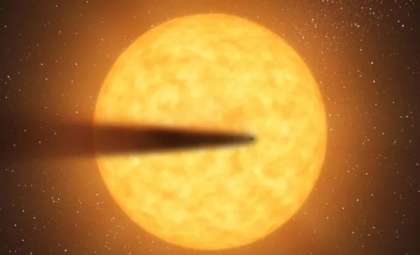
The detection of GOTO0650 also advances understanding of cataclysmic variable stars, which are close binary systems where a white dwarf accretes matter from a companion star. As material accumulates in a surrounding disk, it can trigger powerful nuclear explosions eventually culminating in the white dwarf’s destruction. Particularly intriguing is the “period bouncer” phase, characterized by the gradual separation of the two stars caused by decreasing mass transfer, which affects the system’s brightness and activity.
These changes help astronomers observe the late evolutionary stages of such binary stars. The data collected from both professional and amateur observers regarding GOTO0650 provide a valuable example of this phase. Additionally, the unpredictability inherent in these outbursts further stresses the importance of prompt detection by engaged citizen scientists and observatories, ensuring critical observation opportunities are not missed.
- Categories:
- News











0 comments
Sign in to Comment