
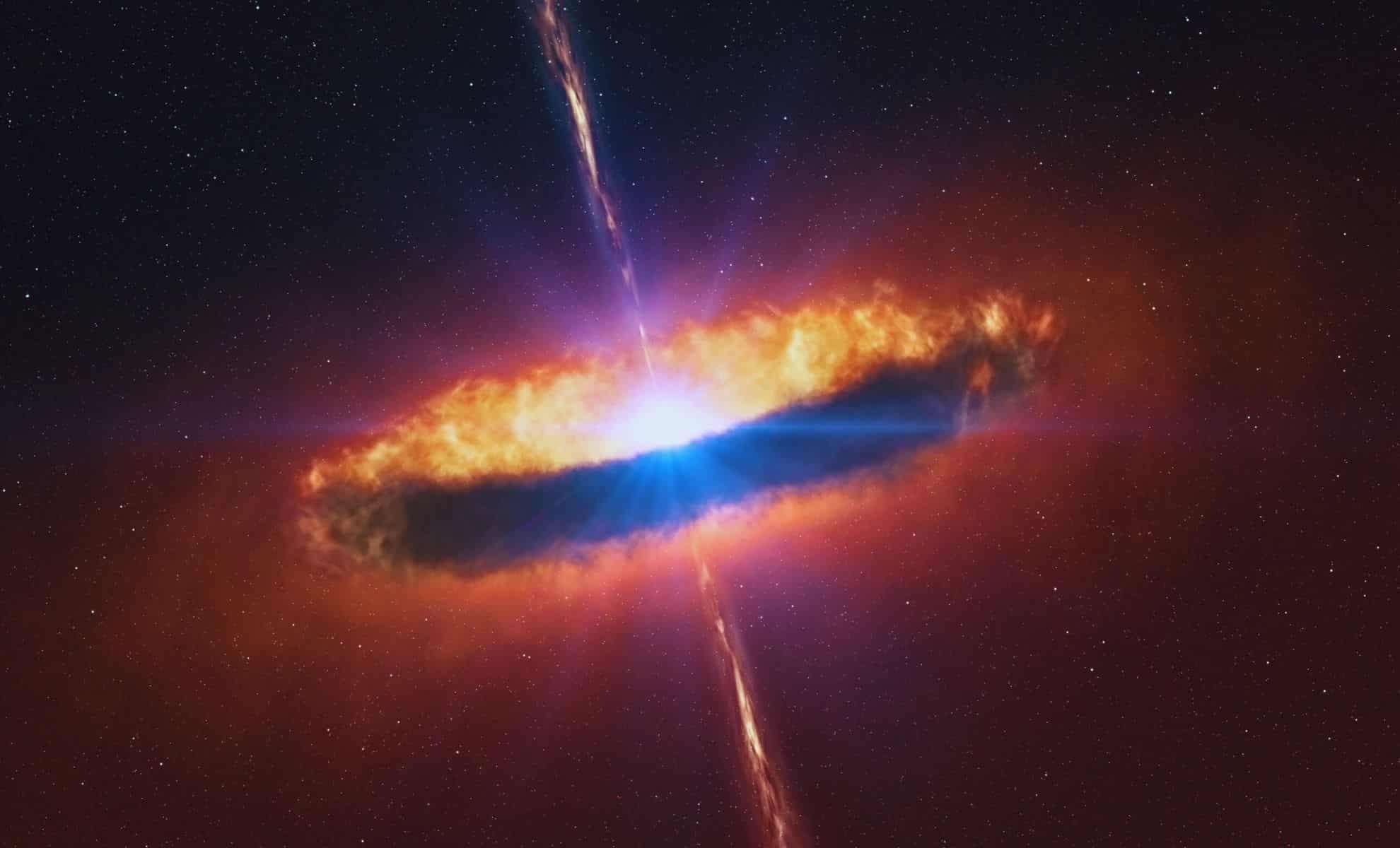
Physicists from Emory University have developed a specialized artificial intelligence that goes beyond mere data analysis to uncover previously unknown phenomena within a complex matter state called dusty plasma, as detailed in a study featured in Proceedings of the National Academy of Sciences (PNAS).
Led by Ilya Nemenman and Justin Burton, the team engineered this AI to learn from limited three-dimensional experimental datasets. Their findings revealed surprising non-reciprocal particle interactions and corrections to theories that have stood for decades.
Decoding Dusty Plasma and Its Peculiarities
Dusty plasma or complex plasma is a hot ionized gas containing tiny dust particles. It appears in environments such as rings around Saturn, moon dust clouds, and Earth's wildfire smoke. Despite its prevalence in astrophysical contexts, it demonstrates behaviors that remain mysterious.

Customarily, forces between particles are reciprocal: push one and it pushes back equally. However, within dusty plasma this balance falters. Forces become asymmetric—leading particles attract those behind while trailing particles exert repulsion on leaders. Although suggested theoretically, this phenomenon of non-reciprocal forces has now been experimentally verified.
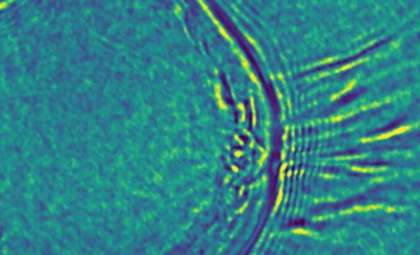
The investigators utilized a 3D imaging system incorporating a high-speed camera and laser sheets to monitor plastic dust particles inside a plasma chamber. The resulting motion data trained a custom neural network that incorporated fundamental physics concepts like gravity, drag, and particle interactions.
AI Designed for Breakthroughs, Not Just Forecasting
This AI stands apart from typical machine learning tools that primarily aim to predict outcomes or clean data noise. Instead, it was created to uncover new underlying physical principles.
“We demonstrated AI's power to discover previously unknown physics,” explained Justin Burton, co-author and physicist. “Our AI isn't a black box—we can interpret its mechanisms.” The approach worked with a relatively small but rich data sample optimized for extracting physical meaning.
The model decomposed particle dynamics into components of drag-driven velocity, environmental forces such as gravity, and inter-particle forces. This structure allowed it to detect and quantify non-reciprocal interactions with better than 99% accuracy, an unprecedented precision in experimental plasma physics.
Updating Plasma Physics’ Fundamental Assumptions
More than identifying new forces, the AI challenged existing beliefs. One traditional idea held that particle electric charge scales linearly with its size; the AI showed that this relationship also depends on plasma temperature and density.
Another notion was that force between particles decreases exponentially at a uniform rate irrespective of size. In contrast, the AI's results revealed that the decay rate varies with particle dimensions, indicating more intricate interaction mechanisms.
“Some widely accepted theoretical ideas about these forces don't hold up,” Nemenman noted. “Our enhanced data resolution lets us correct these misconceptions.”
Far-reaching Effects of Accessible AI Tools
Equally remarkable as the discovery is the accessible technology behind it. The AI model ran effectively on a standard desktop computer without requiring supercomputers or cloud services, making it approachable for many scientific disciplines.
The team envisions adapting their method to study complex systems in biology, like cell migration, or industrial applications involving material blend behaviors. Since this AI emphasizes interpretability, it avoids the opaque “black box” limitations common in artificial intelligence.
“Despite extensive hype about AI in science,” Nemenman said, “few examples exist where AI has directly led to fundamentally new discoveries. We hope this marks the beginning of such breakthroughs.”
- Categories:
- Science








0 comments
Sign in to Comment