
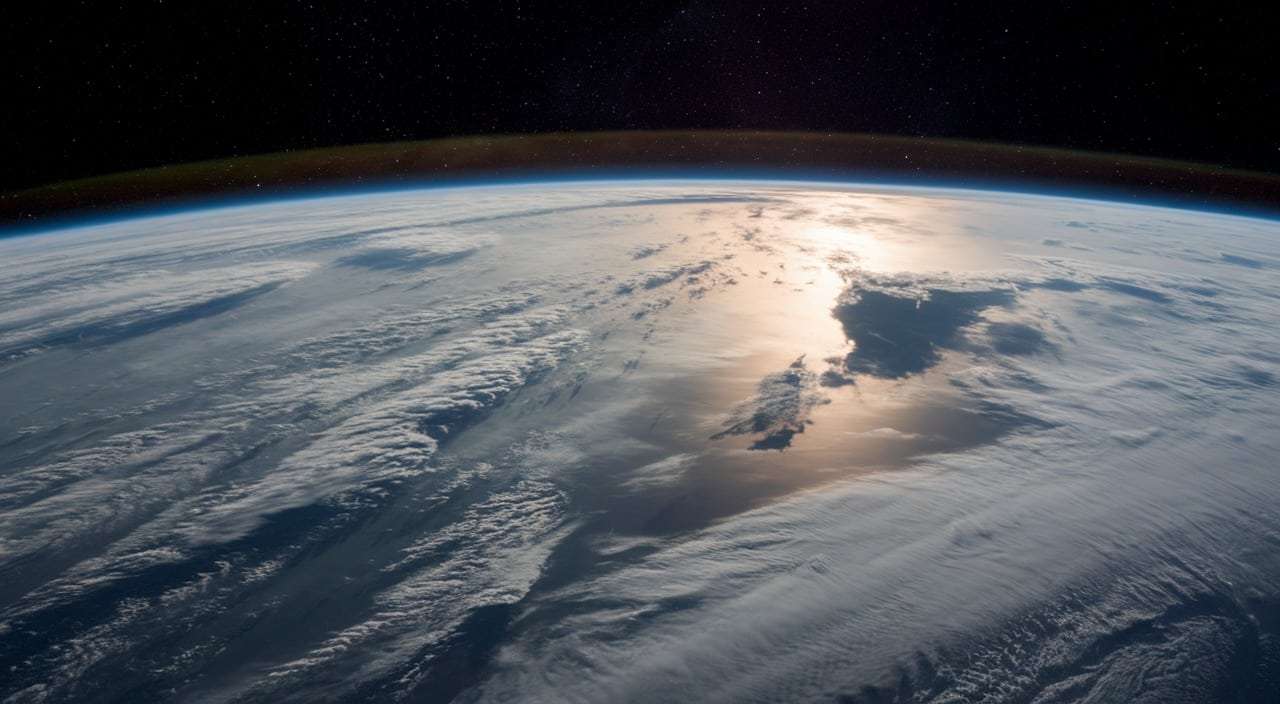
For a long time, the notion of a flat Earth has captivated people, largely because the land around us appears level. Yet, scientific evidence backed by space imagery confirms that Earth is indeed round. So, how do we reconcile this disconnect between what we experience and what science reveals? The explanation lies in human visual perception and the enormous scale of our planet.
Why Earth Appears Flat from Our Viewpoint
As individuals standing on Earth, our size is minuscule compared to the planet’s vastness. Earth spans approximately 12,742 kilometers in diameter along the equator, making its curvature impossible to detect at ground level. Even ascending to the summit of Mount Everest, 8,850 meters high, doesn’t provide a clear view of Earth's roundness. Our natural line of sight typically extends around 4.8 kilometers, insufficient to perceive the planet’s curve.
The Earth's curvature translates to a drop of about 7.98 inches per mile squared, meaning the surface lowers roughly eight inches over one mile. This gradual slope is nearly impossible to observe without precise instrumentation. This phenomenon is similar to a fly resting on a large spherical ball: despite the ball's curve, the fly’s close perspective makes the surface appear flat.

Gaining Altitude: How Height Affects Curvature Visibility
Altitude plays a crucial role in witnessing Earth's curvature. Elevated views from commercial jets, satellites orbiting Earth, or space expeditions reveal what remains unseen at ground level. Passengers cruising above 10 kilometers can spot subtle curves along the horizon through aircraft windows.
The effect of curvature becomes increasingly apparent at these heights. Pilots often describe a more pronounced curve from their vantage points compared to passengers seated by the windows.
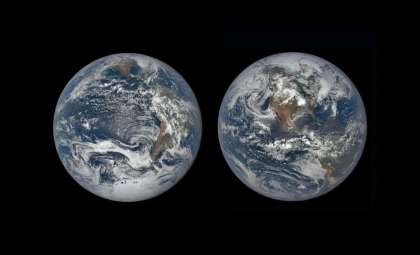
Astronauts orbiting Earth, meanwhile, experience an unmistakable view of our planet’s spherical shape, which stands in stark contrast to the flat horizon observed from the surface. Such curvature grows more noticeable at higher altitudes reached by spacecraft and satellites.
Earth Is Slightly Flattened, Not a Perfect Globe
From outer space, Earth’s shape is not a perfect sphere but an oblate spheroid, flattened near the poles due to its rotational forces. This deformation is described by Earth’s flattening ratio, approximately 1/298, indicating the equatorial diameter exceeds the polar diameter by about 28 kilometers.
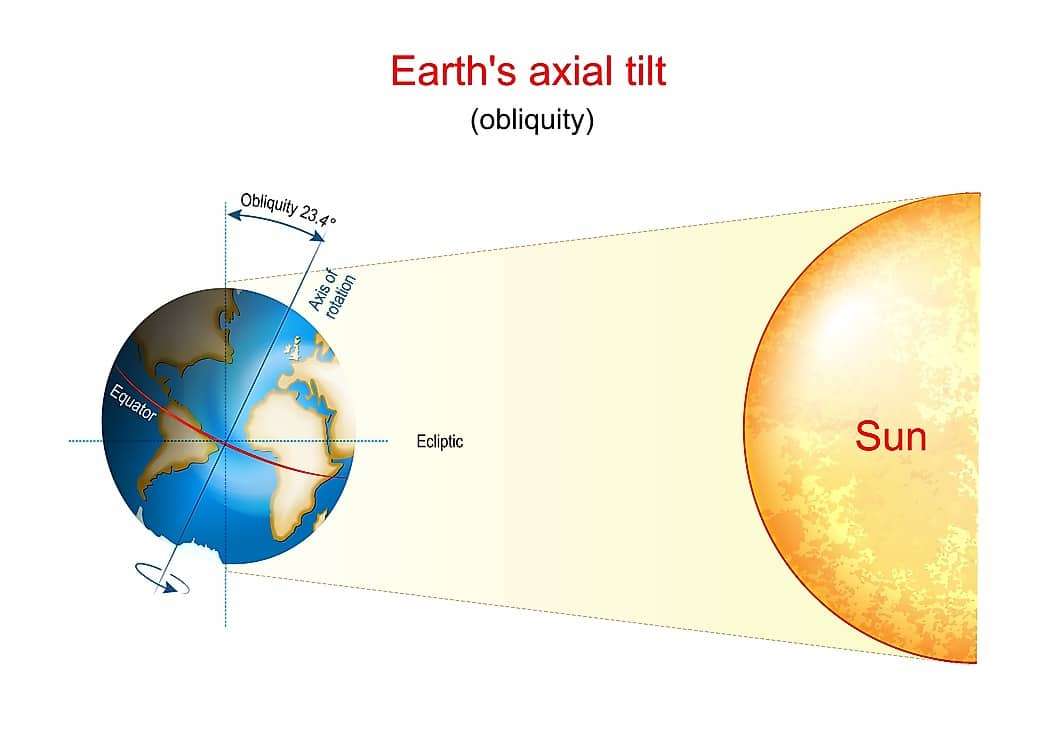
Variations in gravity also affect Earth’s shape, caused by uneven terrain features such as mountains and ocean trenches. These factors influence the geoid, a model representing mean sea level and gravitational variations across the planet.
Earth’s curvature is a vital factor in technical fields like engineering and geodesy. Large-scale projects, including extensive bridge and tunnel constructions, must incorporate curvature calculations in their design to ensure accuracy and stability.








0 comments
Sign in to Comment