

Many individuals instinctively close their eyes tightly when trying to catch a faint or distant sound, believing that shutting out visual input heightens auditory perception. However, a recent investigation by researchers at Shanghai Jiao Tong University challenges this assumption. Published in the Journal of the Acoustical Society of America, their findings reveal that closing your eyes can actually reduce your capacity to detect sounds in noisy surroundings. In contrast, watching a video associated with the sound significantly enhanced auditory sensitivity.
Released in April 2026, this study disputes the straightforward notion that the brain reallocates resources from vision to hearing when the eyes are closed. Twenty-five volunteers took part in listening experiments that illustrated the opposite: visual engagement aids the brain in maintaining connection with the external environment, facilitating better detection of sounds amid noise.
Testing a Common Belief About Hearing and Eye Closure
The scientists focused on measuring auditory detection thresholds, which represent the minimum loudness at which individuals can identify a target sound over background noise. Participants were tasked with spotting one of five different noises: a canoe paddle splashing, steady drumbeats, a skylark’s song, a rumbling train, or keyboard tapping, all presented over a consistent 70-decibel noise level—similar to city street sounds or a household vacuum.

Each person adjusted the volume of the target sound until it was just barely audible. The experiment included four scenarios: eyes closed, eyes open viewing a blank screen, eyes open observing a still picture related to the sound, and eyes open watching a video linked to the sound.
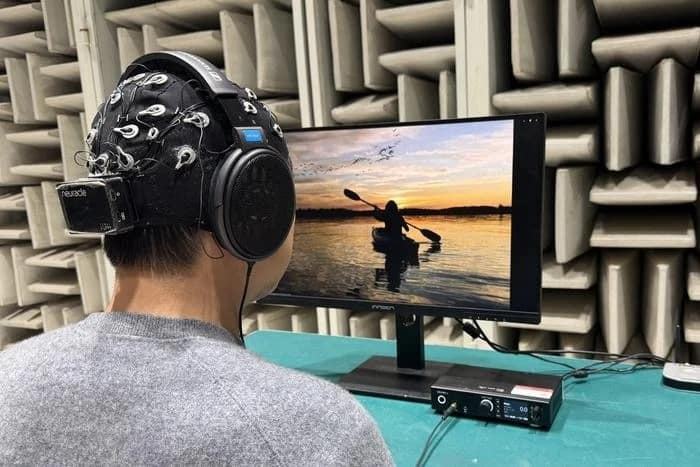
Under the leadership of mechanical engineer Yu Huang, the team used the blank-screen condition as the baseline. This approach helped isolate the effects that eye closure and visual stimuli had on auditory perception. The sound samples included everyday noises such as water splashing and keyboard typing.
Small Decibel Changes That Challenge Popular Beliefs
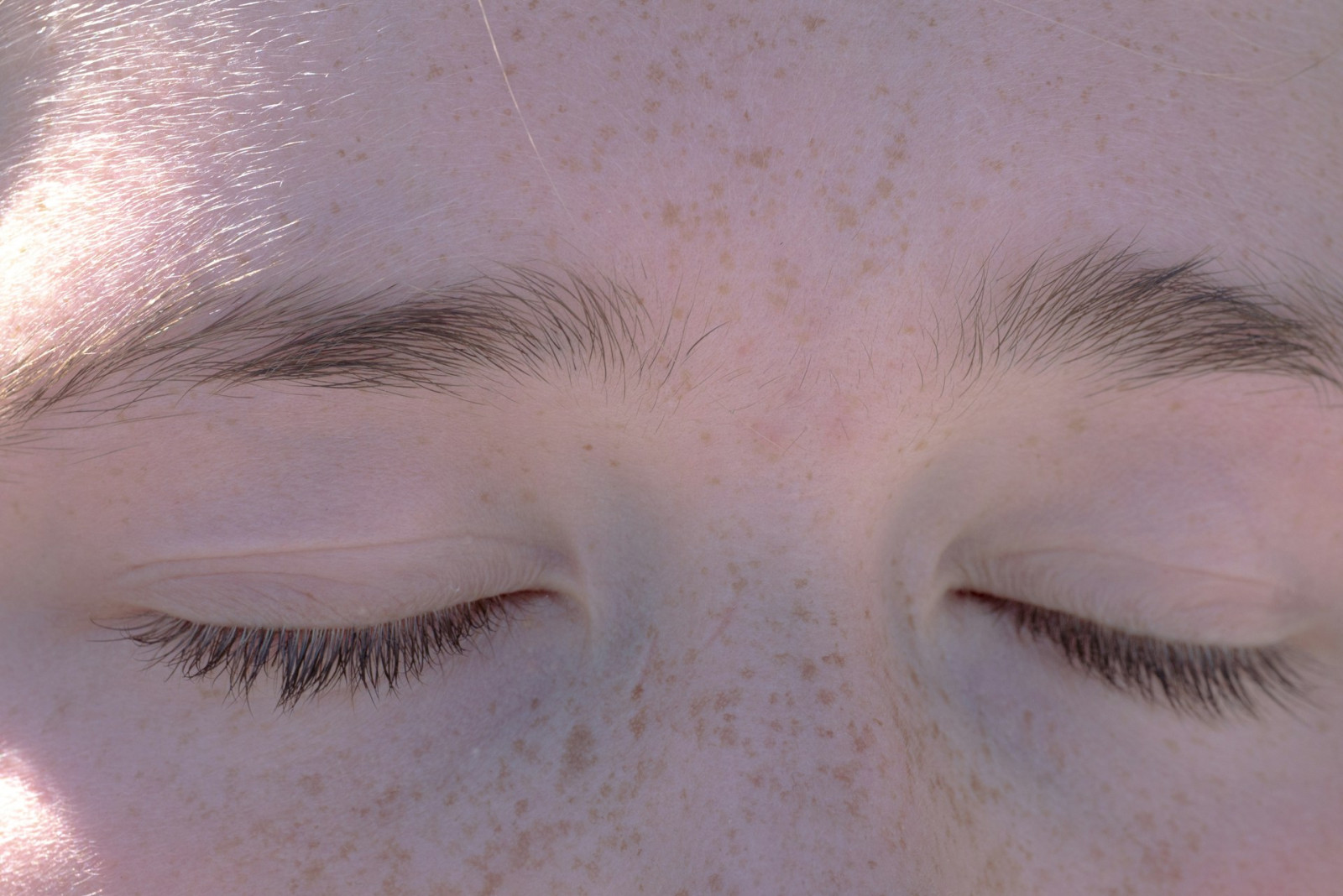
The differences across conditions were notable. When participants closed their eyes, the average volume needed to recognize the sound increased by 1.32 decibels compared to the baseline, indicating reduced hearing performance with eyes shut.
Conversely, viewing a still picture related to the sound improved detection, allowing participants to hear the sound at 1.6 decibels below the baseline. Watching a corresponding video provided the greatest enhancement—nearly 2.98 decibels quieter sounds were detected.
Huang summarized the results: “Contrary to popular belief, closing your eyes diminishes your ability to detect these sounds. Meanwhile, viewing a dynamic video synchronized with the sound substantially boosts auditory sensitivity.”
Neurological Insights on Eye Closure and Hearing
The researchers repeated the tests while monitoring participants’ brain activity using electroencephalography (EEG) caps. The data revealed a neural basis for the behavioral findings. Shutting the eyes shifted the brain into a mode focusing inward, triggering an overzealous filtering of incoming sounds.
This excessive filtering was non-selective, suppressing both the background noise and the target sound, a phenomenon the researchers dubbed “overfiltering.” In contrast, keeping the eyes open—especially when viewing relevant video—helped keep the auditory pathways linked to outside stimuli instead of retreating inward.
Huang elaborated: “In noisy environments, the brain must actively separate important signals from background sounds. Our findings show that internal focus promoted by eye closure actually hinders this process by overfiltering, whereas visual engagement anchors the auditory system to the external world.”
The Study’s Implications in Our Noisy Surroundings
This research specifically applies to noisy settings. Previous studies indicated that closing your eyes might enhance hearing in quiet spaces. As AIP Publishing pointed out, real life rarely offers such silence. Everyday environments like busy streets, open offices, and buzzing appliances are where people most often try to listen carefully—and those are the situations where eye closure actually hampers hearing.
The findings also shed light on multisensory integration, the brain’s ability to combine data from multiple senses. When video corresponded to the target sound, listeners performed best, suggesting that matching visuals help the brain anticipate and focus on auditory clues. Next, the team hopes to explore mismatched pairings, such as drum sounds with bird imagery, to determine whether benefits arise merely from having eyes open or from the brain demanding coherent sensory input.
Huang noted that distinguishing these effects could clarify how attention boosts performance versus the specific advantages of sensory alignment. ScienceAlert highlighted this unexpected contribution to understanding sensory perception, with potential impacts on hearing aid technology and everyday listening strategies.
- Categories:
- News












0 comments
Sign in to Comment