
Mysterious depressions and trails embedded in ancient rock formations from Italy have rewritten the timeline for the earliest vertebrate fossils residing in the deep ocean. These fossilized traces, dating back 130 million years, reveal that fish inhabited deep-sea environments 80 million years earlier than previously documented.
Prior to this finding, the oldest fossil evidence of deep-sea fishes was believed to be only 50 million years old. This new evidence pushes the origin back to the Early Cretaceous period, a time when dinosaurs dominated terrestrial ecosystems and fish were already hunting along muddy ocean floors thousands of meters below the surface.
The fossils were uncovered within the Northern Apennines region near Piacenza, Modena, and Livorno, Italy. The discovery was made by an international research team affiliated with the Faculty of Sciences at the University of Lisbon and published in the Proceedings of the National Academy of Sciences.

Unusual Rock Impressions Reveal Ancient Deep-Sea Activity
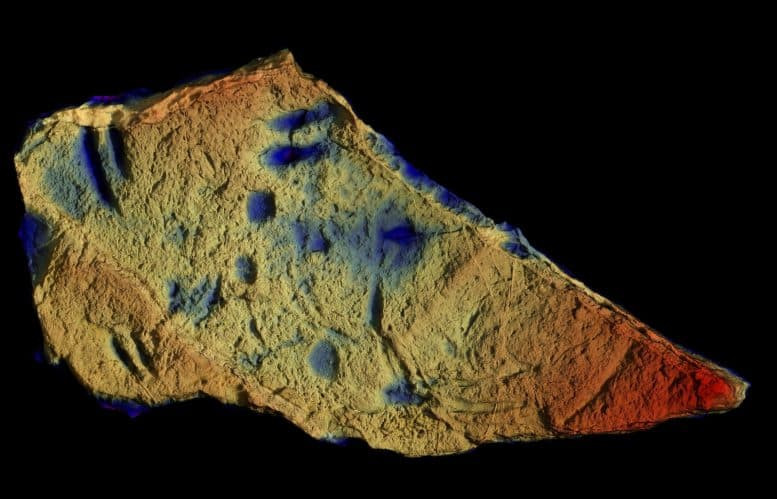
The fossils do not include fully intact skeletons or sharp teeth; rather, they consist of bowl-shaped depressions and a sinuous path embedded in ancient mudstones.
These marks provide compelling evidence: the depressions, measuring around four centimeters across, were formed by fish probing the seafloor in search of food. The winding groove appears to have been created by the tail of a fish gliding along the sediment bottom.
“When I first found the fossils, I could not believe what I was seeing,” said Andrea Baucon, the paleontologist who led the study and discovered the traces.
Baucon’s astonishment mainly stemmed from the remarkable age of these fossils. At 130 million years old, they predate any previously known records of deep-sea fish activity by several tens of millions of years.
“The new fossils show the activity of fishes on a dinosaur-age seafloor that was thousands of meters deep,” Baucon added.
Insights from Ghost Sharks Illuminate Ancient Behaviors
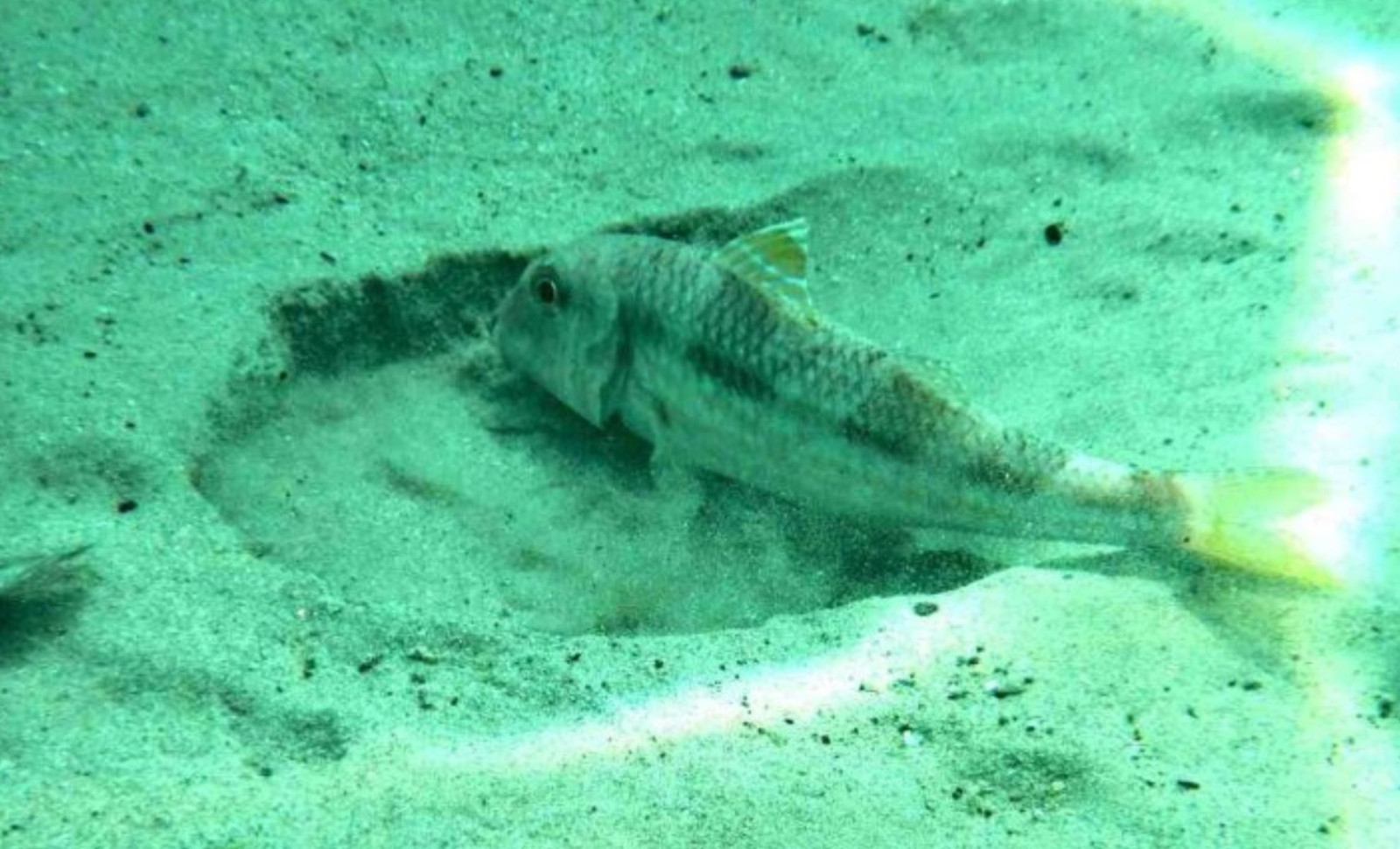
The team didn’t rely solely on fossil evidence; they also examined behaviors of modern-day fish to better understand the ancient marks. They observed chimaeras, commonly known as ghost sharks, in contemporary deep-sea habitats. Notably, one chimaera was filmed in the Pacific Ocean's Kermadec Trench at a depth of 1,544 meters, where it was seen swimming just above the seabed before plunging its mouth into the sediment to forage.
Present-day fish use suction to extract buried prey or scratch the ocean floor while hunting, leaving behind physical traces indistinguishable from those found in the Cretaceous rocks of the Northern Apennines.
Fossil pits and trails reveal ancient fish activity on a 130-million-year-old deep seafloor. Credit: PNAS
These ancient feeding traces also resemble behaviors observed in Neoteleostei, a group that encompasses modern jellynose and lizard fishes.
Mário Cachão, a co-author of the study, pointed out that while deep-sea sediment layers commonly contain fossils of tiny organisms from higher water columns like phytoplankton and zooplankton, direct evidence of vertebrate activity within these deposits is extraordinarily rare.
Deep-Sea Fish Were Drawn by Abundant Food Supplies
What motivated these ancient fish to venture into the harsh conditions of the deep sea—marked by perpetual darkness, near-freezing temperatures, and immense pressure? According to the recent study, the answer lies in the availability of food.
The researchers suggest that during the transition from the Late Jurassic to the Early Cretaceous, an exceptional influx of organic material reached the ocean’s abyssal zones. This nutrient boost supported thriving populations of bottom-dwelling worms, which attracted fish adapted to excavating sediment or using suction to capture prey.
All these events unfolded beneath the Tethys Ocean, an ancient seaway that existed approximately between 250 and 50 million years ago and preceded the modern Mediterranean Sea.
The sedimentary layers housing these traces underwent significant tectonic deformation and uplift, eventually becoming part of the Northern Apennine mountain range, primarily during the Miocene and Pliocene epochs.
“The new fossils shed light on an otherwise obscure chapter of the history of life on Earth,” said Carlos Neto de Carvalho, a researcher involved in the study.
- Categories:
- Science






0 comments
Sign in to Comment