
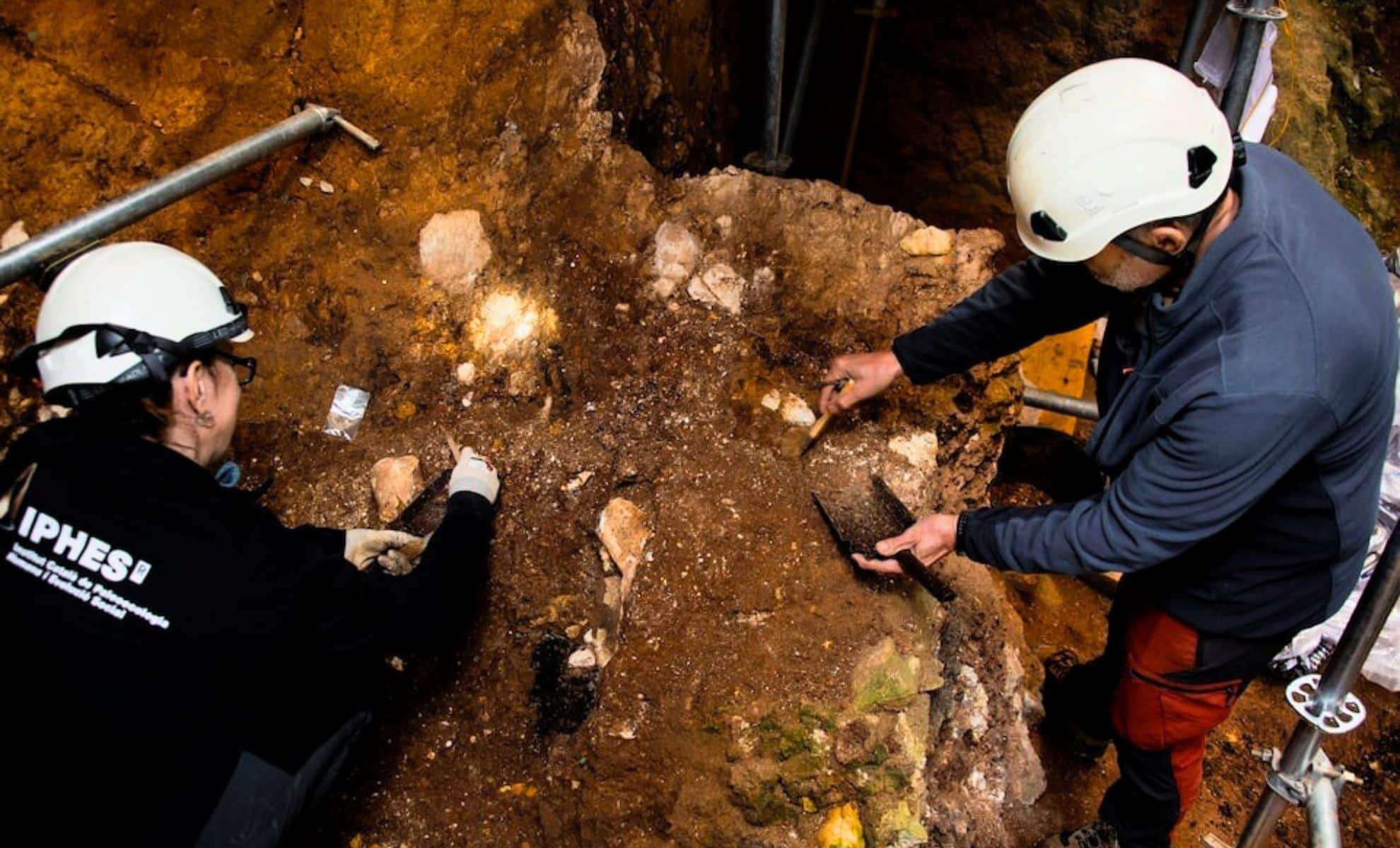
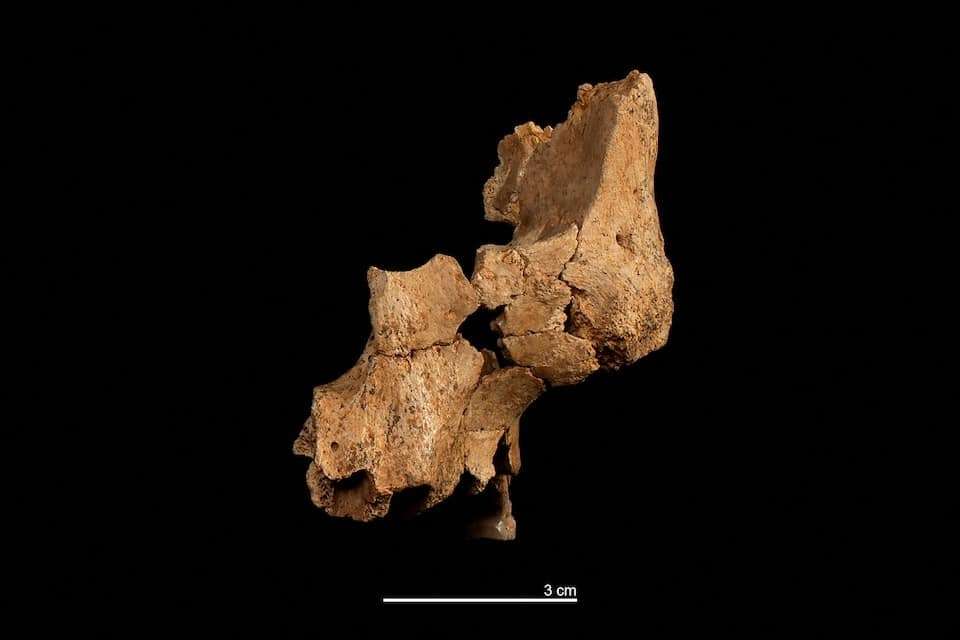
Scientists have uncovered an astonishing 1.4-million-year-old facial fossil in the Sima del Elefante cave, nestled within Spain’s Atapuerca mountains. This fragment stands as the oldest human fossil ever discovered in Western Europe, redefining current understandings of early human presence on the continent.
This ancient individual, affectionately named “Pink”, is thought to represent Homo affinis erectus (often abbreviated H. aff. erectus), an early hominin species exhibiting traits more primitive than those of Homo antecessor.
The findings, published in Nature, dramatically extend the timeline for human migration into Europe, pushing the earliest known occupation back beyond the previously accepted 1.2 million-year mark.

Atapuerca: A Wealth of Prehistoric Insights
The Atapuerca mountains have served as a vital site for uncovering pivotal fossils in human evolution and hold the status of a UNESCO World Heritage site. Among its noteworthy locations, the Sima del Elefante cave, or the “Pit of the Elephant”, has yielded human remains dating back roughly 1.2 million years, previously the oldest remains found in this part of Europe.
However, a 2022 excavation at a deeper stratigraphic level uncovered Pink’s fossils, now accurately dated between 1.1 and 1.4 million years old.
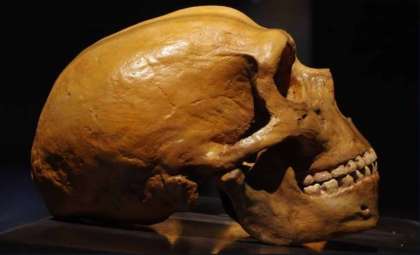
The fossil, labeled ATE7-1, comprises parts of the upper jaw and cheekbone. It was reconstructed with cutting-edge imaging and 3D modeling, revealing distinctive anatomical features that set it apart from previously discovered hominins in the area.

Introducing Pink: Europe's Earliest Human Face
Pink’s physical traits invite fresh perspectives on early Europeans. While Homo antecessor was long considered the continent’s earliest hominin, Pink’s more robust and primitive cranial features set it apart.
Dr. María Martinón-Torres, head of CENIEH and co-author of the research, notes that unlike Homo antecessor, which shares some facial similarities with modern humans (such as a pronounced nose), Pink exhibits markedly archaic traits close to those of Homo erectus. Yet, subtle differences prompted scientists to classify this specimen as Homo affinis erectus, potentially representing a distinct European hominin lineage.
This evidence pushes the idea that different hominin species occupied Western Europe well before Homo antecessor, challenging previous timelines and suggesting the region was settled over 1.4 million years ago.
Ancient Tools and Early Human Adaptation
Along with Pink’s bones, archaeologists uncovered stone tools and marked animal bones, evidence of early humans’ emerging tool-making and food-processing skills. Crafted from quartz, chert, and limestone, these implements reflect a form of lithic technology that aided survival and possibly hunting practices.
Dr. Xosé Pedro Rodríguez-Álvarez, an expert on stone tool industries, highlighted that the cut marks on the tools demonstrate stone knapping techniques, showcasing sophisticated survival strategies over a million years ago.

Unraveling the Mystery of Early Human Extinction
The fate of Pink and the Homo aff. erectus population remains one of anthropology’s intriguing enigmas. Several theories are under consideration:
- Environmental shifts: Around 1.1 million years ago, major climate alterations might have created inhospitable conditions leading to their decline.
- Inter-species rivalry: The emergence of Homo antecessor around 860,000 years ago suggests potential competition among hominin species for resources.
- Migration dynamics: Pink’s group may have represented an earlier migration that eventually vanished, giving way to subsequent human populations.
Dr. José María Bermúdez de Castro, co-leader of the Atapuerca Project, commented: “This finding opens a new chapter in the exploration of Europe’s early human settlements. Ongoing research will shed more light on our ancestors’ evolutionary diversity.”











0 comments
Sign in to Comment