
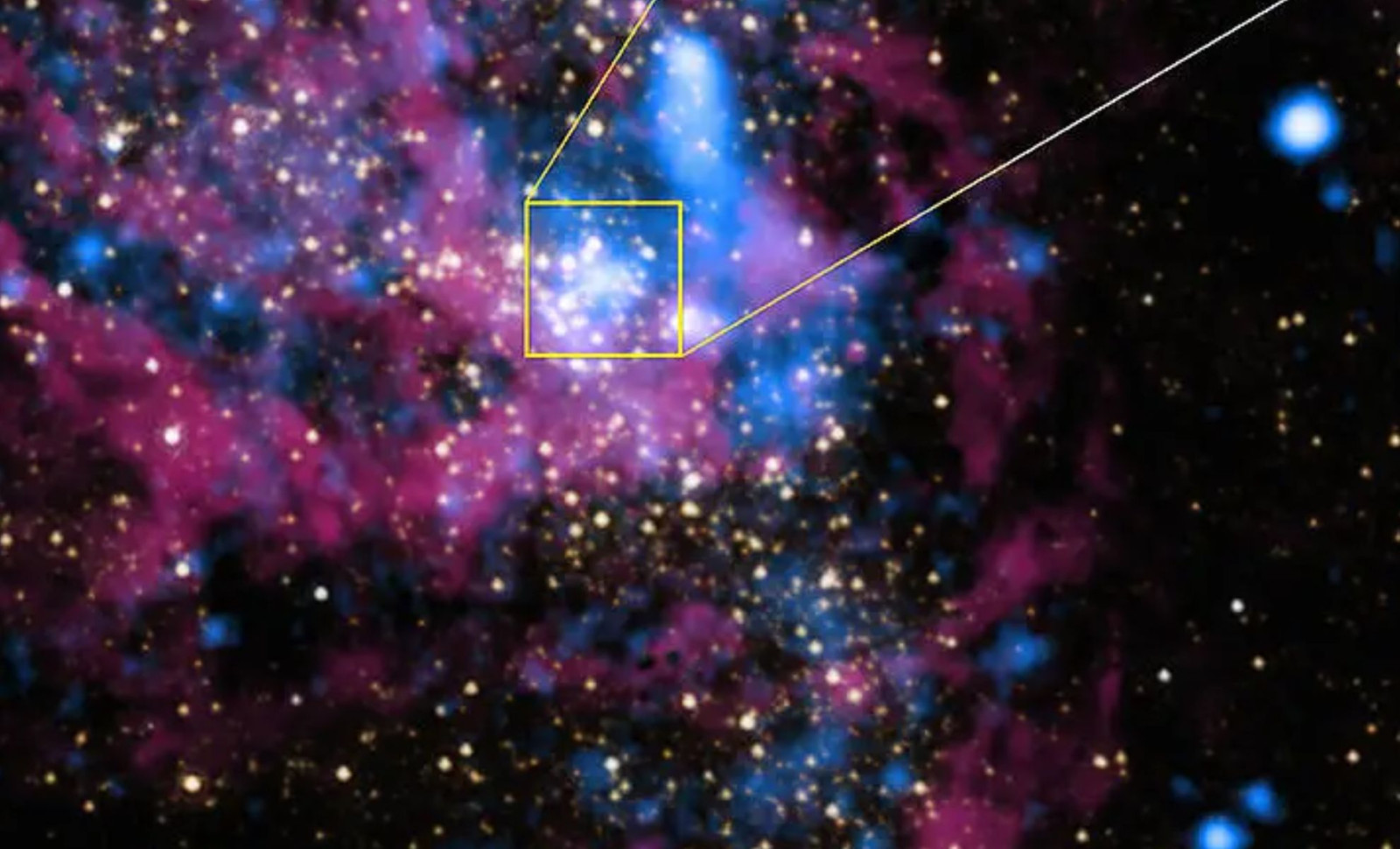
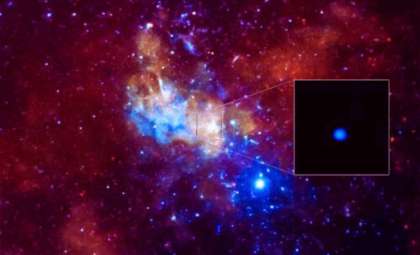
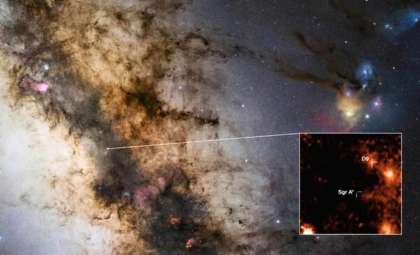
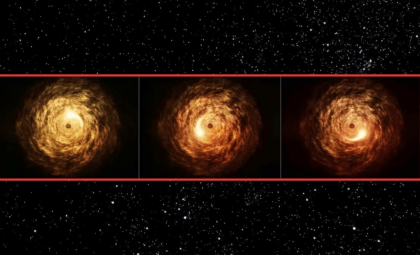
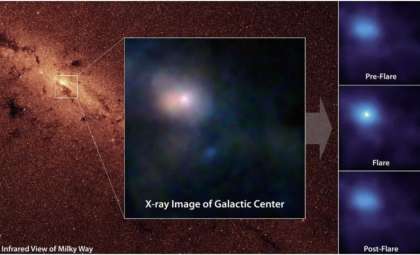
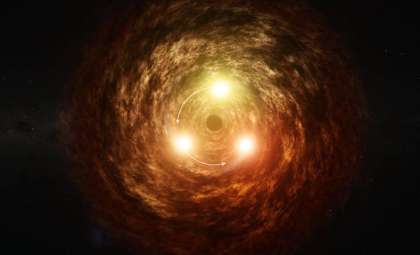
Several dusty bodies orbiting Sagittarius A*, the supermassive black hole anchoring the Milky Way’s core, have defied expectations by remaining intact amid intense gravitational forces. New data challenges earlier views, indicating that these peculiar systems are much more durable than previously assumed.
For years, scientists observed these objects anticipating that some would succumb to the black hole’s extreme tidal forces, stretching and ultimately disintegrating. Contrary to these predictions, recent measurements show stable trajectories, prompting a fresh understanding of this well-studied galactic area.
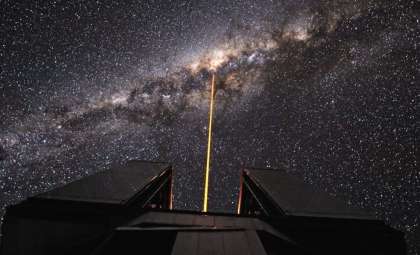
The investigation was spearheaded by Dr. Florian Peißker from the University of Cologne, utilizing the Enhanced Resolution Imager and Spectrograph (ERIS) on the Very Large Telescope (VLT) in Chile. Published in Astronomy & Astrophysics, their work concentrates on four distinctive dusty objects that have intrigued astronomers in recent times.

G2 Maintains Stable Orbit Without Disruption
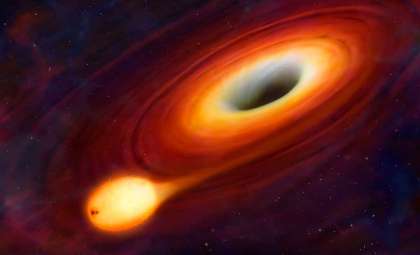
Among these bodies, G2 has been particularly controversial. Previously thought to be merely a cloud of gas and dust, many experts expected the intense gravity near Sagittarius A* to elongate and break it apart through a process known as spaghettification.
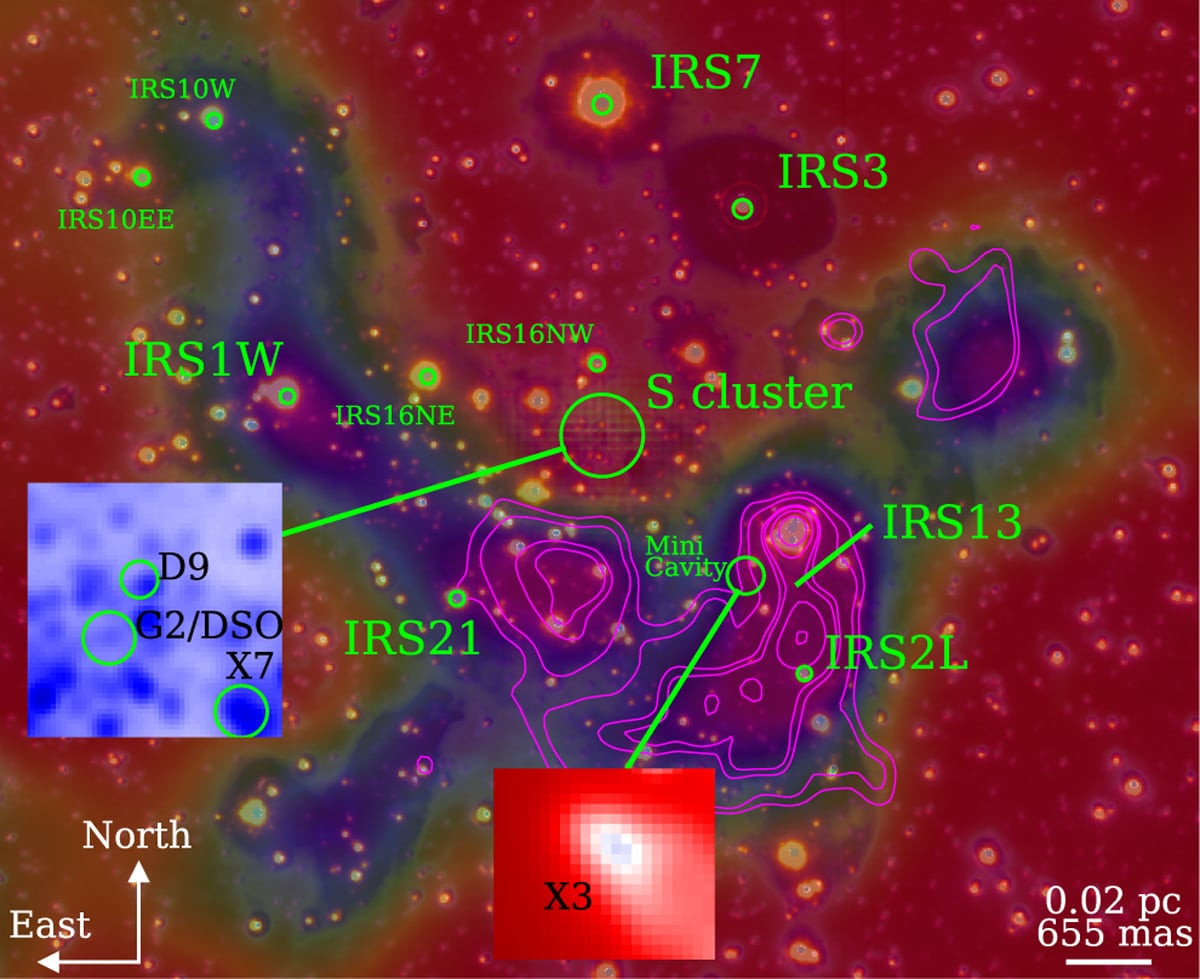
However, the new ERIS data reveals that G2 retains a steady orbit around the black hole with no signs of destruction. Findings suggest that the dusty cloud likely encloses a star, which could explain its surprising resilience.
“The fact that these objects move in such a stable manner so close to a black hole is fascinating,” Florian Peißker said.
He noted that this suggests Sagittarius A* may be less destructive than once believed.
“This makes the center of our galaxy an ideal laboratory for studying the interactions between black holes and stars.”
D9, X3, and X7 Also Show Unexpected Endurance
The research extended its focus beyond G2 to three other intriguing systems. One, D9, identified by Peißker and his team in 2024, is the first confirmed binary star system so close to a supermassive black hole.
Previous theories anticipated the two stars could merge under strong tidal forces near Sagittarius A*. However, the study published in Astronomy & Astrophysics shows that D9 has stayed intact over the observation period.
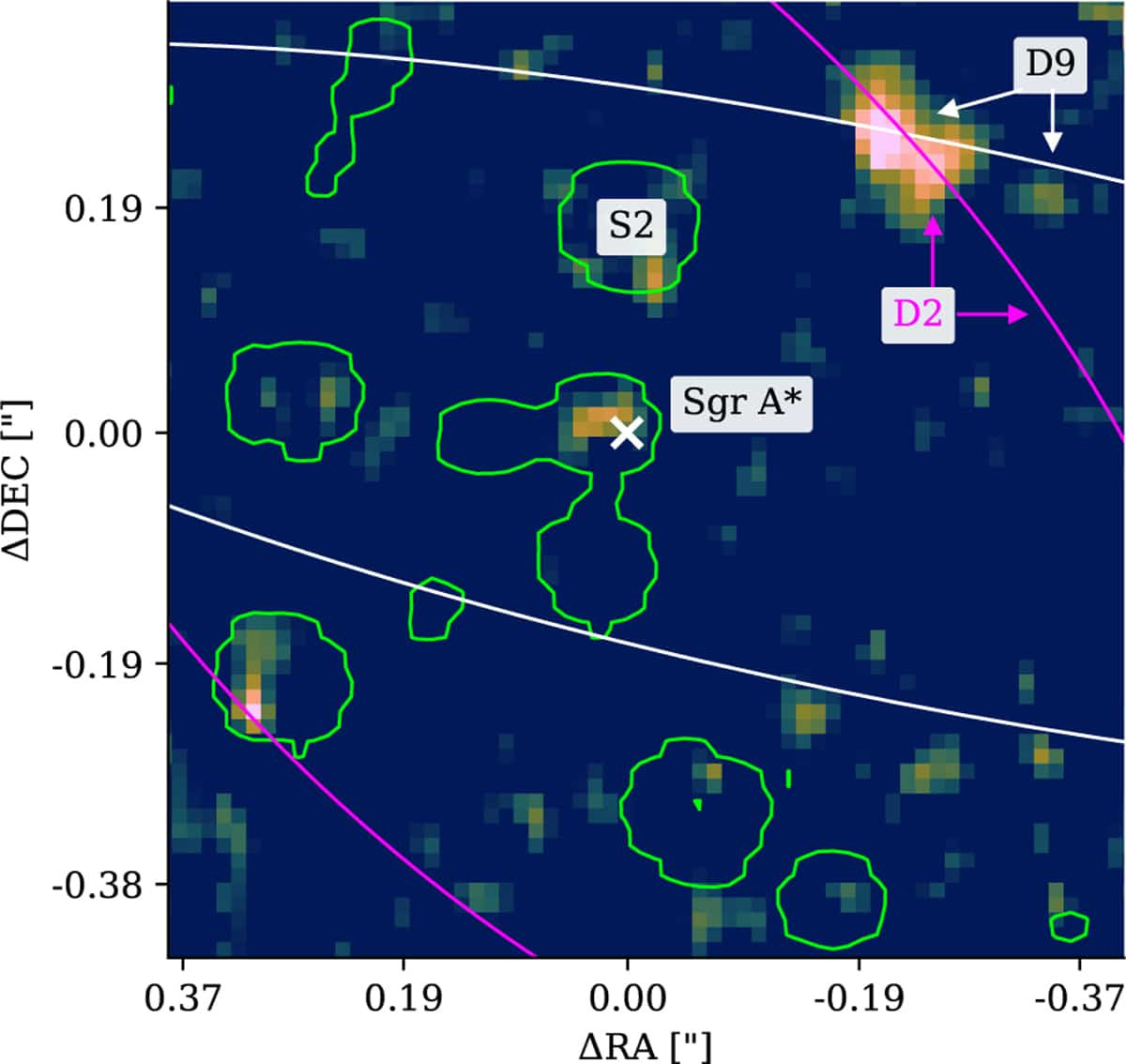
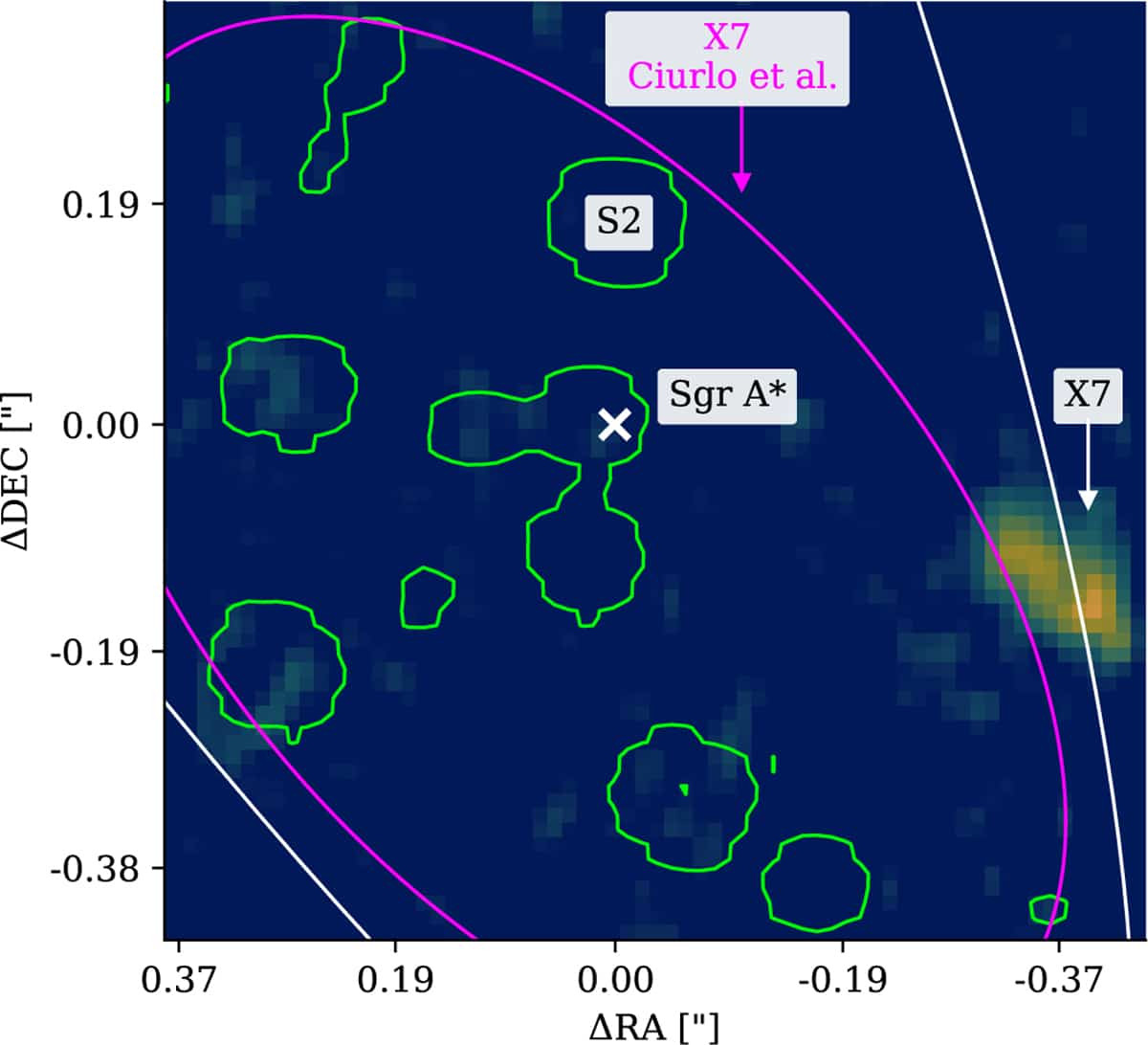
Similar durability was observed in X3 and X7, both dusty objects that continue to orbit steadily near the black hole, reinforcing the idea that these systems are more resistant than previously suggested by models.
Insights Into the Milky Way’s Core Environment
These findings provide a more complex understanding of the region around Sagittarius A*. Instead of solely acting as a destructive entity, the black hole seems to coexist with dusty and stellar systems that withstand its immediate surroundings.
Michal Zajaček from Masaryk University in the Czech Republic explains that the supermassive black hole "not only has the potential to destroy stars but also to encourage their formation or that of unusual dusty objects, likely through mergers of binary stars."
The authors also emphasize that ongoing and future studies with ERIS and the under-construction Extremely Large Telescope (ELT) will continue monitoring these systems. Such observations aim to deepen our understanding of how stars and dusty assemblies survive in one of our galaxy’s most extreme regions.
- Categories:
- Space

0 comments
Sign in to Comment