
NASA recently deployed a CubeSat aimed at fast-tracking the evaluation of novel space technologies directly in orbit. This initiative could significantly reduce the time and cost required to develop equipment for upcoming missions. The R5-S9 satellite exemplifies a forward-thinking program that leverages a compact and economical platform to quickly validate new hardware and software. By integrating commercial parts with cutting-edge experimental payloads, this mission demonstrates that rapid, cost-effective spacecraft can still achieve substantial technological advancements for future space exploration.
A Compact Satellite Driving Faster Technological Breakthroughs
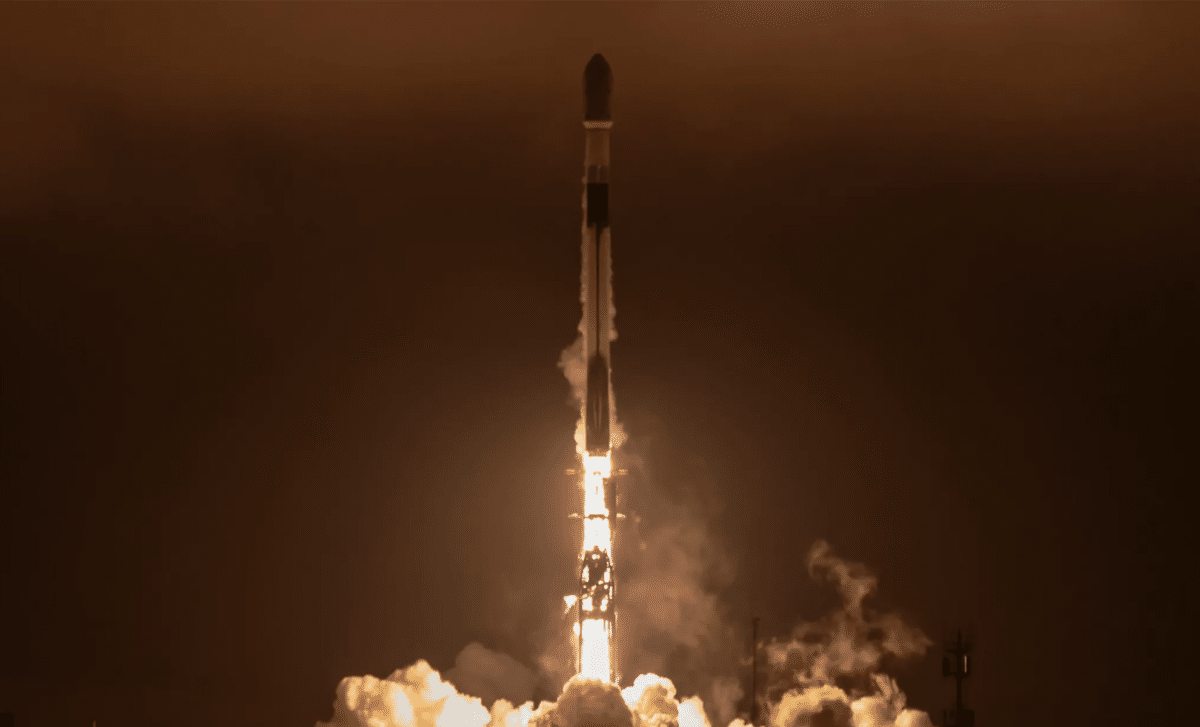
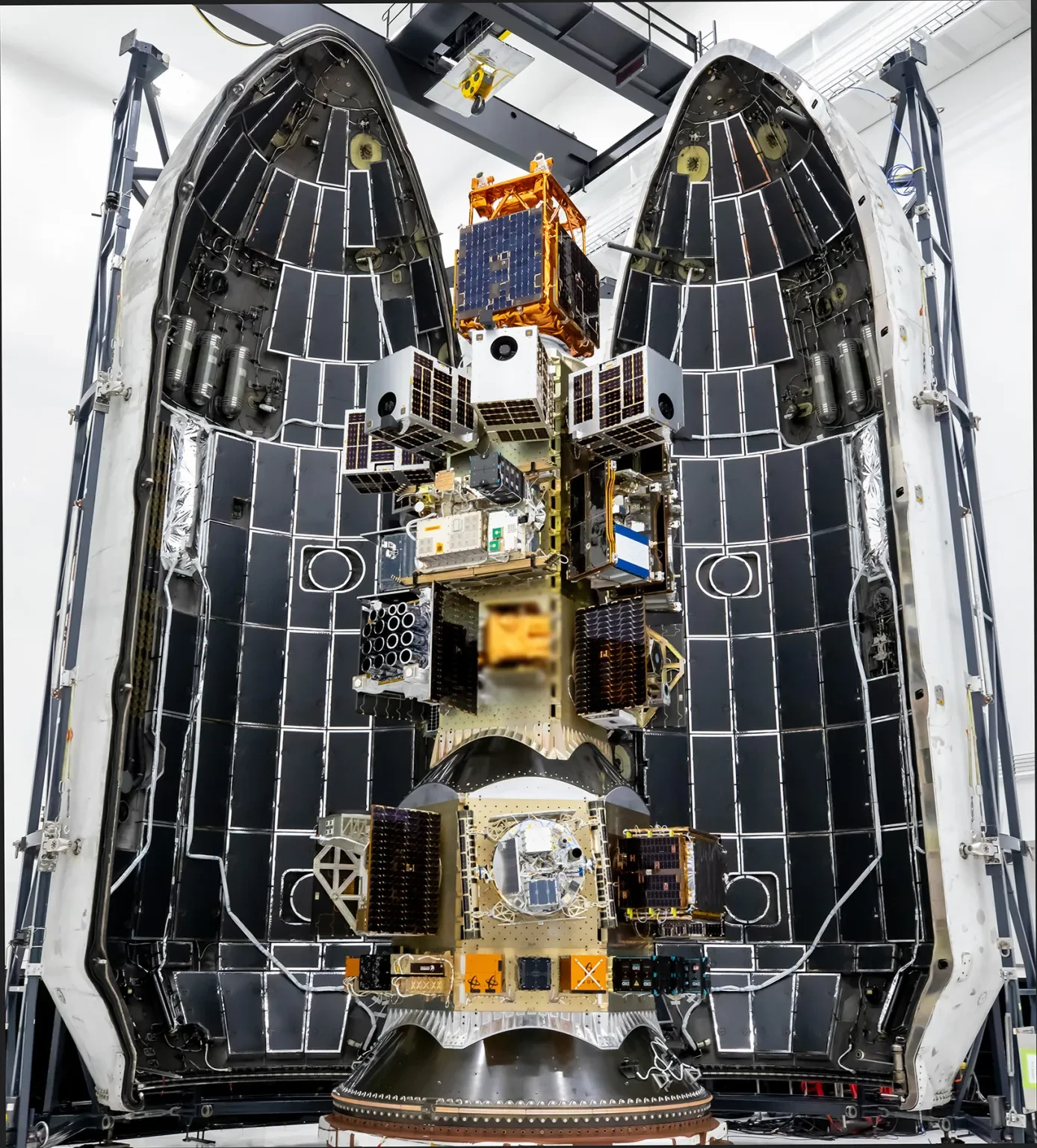
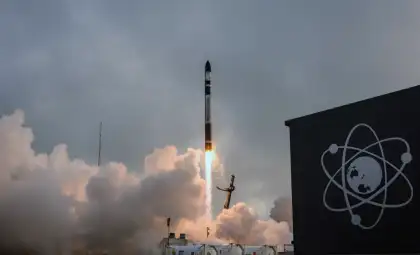
The R5-S9 (Realizing Rapid, Reduced-cost High-Risk Research Spacecraft 9) hitched a ride on a SpaceX Falcon 9 rocket as part of the Transporter-17 rideshare mission from California’s Vandenberg Space Force Base. Despite its small size, this spacecraft has a mission that is anything but modest. Rather than conducting traditional scientific observations, it acts as a technology testbed in orbit, capable of assessing several experimental systems under actual space conditions. This method provides engineers with operational insights unattainable through Earth-based simulations.
The spacecraft follows the philosophy of NASA’s R5 program, prioritizing fast development iterations instead of prolonged design phases. Engineers extensively use off-the-shelf commercial components, crafting bespoke parts only when absolutely necessary. Each mission benefits from the lessons learned in prior flights, enabling continuous enhancements instead of waiting for a whole new generation of spacecraft. This approach allows NASA to detect issues promptly, optimize designs faster, and lower mission costs without compromising engineering standards.

Building on improvements from previous R5 flights, this model demonstrates remarkable efficiency. NASA highlights that the satellite moved from design to launch readiness in roughly four months—a notably swift process for an orbited spacecraft. This rapid turnaround exemplifies how standardized architectures combined with commercial tech can significantly shrink development windows while retaining mission adaptability.
🚀A new CubeSat called R5 S9 launched on the Transporter 17 mission with SpaceX from SLC-4E at Vandenberg Space Force Base on July 7! Built with commercial off the shelf components, the spacecraft advances rapid and low cost development approaches.
The mission was manifested for… pic.twitter.com/MGipxtnKNr— NASA's Kennedy Space Center (@NASAKennedy) July 10, 2026
On-Orbit Trials of Innovative Space Technologies
The mission hosts several experimental payloads poised to influence future spacecraft designs. A key instrument, developed alongside Sandia National Laboratories, tests edge computing capabilities that empower satellites to analyze data autonomously while in orbit. Instead of transmitting all gathered information back to Earth, satellites with these systems could independently identify critical events and act swiftly in response to dynamic conditions.
This kind of autonomous processing is especially crucial for missions venturing far from Earth, where communication lags hinder continuous ground control. Intelligent onboard computing will enable spacecraft to prioritize data collection, detect anomalies, and allocate resources efficiently without waiting for instructions from mission control. As satellite networks grow, autonomy will become essential for effective mission management.
Additionally, the CubeSat aims to validate a cost-effective optical communication system pioneered by The Aerospace Corporation with assistance from NASA’s Center Innovation Fund. Utilizing lasers rather than traditional radio frequency signals, optical links promise considerably higher data transmission rates. Success in this demonstration could lead to future satellites capable of sending large scientific datasets while using compact, efficient communication hardware suitable for small platforms.
Leveraging Commercial Advances for Spacecraft Development
NASA describes the R5 program not just as a series of technology tests but as a comprehensive effort to revolutionize how small satellites are designed, built, and operated. The team rigorously assesses commercial off-the-shelf products to determine their capability to endure the extreme conditions of space, identifying which can replace costly custom-made parts reliably. Insights gathered from each mission are widely shared, benefiting universities, research institutes, government bodies, and private companies across the small satellite community.
The launch itself underscores NASA’s increasing partnership with the private space sector. SEOPS, based in Houston, secured the CubeSat’s ride through NASA’s Venture-class Acquisition of Dedicated and Rideshare (VADR) contract. This program offers flexible, affordable access to commercial launches, allowing smaller satellites to reach orbit at a fraction of the cost of dedicated missions. This approach facilitates more frequent technology demonstrations and accelerates NASA’s capacity to test novel ideas.
The R5 mission series is funded and overseen by NASA’s Small Spacecraft & Distributed Systems program at Ames Research Center under the Research and Technology Mission Directorate, with further support from the Engineering Directorate at Johnson Space Center. Launch operations are coordinated by NASA’s Launch Services Program at Kennedy Space Center, showcasing a multi-center NASA collaboration to advance rapid spacecraft innovation.
- Categories:
- Nasa




0 comments
Sign in to Comment