
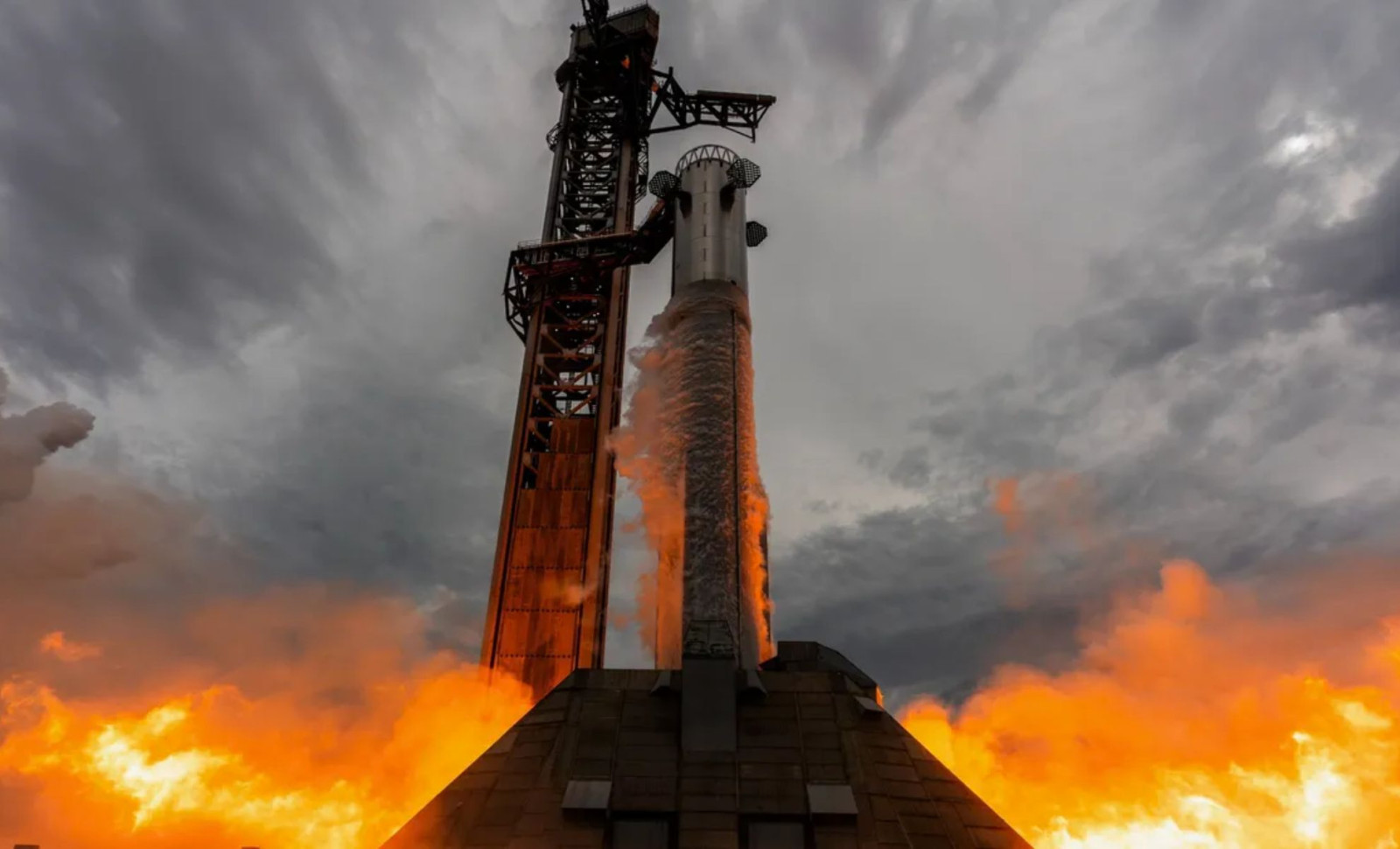
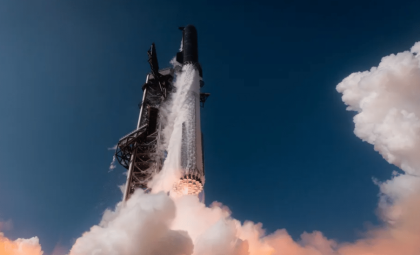
SpaceX has achieved a crucial milestone towards Starship Flight 13 by successfully firing all 33 Raptor engines on its enormous Super Heavy booster during a full-duration static fire test at its Starbase facility in Texas. This critical test marks a significant step forward for what is currently the world’s most powerful launch vehicle as it moves closer to its upcoming launch.
Comprehensive Engine Test Ensures Readiness for Launch
Firing all 33 engines at once is more than just impressive optics. As detailed by Space.com, this static fire test allows engineers at SpaceX to confirm that each Raptor engine activates correctly, achieves the required thrust, interacts properly with onboard systems, and operates within safe parameters while the booster remains secured to the launch mount. The combined thrust generates millions of pounds of force, which stresses the vehicle’s fuel lines, avionics, software, structure, and launch pad infrastructure.
Identifying any anomalies before liftoff significantly decreases the risk of failure during flight. Because of Starship’s ambitious design, real-world static fire data is invaluable and cannot be fully mimicked by simulations alone. This test also validates that the booster, ground facilities, and control systems operate cohesively as a unified launch vehicle instead of independent parts.

Significance of This Achievement for Starship’s Future
This engine test is a pivotal part of SpaceX’s broader vision for Starship, which aims to develop a fully reusable launch system capable of delivering payloads, crew, and cargo to destinations far beyond Earth’s orbit. Each successful static fire test advances the vehicle towards supporting NASA’s Artemis missions to the Moon, commercial space ventures, and the long-term goal of crewed Mars expeditions.
SpaceX’s approach emphasizes rapid prototyping, frequent testing, and incremental refinement. Instead of lengthy waits between launches, the company leverages regular flight data to swiftly identify and fix issues, allowing technological improvements to be incorporated with each new iteration. The successful ignition of all 33 engines marks an important milestone in refining the booster’s reliability and performance ahead of subsequent missions.
Next Phases Ahead of Starship Flight 13
While the engine test success is encouraging, further preparations are necessary before the next flight. Engineers will review extensive telemetry from the static fire to verify that every system functioned correctly. Additional vehicle assembly tasks, inspections, and regulatory approvals are still pending before launch authorization is granted.
Once confirmed that the booster meets all requirements, SpaceX will proceed with stacking the full Starship vehicle and conducting final pre-launch rehearsals. Each completed step enhances confidence not only in this particular booster but also in the Starship architecture’s potential to become a reliable and routinely used vehicle for deep space travel. With this milestone behind it, Flight 13 advances closer to becoming a reality, highlighting the program’s fast-paced development through ongoing testing and engineering improvements.
- Categories:
- Space




0 comments
Sign in to Comment