
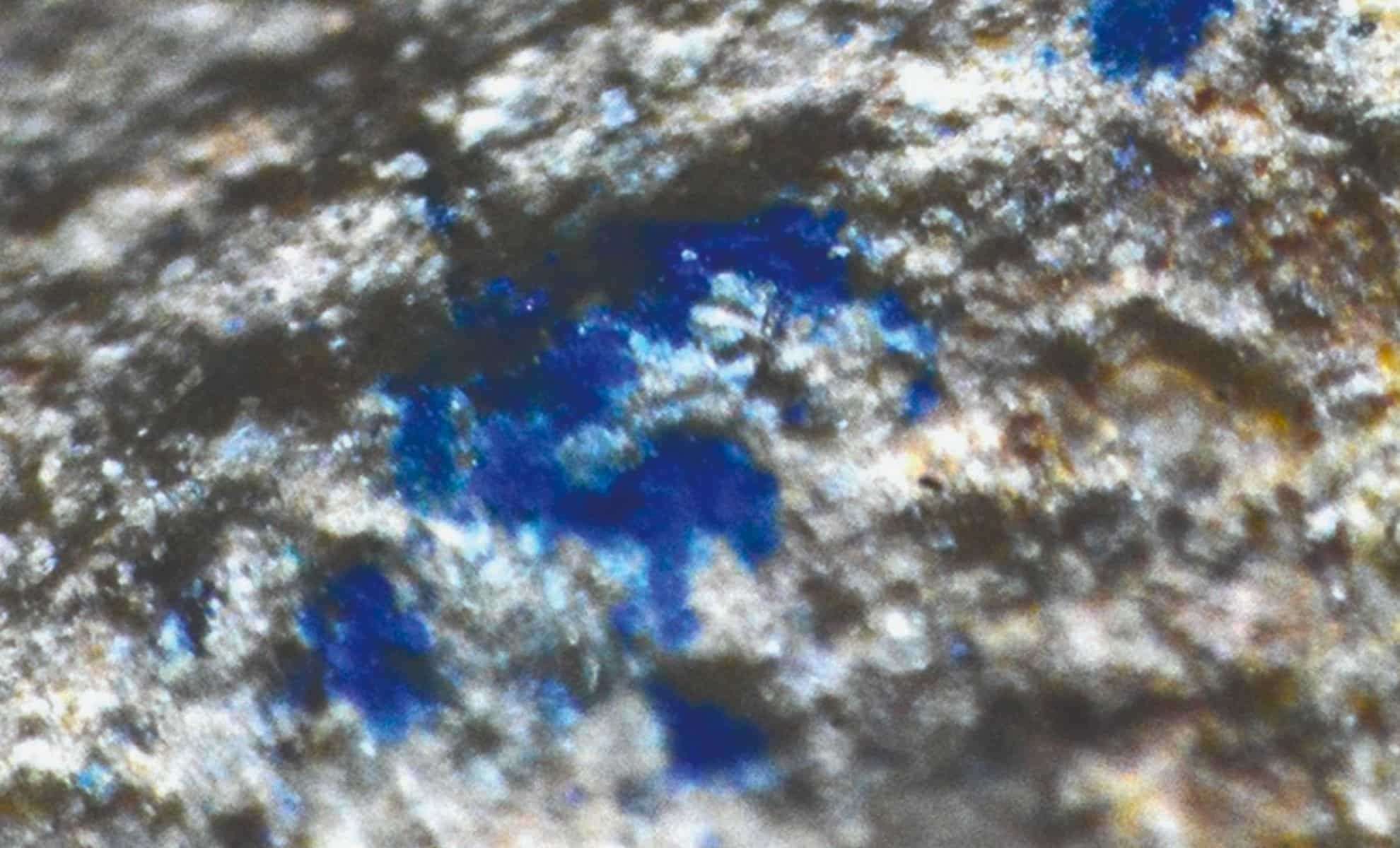
For many years, experts believed that Ice Age artists used only red and black pigments. However, a remarkable find stored in a German museum has now challenged this notion: Europe’s oldest blue pigment from azurite has been uncovered, extending the timeline of blue pigment usage in prehistoric Europe by more than 8,000 years.
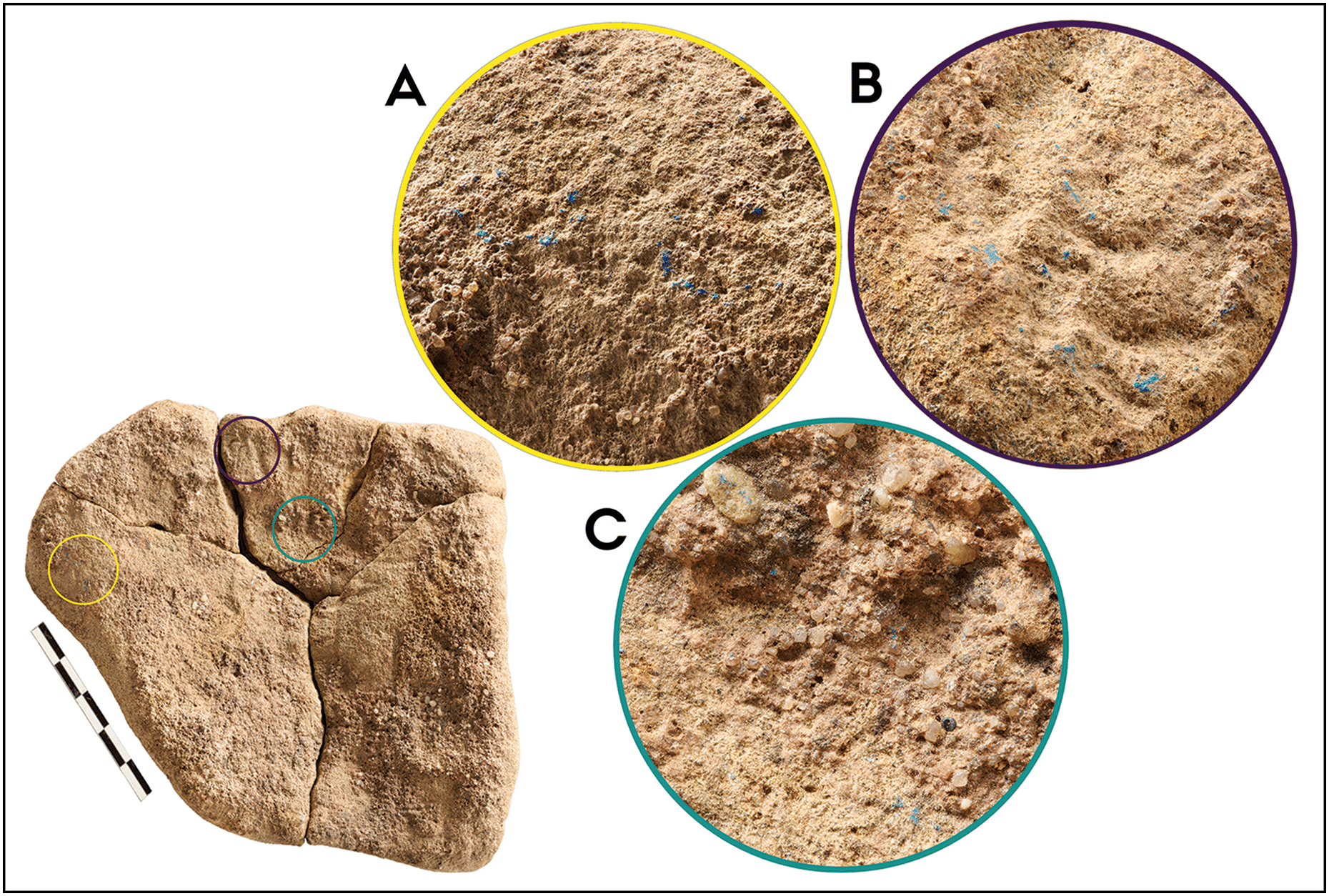
The minute remnants were detected on a seemingly ordinary stone tool from the Mühlheim-Dietesheim excavation site in Germany, once considered simply an oil lamp. Recent investigations showed that this artifact actually contains a copper mineral-based pigment previously unknown in Paleolithic Europe. Researchers from Aarhus University led the study, which was published on September 29 in the journal Antiquity.
Uncovering an Overlooked Artifact
The item had been excavated in the late 1970s and classified as a stone oil lamp. It was displayed in a local museum for decades without drawing much attention. Archaeologist Felix Riede of Aarhus University revisited the collection with fresh eyes, seeking traces of animal fats but instead observed a subtle blue tint on the stone's surface. The expertise of Dr. Izzy Wisher, a specialist in Paleolithic pigments, was enlisted to further investigate.

“At first we joked that it might be some modern kind of ink that got onto it,” Wisher said in an interview with National Geographic.
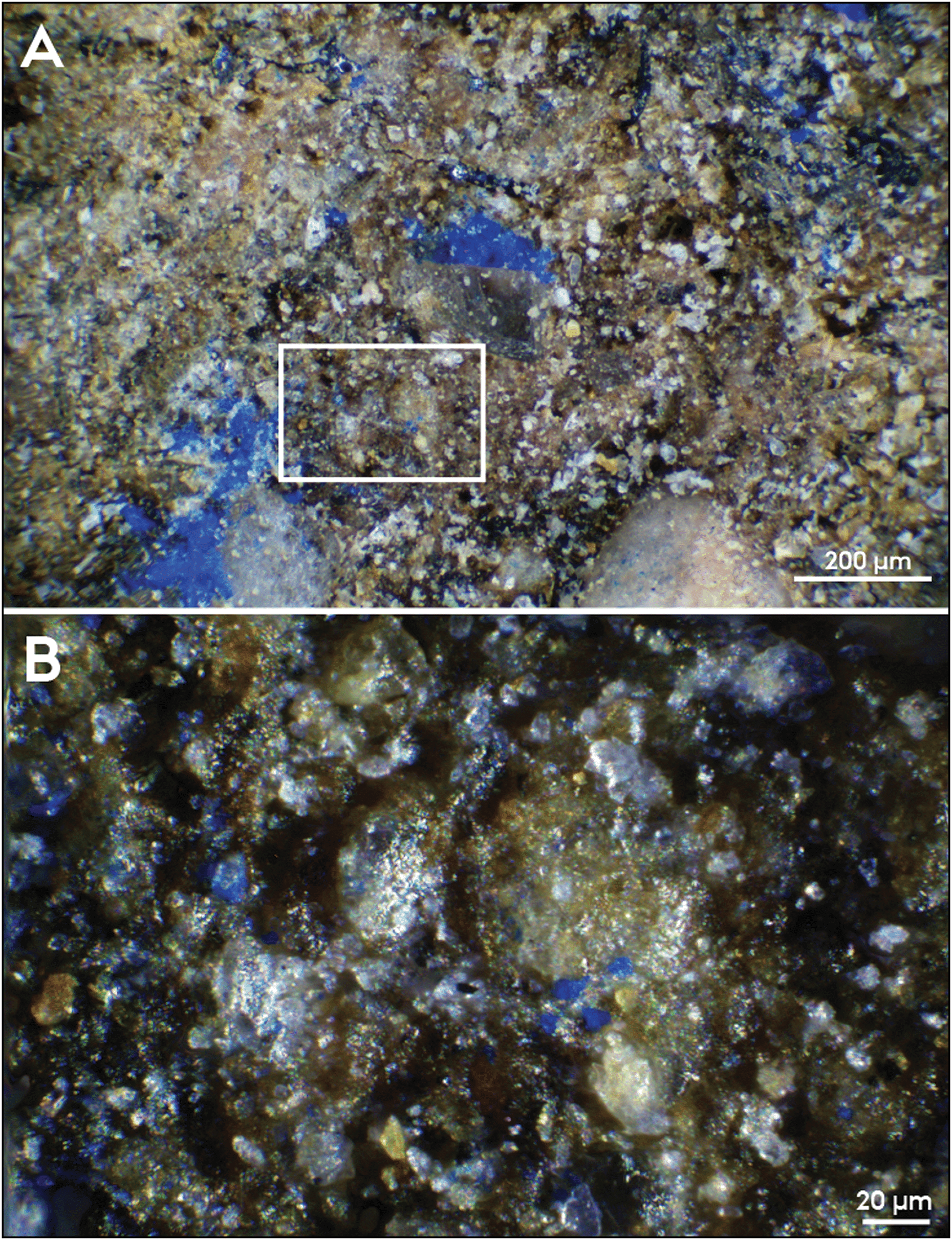
Subsequent geochemical testing identified the residue as azurite, a copper carbonate mineral known for its vibrant blue color. According to Phys.org, this represents the earliest confirmed use of azurite pigment in a Paleolithic European setting.
Using sophisticated techniques like PIXE (Proton Induced X-ray Emission), the team verified that the azurite was naturally sourced, probably from surrounding mineral deposits. This finding indicates that prehistoric people not only located these blue minerals but also deliberately processed them for decorative or symbolic applications.
Tracing the Pigment’s Origins
Previous assumptions attributed the absence of blue hues in Paleolithic art to the scarcity of such minerals. This discovery challenges that belief, suggesting a more sophisticated dynamic between early humans and their use of color. As reported by National Geographic, azurite-bearing rocks naturally occur near the Mühlheim-Dietesheim site. People in that era were already extracting ochre and flint from the area.
These facts imply that azurite was probably purposefully gathered rather than coincidentally discovered. According to Dr. Wisher’s team, the blue residue could come from uses rarely preserved in the archaeological record. The artifact once identified as a lamp might actually have functioned as a palette or pigment mixing implement.
The Role of Color in Ice Age Culture
Until now, there was no definitive evidence that blue played a part in the visual expressions of Paleolithic Europe. This finding hints that the color spectrum used by early humans was more diverse and nuanced than previously believed.
Elizabeth Velliky, an archaeologist from the University of Bergen not involved in the study, described the discovery as “just the beginning” of expanding our understanding of prehistoric color use. As human societies expanded and became more mobile after the Ice Age, it’s probable they sought new ways to express social identities.
“There’s probably more communication and they probably need more or would like more ways to express themselves,” she told National Geographic.
A lingering mystery is why azurite appears so rarely in the archaeological record if it was accessible and utilized. Researchers propose a simple explanation: blue pigments tend to degrade over time. When applied to organic materials like skin, fabric, or wood, they would have faded, unlike the enduring red and black pigments that remain visible on cave walls.
- Categories:
- News













0 comments
Sign in to Comment