

A team of researchers has transformed the ancient geomagnetic reversal known as the Laschamp event, which took place around 41,000 years ago, into an atmospheric sound experience. Utilizing measurements from ESA’s Swarm mission, they converted this powerful natural phenomenon into a haunting auditory journey that reveals the mysterious behavior of Earth’s magnetic field during that period.
Translating Earth’s Magnetic Turmoil into Sound
The conversion involved mapping magnetic field data and creatively interpreting it through sound design. By sonifying the intricate motion of magnetic field lines during the Laschamp event, scientists crafted a complex and immersive soundscape. This approach was intended to provide listeners with a visceral sense of how Earth's magnetic field experienced severe fluctuations during that time.
The researchers explained that hearing the magnetic data offers a striking representation of the dramatic disturbances that occurred during the reversal. This auditory method helps to communicate the magnitude and intricacy of the event, which significantly altered Earth's protective ability against cosmic radiation. The resulting soundscape translates this profound geological shift into an engaging and comprehensible form.

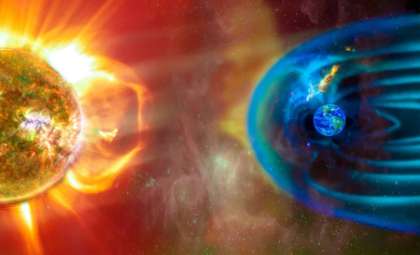
“The rumbling of Earth’s magnetic field is accompanied by a representation of a geomagnetic storm,” said Klaus Nielsen, a scientist involved in the project. He described the eerie audio as capturing the “otherworldly” essence of the magnetic field’s transformations during major shifts, drawing a comparison to modern geomagnetic storms caused by solar flares.
The Vital Role of Swarm in Studying Geomagnetic History
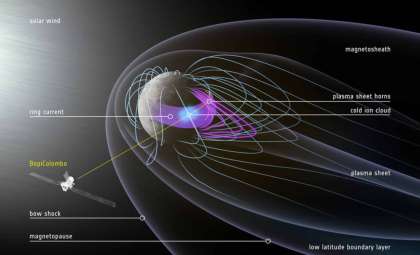
The Swarm satellites, launched by the European Space Agency (ESA), provide essential data that reveals the complexities of Earth’s magnetic field and its long-term behavior. Swarm measures magnetic signals stemming from several layers of Earth, including the core, mantle, crust, as well as the outer atmospheric layers like the ionosphere and magnetosphere. This comprehensive data collection is key to examining geomagnetic phenomena such as the Laschamp event and other historic magnetic reversals.
Continuous, accurate observations from the mission enable scientists to monitor how Earth’s magnetic field originates and changes over time. These insights are crucial not only for understanding past magnetic flips but also for anticipating possible future magnetic variations that could impact technology and ecosystems. One expert highlighted, “Swarm’s data is indispensable for both analyzing past geomagnetic transformations and forecasting upcoming changes.”
This latest sonification builds on a similar 2022 project, wherein Swarm data was used to create soundscapes of geomagnetic storms triggered by solar flares. That sound installation, presented through 32 speakers at Copenhagen’s Solbjerg Square, demonstrated the vulnerability and power of Earth’s magnetic environment. Together, these initiatives aim to make scientific concepts more approachable and enhance public appreciation of Earth’s magnetic defenses.
Understanding the Impact of Magnetic Reversals on Earth’s Environment
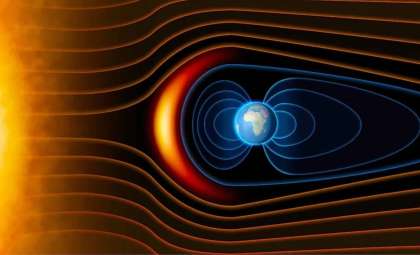
Magnetic pole flips like the Laschamp event are infrequent but impactful episodes in our planet’s timeline. Such reversals weaken the magnetic shield temporarily, exposing Earth to increased cosmic radiation. While humanity has not witnessed a full magnetic reversal firsthand, understanding these events aids in assessing how future flips might affect satellites, communication systems, and even biological health.
A weakened magnetic field during these periods can disrupt critical technologies like GPS and power grids by allowing higher radiation levels to reach Earth's atmosphere. Current observations show that Earth’s magnetic field strength is declining faster than predicted, raising concerns about a potential upcoming reversal.
Efforts like sonifying the Laschamp event emphasize the magnetic field’s crucial role in protecting our planet from extraterrestrial hazards. The ongoing Swarm mission continues to enrich our knowledge of Earth’s magnetic past and is instrumental in preparing society for any magnetic upheavals yet to come.






0 comments
Sign in to Comment