
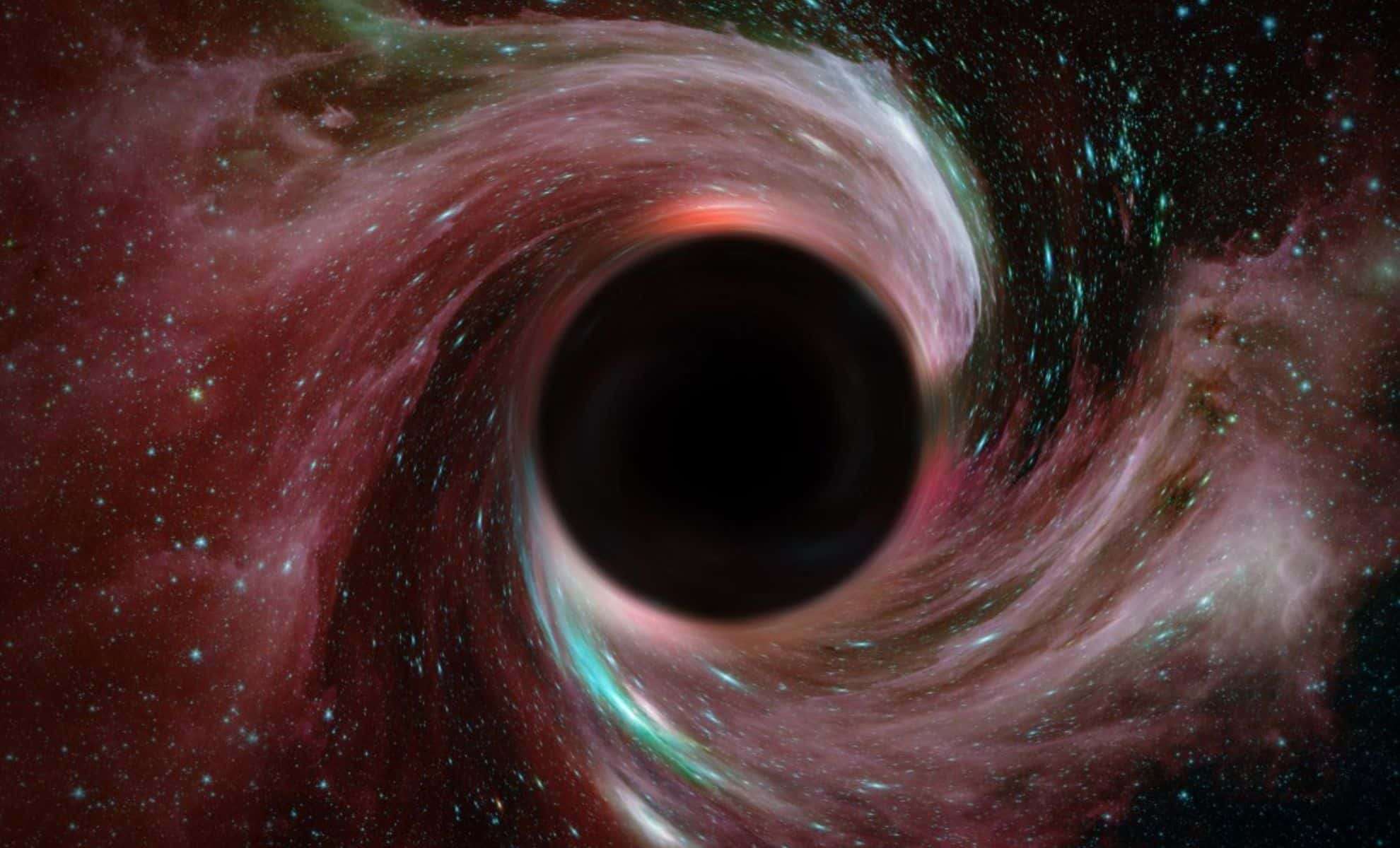
Black holes have remained one of space’s most baffling mysteries, challenging our grasp on physics and stretching the limits of our cosmic knowledge. In a pioneering effort, Enrico Rinaldi and his team at the University of Michigan harnessed quantum computing combined with machine learning techniques to explore the enigmatic interiors of black holes, shedding light on their fundamental workings.
Utilizing the holographic principle—which proposes a mathematical equivalence between gravity and quantum mechanics across different dimensions—Rinaldi’s group created advanced mathematical simulations mimicking black hole interiors. Their results, recently published in PRX Quantum, represent an important advance toward reconciling the often conflicting frameworks of quantum mechanics and general relativity.
This breakthrough not only deepens our understanding of black holes but also brings physicists closer to formulating a quantum theory of gravity, a critical step toward redefining our conception of space, time, and reality.

Employing Quantum Computing to Replicate Black Hole Interiors
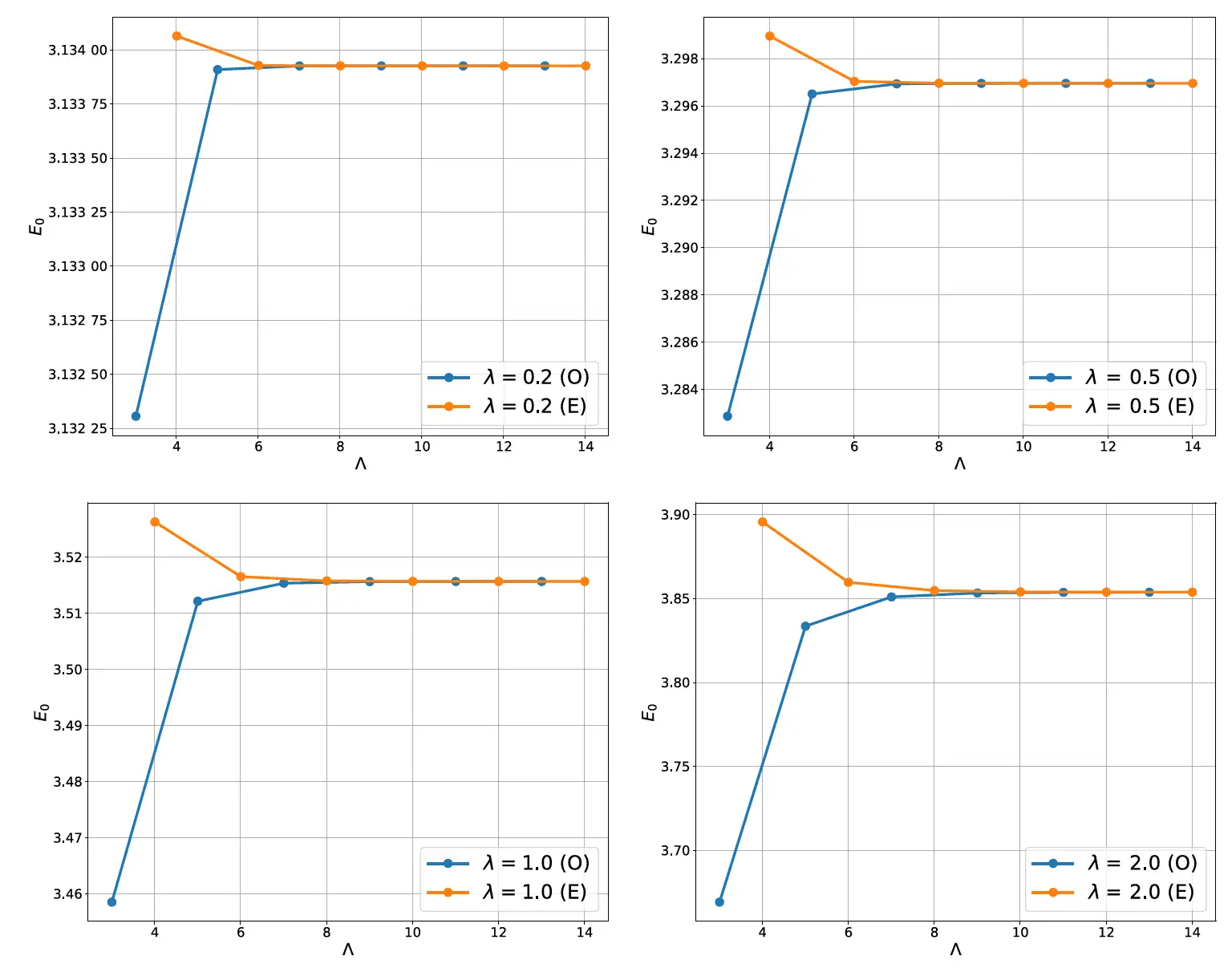
The research utilized quantum matrix models—mathematical frameworks designed to approximate the lowest energy states of quantum systems. These models offer valuable clues about how particles behave deep within black holes.
“Our goal is to decode gravitational phenomena by studying this particle theory numerically,” Rinaldi shared. Since these calculations are incredibly complicated to solve by hand, the team relied on quantum circuits enhanced with deep learning algorithms for the task.
Within these circuits, qubits—quantum analogues of classical bits—are connected by gates which dictate how quantum information propagates, allowing the simulation to dynamically adjust over time.
Rinaldi compares this to music composition:
“You can think of it as reading music from left to right,” he said. “Each step transforms qubits in a unique way, but it’s unclear which operations, or ‘notes,’ should be played at each point.”
By fine-tuning these quantum operations, the researchers successfully captured the ground state of black hole matrix models, unlocking new perspectives on their intrinsic nature.
The Holographic Principle Linking Black Holes to Cosmic Reality
A fascinating element of this work is its foundation in the holographic principle, a theory suggesting that our three-dimensional universe may be encoded as quantum data on a lower-dimensional boundary.
This concept implies:
- Gravity manifests in three-dimensional curved spacetime shaped by mass and energy.
- Quantum particle interactions occur on two-dimensional surfaces with flat geometry.
- Both descriptions are mathematically analogous, so understanding one can illuminate the other.
The implication for black holes is profound: instead of losing information forever within the singularity, that information might be preserved on the black hole’s event horizon, where it can be mathematically retrieved.
Highlights from the Black Hole Simulations
Inside the Black Hole: Unveiling Its True Composition
Contrary to popular depictions of black holes as inescapable voids with infinite gravitational pull, this research paints a more intricate reality.
Fundamental components of black holes include:
- Singularity – The infinitely dense core with maximal gravity.
- Event Horizon – Boundary beyond which escape is impossible.
- Photon Sphere – Region where light temporarily orbits.
- Accretion Disk – Bright whirlpool of matter spiraling inward.
- Jets and Magnetic Fields – Intense plasma streams expelled from poles.
The interior singularity remains mysterious, but this study proposes the black hole’s core may be a structured quantum state, governed by emerging quantum laws yet to be fully understood.
Advancing Toward a Unified Quantum Gravity Theory
A major challenge in physics is bridging general relativity and quantum mechanics.
- General relativity precisely models gravity and spacetime curvature on large scales.
- Quantum mechanics governs the microscopic realm but lacks a complete description of gravity.
This study’s demonstration that quantum systems can mimic gravity-related phenomena marks a key move toward a coherent theory unifying these foundational principles. Such a theory could elucidate black hole interiors and reveal the fundamental properties of spacetime.
Rinaldi remarked:
“These matrices represent one way to characterize a unique kind of black hole. By understanding their configuration and properties, we can discern the interior structure of black holes.”
This discovery opens new research avenues for exploring quantum gravity with implications reaching well beyond black holes to the fabric of the universe.
Future Directions: Expanding the Scope of Research
Though a major advance, this work raises further questions. Future objectives include:
- Scaling quantum models to investigate larger, more complex black hole forms.
- Utilizing next-generation quantum computers with enhanced qubit counts for improved accuracy.
- Exploring if similar quantum modeling techniques can describe other cosmic phenomena, such as neutron stars or wormholes.
By integrating quantum mechanics and gravity, this trailblazing research propels science closer to decoding the universe’s most extreme phenomena.







0 comments
Sign in to Comment