
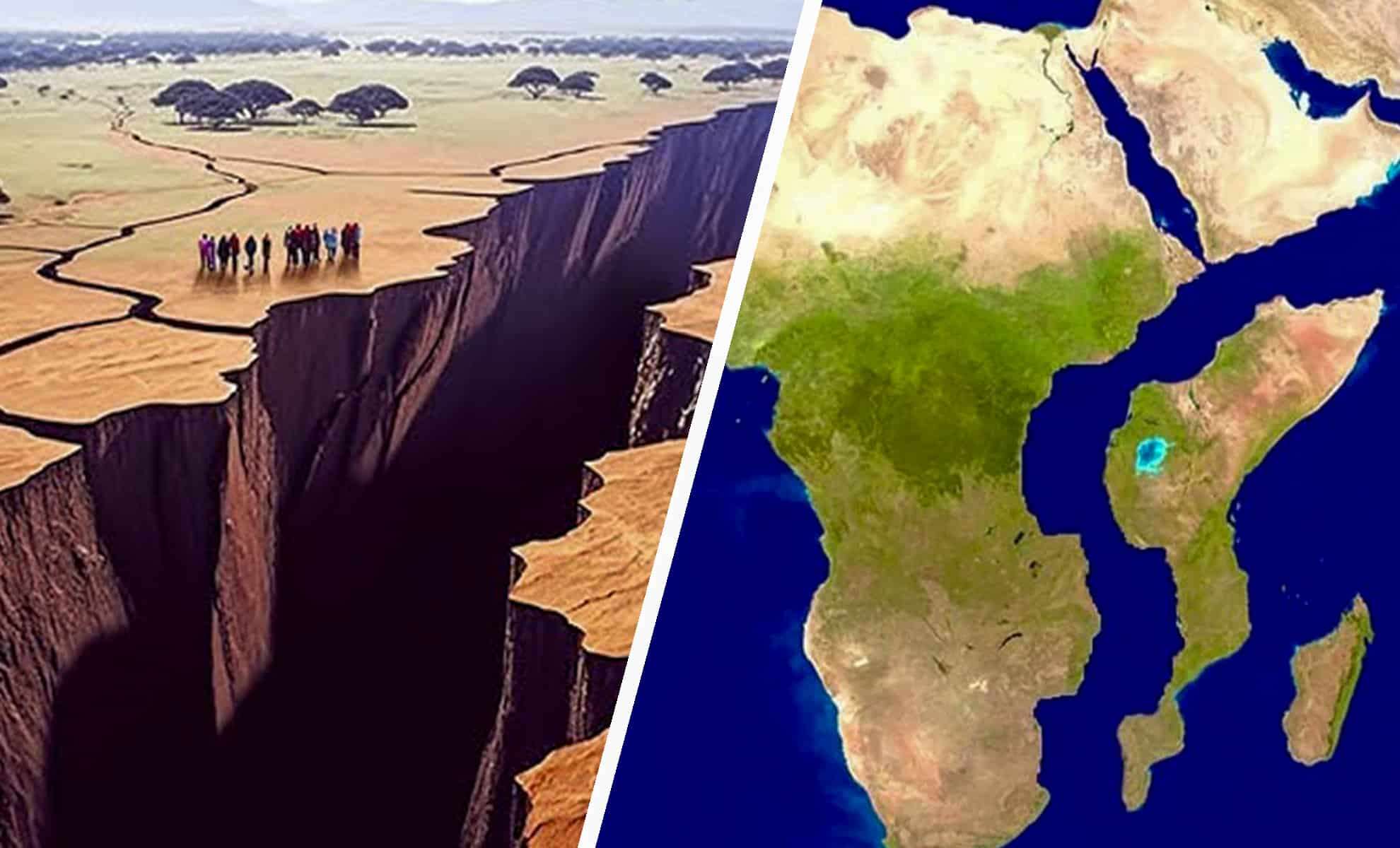
A fascinating geological transformation is taking place as scientists track the gradual birth of Earth’s sixth ocean. This development results from the slow divergence of tectonic plates, modifying the shape of the African landmass. Should this separation persist, it holds the potential to redefine global geography and alter the economic prospects of nations in the region.
How Tectonic Plates Are Pulling Apart
This new ocean is forming due to the shifting dynamics among three significant tectonic plates: the African plate, the Arabian plate, and the Somali plate. For millions of years, the Arabian plate has been gradually moving away from Africa, while the Somali plate is also drifting in the opposite direction, causing a growing rift within the East African Rift Valley. This ongoing divergence is setting the stage for a new ocean to emerge between these landmasses.
- Plate Movements:
- African plate: Slowly separating from both the Arabian and Somali plates.
- Arabian plate: Gradually shifting away from the African continent.
- Somali plate: Moving outward from Africa, helping to form the rift.
Where the Sixth Ocean Will Arise
This emerging sixth ocean is predicted to fill the East African Rift, a geological zone spanning Ethiopia, Kenya, and Tanzania. The rift extends from the Red Sea through the Gulf of Aden, where sea waters are expected to gradually inundate the valley. Over millions of years, this will create a new oceanic basin dividing the continent.

If this tectonic activity continues uninterrupted, it could bring about significant geographical changes. Countries currently without access to the sea, such as Zambia and Uganda, could gain new coastlines, dramatically transforming their trade and development opportunities. The future ocean would transform the Rift Valley into a vast seacoast, reshaping regional and global geography.
The key anticipated transformations include:

Cutting-Edge Tools Reveal Slow Movements
Despite the extremely gradual pace of tectonic shifts, modern technology, especially GPS, has enabled scientists to observe these subtle motions with remarkable accuracy.
Marine geophysicist Ken Macdonald from the University of California points out that GPS measurements can detect plate motions within a margin of a few millimeters annually. This precise data helps researchers monitor how the African Rift is evolving and forecast the eventual emergence of a new oceanic body.
- Technological advancements:
- GPS technology provides detailed monitoring of tectonic movement.
- Ongoing data collection delivers clear insights into geological changes.
Implications for Earth’s Future Landscape
Although imperceptible in the short term, this geological process carries significant long-term consequences. Macdonald explains that waters from the Gulf of Aden and the Red Sea are anticipated to inundate the Afar region and East Africa, creating this future ocean. Such a major transformation could impact global climate systems by modifying ocean currents and weather dynamics.
This event underscores Earth’s ongoing geological evolution. While the tectonic rifting will span millions of years, the eventual formation of the sixth ocean promises to be a landmark in our planet's development. Continuing research will enrich understanding of tectonic processes and Earth’s geological narrative.
- Categories:
- News












0 comments
Sign in to Comment