

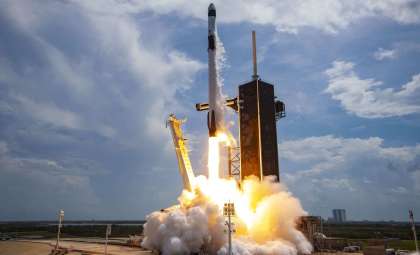
NASA is preparing to launch its Europa Clipper spacecraft on October 10, 2024, from the Kennedy Space Center using a SpaceX Falcon Heavy rocket. This ambitious mission targets Europa, one of Jupiter’s frozen moons thought to hide a vast ocean beneath its icy crust, a prime environment for potential habitability. The spacecraft, the largest built for planetary exploration by NASA, will cover approximately 1.8 billion miles and is expected to reach Jupiter by April 2030. Outfitted with nine scientific instruments, Europa Clipper will carry out comprehensive studies of Europa’s ice layer, ocean, and atmosphere to evaluate its capacity to support life.
Unraveling Europa’s Habitability Potential
The key mission of Europa Clipper is to explore Europa as a candidate for extraterrestrial life within our solar system. Beneath the moon’s icy surface lies a massive subsurface ocean, believed to hold more water than all of Earth's oceans combined. Europa Clipper will examine this ocean’s composition and depth to determine whether it provides the chemical and physical conditions necessary for life. Utilizing sophisticated tools like ice-penetrating radar, the probe will measure the thickness of the ice shell and investigate the exchange of materials between the ocean and the surface.
Beyond the ocean, Europa Clipper will study Europa’s terrain for signs of active geology such as ice shifts or cryovolcanic activity—where water or ice bursts through the surface instead of molten rock. These phenomena might facilitate chemical exchanges between Europa’s surface and ocean, creating a dynamic setting possibly conducive to life. The spacecraft is planned to perform 49 flybys of Europa, gathering high-resolution data from various regions to build an extensive understanding of the moon’s environment.

Journey and Technical Specifications
The Europa Clipper spacecraft is NASA’s biggest planetary probe, stretching nearly 30 meters (98 feet) mainly due to its extensive solar arrays which will power its instruments far from the Sun. Differing from previous deep space explorers that used nuclear power, Europa Clipper will depend on solar energy, with twin panels that deploy post-launch to capture sufficient light even at Jupiter’s distance.
The spacecraft’s voyage to Jupiter will last roughly six years and include gravity assists from Mars in 2025 and Earth in 2026 to build momentum efficiently. Arriving by April 2030, Europa Clipper will perform a final gravity assist maneuver with Ganymede to reduce speed before beginning its mission. Instead of orbiting Europa itself, the craft will orbit Jupiter and conduct multiple close flybys, minimizing exposure to Jupiter’s intense radiation belts while collecting detailed observations.
Science Tools and Mission Aims
Equipped with nine advanced instruments, Europa Clipper will deliver detailed information about Europa’s ice, ocean, atmosphere, and geology. Notably, the Radar for Europa Assessment and Sounding: Ocean to Near-surface (REASON) radar will scan the ice shell to identify its thickness and detect any connectivity to the underlying ocean, which is vital for assessing life-supporting environments.
The Europa Imaging System (EIS) will capture high-definition images to map geological features and identify prospective landing sites for future exploration. The Europa Thermal Emission Imaging System (E-THEMIS) will chart temperature variations across the moon’s surface, pinpointing areas warmer than their surroundings where liquid water might exist.
Additionally, a mass spectrometer will analyze Europa’s tenuous atmosphere and possible water vapor plumes previously spotted by Hubble Space Telescope. Discovering these plumes could help scientists directly examine the ocean’s chemical makeup, enhancing the search for potential biological signatures.
Launch Vehicle and Mission Schedule
The mission's departure will utilize the powerful SpaceX Falcon Heavy, selected after delays in NASA’s own Space Launch System (SLS) development. For this mission, Falcon Heavy is configured as an expendable rocket without reusable components to maximize payload delivery to the outer solar system.
The launch window, originally closing on October 30, has been extended through November 6 to allow for possible weather or technical setbacks, especially given the hurricane season in the Atlantic. Following launch, Europa Clipper will use planetary gravity assists to efficiently navigate the vast distance to Jupiter.
International Cooperation and Future Prospects
Europa Clipper is set to join forces with the European Space Agency’s (ESA) Jupiter Icy Moons Explorer (JUICE), arriving at Jupiter in July 2031. JUICE will focus on Ganymede, Callisto, and Europa, providing complementary insights into their ice-covered surfaces and potential for life. The overlap of these missions enables collaborative data sharing that will advance understanding of Jupiter’s satellites.
While Europa Clipper is not designed to confirm life’s presence, its research will lay the groundwork for future missions, potentially including landers to directly sample Europa’s surface or subsurface ocean, deepening humanity’s search for life beyond Earth.
- Categories:
- Astronomy ,
- News ,
- Science ,
- Nasa





0 comments
Sign in to Comment