

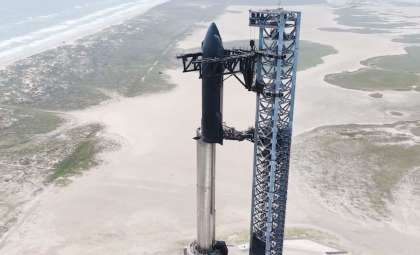
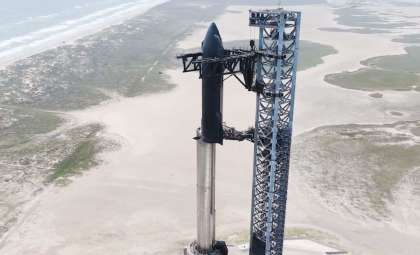
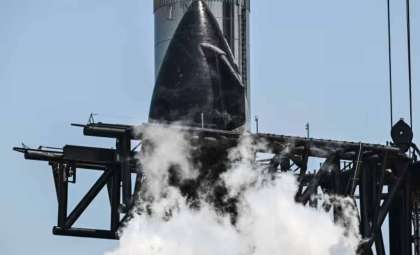
SpaceX's Starship, the most massive and powerful spacecraft constructed, reached a major milestone by completing its fourth test flight, culminating in its inaugural splashdown in the Indian Ocean.
Under the leadership of Elon Musk, this breakthrough marks a pivotal advance for the ambitious spacecraft following earlier failed launches. This success highlights SpaceX’s dedication to creating a dependable vehicle capable of ferrying astronauts to the Moon, Mars, and beyond.
Progress After Earlier Setbacks
The Starship program has navigated through multiple challenges since its beginning. The initial three flight tests ended in catastrophic explosions.

The first flight in April 2023 lasted only four minutes due to several engine malfunctions detected by telemetry, causing the automatic flight termination system to activate.
Subsequent launches in November 2023 and March 2024 showed notable improvements, including longer flight durations, successful stage separations, and brief orbital reach. Although these still concluded in failures, the data collected was invaluable for refining Starship’s engineering and operational protocols.
Breakthrough During Fourth Flight
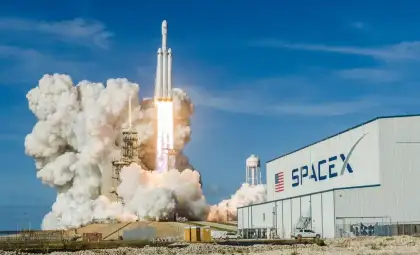
On June 6, 2024, the fourth test flight represented a turning point. Starship launched from SpaceX’s Starbase in Boca Chica, Texas, at 8:50 a.m. Eastern Time. During liftoff, 32 of the 33 Super Heavy booster engines ignited successfully. Seven minutes after launch, the booster separated as planned and safely splashed down in the Gulf of Mexico.
The upper stage then proceeded to orbit with all six engines performing as designed. A critical goal of this flight was assessing the effectiveness of the thermal protection on the steering flaps during re-entry. Elon Musk emphasized the importance of this, stating, “One of the key questions is—does that seal work? We think it will work, but it may not work.”
Testing Thermal Shields on Re-Entry
The thermal shield system endured intense heating upon re-entering Earth’s atmosphere. Debris from one heat shield even struck a live camera mounted outside the spacecraft. Despite these challenges, the Starship re-entered successfully, validating the durability of its heat protection.
About one hour and six minutes after launch, the spacecraft executed its first landing burn and splashed down in the Indian Ocean.
The SpaceX team celebrated enthusiastically, recognizing this as a landmark achievement in Starship’s evolution.
Significance for NASA and Upcoming Missions
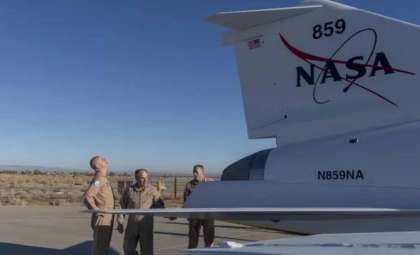
This success is encouraging news for NASA, which awarded SpaceX a $2.9 billion contract in 2021 to develop the first commercial crew landing vehicle for the Artemis III lunar mission planned for 2026.
Completing a full test flight with controlled splashdown is a crucial milestone validating Starship's readiness for crewed space travel. The company’s practice of learning from each experiment exemplifies a methodical engineering approach driving continued progress.
Moving forward, SpaceX will leverage insights from this flight to enhance the thermal protection system and other vital components, ensuring the spacecraft’s safety and dependability.
Future tests will focus on verifying these improvements and further proving Starship's capabilities. With NASA’s Artemis missions and Mars exploration ambitions on the horizon, Starship’s development is key to ushering in a new chapter of human space exploration. As SpaceX pushes aerospace innovation, every successful test brings humanity closer to reaching these distant destinations.
- Categories:
- Astronomy ,
- News ,
- Space ,
- Aircraft








0 comments
Sign in to Comment