

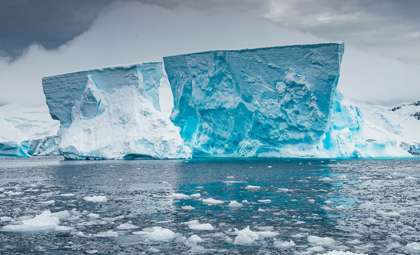
The colossal iceberg A23a, the largest and oldest known, is confounding scientists by holding its ground and rotating slowly rather than melting away as predicted.
Weighing in at a trillion tons and covering around 1,500 square miles, this iceberg has captured the attention and curiosity of researchers worldwide.
Tracing the Path of Iceberg A23a
A23a, which previously housed a Soviet research camp, calved from the Antarctic coastline back in 1986. For over 30 years, it remained stuck on the ocean floor, seemingly immobile. Yet in 2020, it refloated and started drifting toward warmer seas.

Scientists initially expected A23a to move through the South Atlantic Ocean and gradually break apart from exposure to higher temperatures. Pushed by powerful winds and currents, by April, the iceberg had entered a strong ocean current thought to carry it into the South Atlantic.
Observing such a massive iceberg in transit was a rare thrill for researchers. Contrary to expectations, A23a has ceased its migration and is now slowly rotating just north of the South Orkney Islands, a remote region within the British Antarctic Territory. This surprising motion has left scientists intrigued, underscoring the complexities of iceberg dynamics and ocean circulation.

Trapped by an Oceanic Whirlpool
The unexpected stopping point of A23a is linked to a vortex generated by the Pirie Bank, an underwater rise on the seabed. When ocean currents encounter this obstruction, the flow splits, creating a rotating water mass. This vortex has effectively captured the iceberg, causing it to spin slowly on the spot. “The ocean’s dynamics never fail to amaze, and this swirling trap is one of the most remarkable phenomena we’ve observed,” stated Professor Mike Meredith of the British Antarctic Survey.

Encounters of enormous icebergs ensnared within ocean vortices are exceptionally uncommon, presenting a rare chance for in-depth research into iceberg-ocean interactions.
This iceberg's nearly static position, combined with its gentle rotation, has enabled scientists to accumulate valuable data, enhancing their understanding of the subtle forces shaping iceberg behavior. The case exemplifies how even massive natural structures are susceptible to minor seabed features and current patterns.
Environmental and Climatic Significance
The enduring presence of A23a showcases the ocean’s dynamic and sometimes puzzling character. “Icebergs are typically fleeting, breaking up and melting away — but this one is different,” explained polar researcher Professor Mark Brandon.
The iceberg’s resilience despite warmer waters is crucial for grasping global climate effects and sea level concerns. It highlights the challenges scientists face when predicting iceberg disintegration and their broader climate impacts.
Ongoing Antarctic Ice Decline
While A23a remains stable, the Antarctic region is witnessing major ice declines. Last year saw the Antarctic winter sea ice reach record lows, shrinking by over two million square kilometers. The British Antarctic Survey asserts this significant dwindling is "extremely unlikely to occur without climate change influence."
Such persistent ice reductions dramatically affect Southern Ocean ecosystems and weather patterns, threatening species like penguins and whales reliant on ice habitats and resources.
The loss of sea ice also contributes to rising sea levels globally, posing risks to coastal populations. The Antarctic's melting is a stark indicator of wider climate issues, making studies of icebergs such as A23a vital for understanding these developments.
Scientific Insights and Research
Researchers closely observe A23a and its environmental effects. Its ability to resist melting while nearing warmer seas highlights its enormous mass and the unique marine conditions encountered. Scientists leverage this moment to examine iceberg currents and seabed interactions.
Gaining insight into how A23a behaves with ocean flows and underwater terrain will refine predictive models for iceberg travel and longevity. This knowledge is critical for projecting how icebergs affect sea level rise and marine habitats.
Future Prospects
Based on current conditions, A23a might linger in place for years, continuing its slow rotation. This prolonged stability offers a rare window for extended study, deepening our understanding of iceberg mechanics and climate change effects. The ongoing presence within the vortex facilitates continuous observation of the physical processes driving iceberg drift and decay.
Scientists remain particularly keen to discover if interaction with ocean currents and seabed features will eventually free the iceberg to resume its journey or keep it confined indefinitely. These questions fuel ongoing investigations and explorations.
- Categories:
- News ,
- Science ,
- Climate change














0 comments
Sign in to Comment