
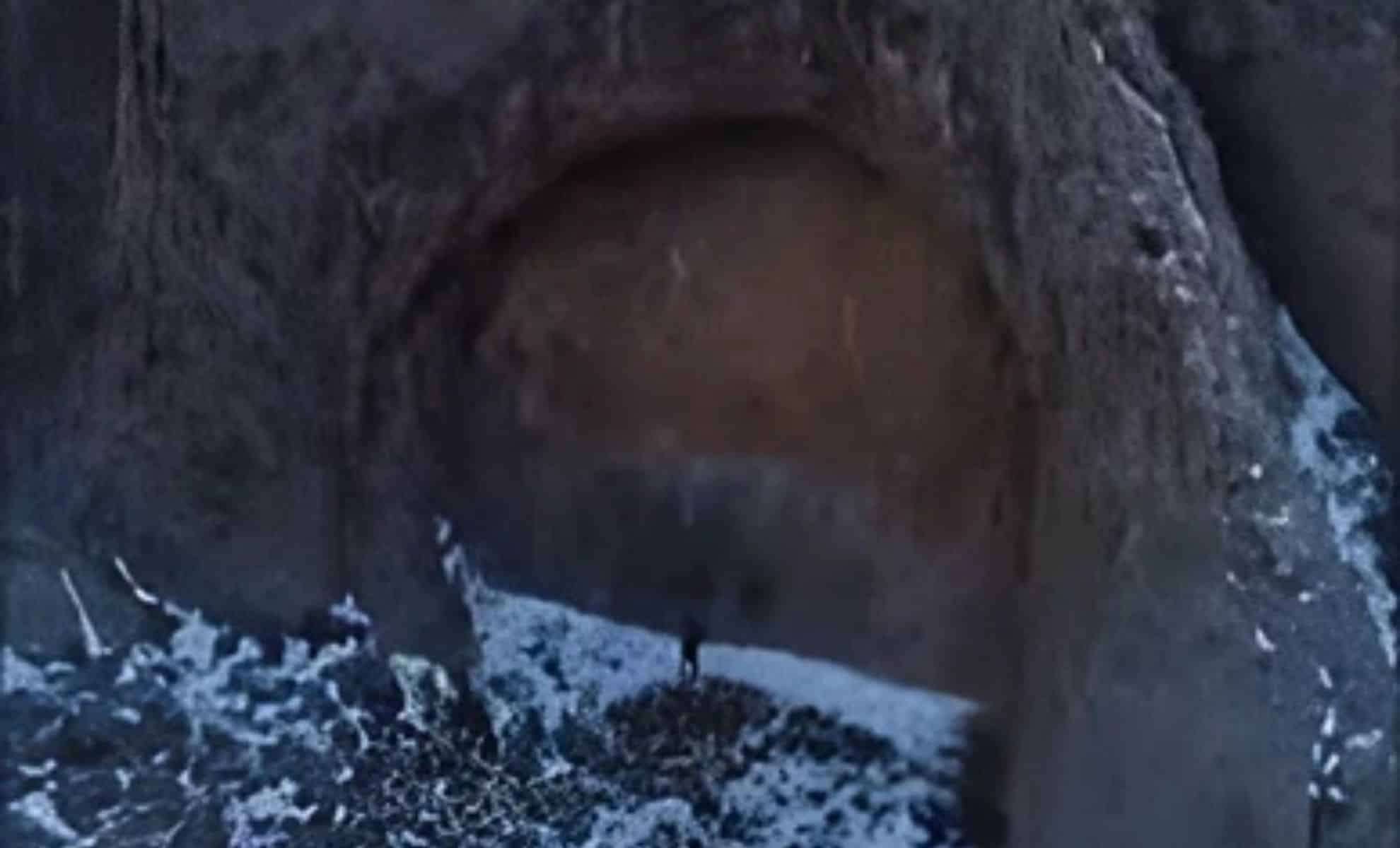
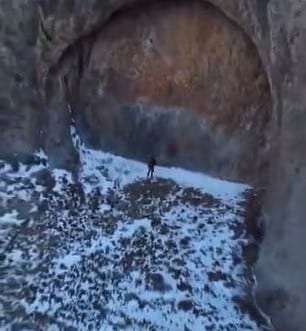
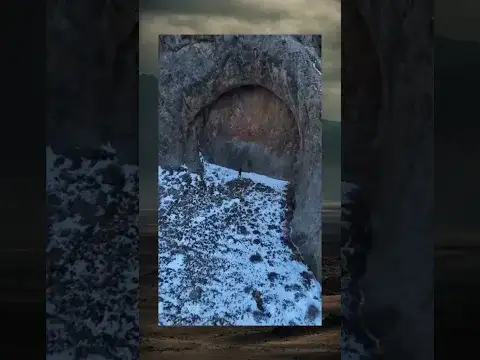
Hidden within Kazakhstan’s secluded Dzungarian Alatau mountain range lies an extraordinary stone structure that has recently captivated online audiences. Towering approximately 40 feet in height and width, this formation strikingly resembles a colossal doorway etched into the cliff face.
The viral footage, originally shared on Reddit and later spotlighted by the Daily Mail, documents two adventurers exploring near the Kazakhstan-China border. Captured via drone at about 6,500 feet above sea level in the breezy expanse called the Dzungarian Gate, the gigantic, door-shaped outline emerges as the camera pans away — its perfect symmetry and sheer size striking viewers as almost too methodical to be natural.
Is It Natural or Crafted by Humans?
Onlookers quickly pointed out the formation’s sharply defined semi-circular shape rising from the rock face, noting the unlikely precision akin to manmade design. Some likened it to iconic scenes from video games, with one comparing it to the starting point of the original Tomb Raider game, while others referenced the Doors of Durin from The Lord of the Rings.

Speculation about extraterrestrial origins also emerged. A commenter humorously remarked, “Knock knock! Who’s there!? Aliens. That’s aliens,” while others theorized it might conceal a cloaked spaceship or act as an interdimensional gateway. The clean, monumental contours certainly fuel such imaginative possibilities.
However, more skeptical viewers observed the terrain’s natural contours, noting that the ridge behind the formation slopes downward, suggesting the feature might be shallow — resembling more of a surface pattern than an actual hollow portal.
Scientific Explanation Points to Natural Origins
Not all experts buy into the mystery. Mark Allen, a Durham University geology professor, proposes the structure is an instance of pareidolia, a phenomenon where the human mind interprets random shapes as recognizable forms — like faces in clouds or patterns in rocks.
He explains that varying erosion rates in different rock layers can sculpt sharp edges and unusual symmetry over time. Having explored the adjacent Chinese side nearly 40 years ago, Allen mentioned that nothing particularly extraordinary stood out during his visit.
The Intersection of Myth and History
The location’s historical importance deepens the intrigue. The Dzungarian Gate has served as a strategic passage bridging East and West for centuries, frequently traveled by armies, merchants, and nomads alike. Also called the Altai Gap, this corridor holds immense cultural and geographical significance.
Ancient lore surrounds the region, with some connecting it to the legend of Hyperborea, a mythical northern utopia inhabited by a long-lived people in isolation. Discovering a 40-foot tall stone gateway here adds a fascinating layer to these stories.
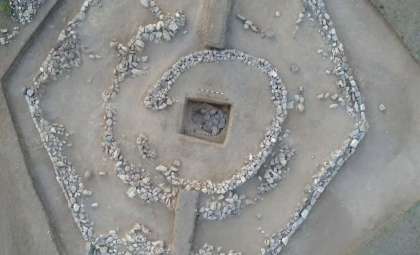
The area is also rich in archaeological finds, featuring petroglyphs, ancient fortifications, and prehistoric burial grounds—traces that reveal sustained human activity long before modern borders. Within such a context, any unusual formation is bound to be viewed with curiosity.
Could It Be Part of a Worldwide Phenomenon?
Viewed in a global context, the Kazakh “doorway” aligns with a series of enigmatic stone structures around the planet that exhibit suspiciously geometric forms. Among the most famous is Aramu Muru in Peru, nicknamed the Gate of the Gods, featuring a carved rectangular niche believed by some to be linked to ancient rituals and teleportation theories.
Another example is Ñaupa Waka, located in Peru’s Sacred Valley, which includes a polished altar and doorway-like cutout with remarkable precision. While often attributed to the Inca civilization, several researchers argue it predates Inca times by centuries or millennia, based on its mysterious craftsmanship and unclear technology. These sites share a common theme: geometric intrigue paired with uncertain origins.
- Categories:
- News








0 comments
Sign in to Comment