
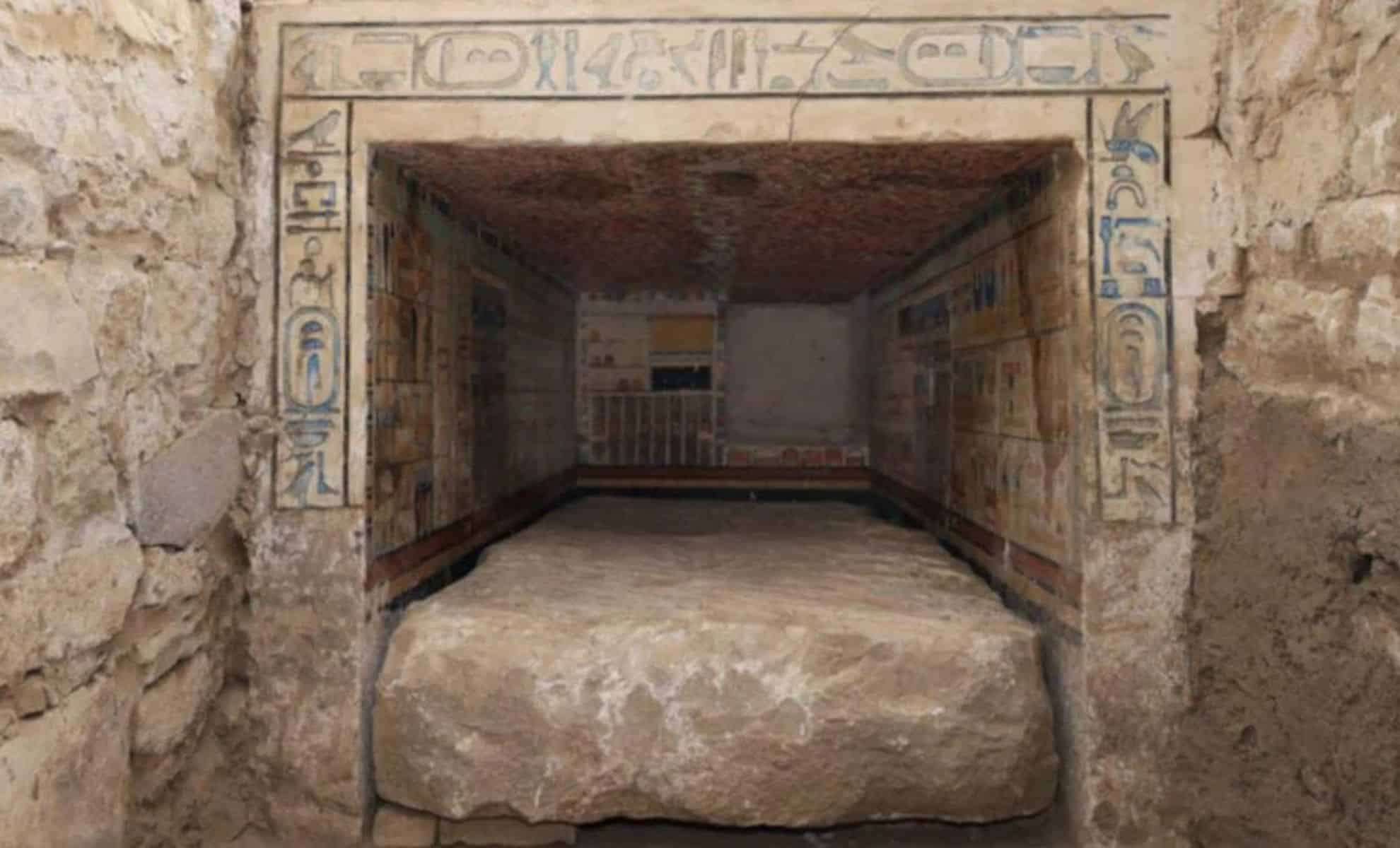
Archaeologists have unveiled a fascinating find that continues to mystify both the scientific community and history buffs. Inside an ancient Egyptian tomb, estimated to be over 4,000 years old, researchers discovered a striking 14-foot stone door that leads to no physical room or pathway.
This extraordinary element, embedded within the tomb’s walls, has sparked discussions about its possible symbolic meaning in the burial traditions of ancient Egypt.
A Massive Door With No Purpose?
Reported by Popular Mechanics, the tomb—part of a larger excavation focusing on Egypt’s early Bronze Age period—contains a distinctive architectural curiosity: a hefty stone door that does not open to any chamber or corridor.
Specialists believe this door was deliberately designed without any functional intent. Crafted entirely from stone, it forms part of the tomb’s construction but lacks any practical role in allowing entry or exit.
Instead, it is likely that this door served as a symbolic gateway, possibly representing a passage to the afterlife, consistent with the spiritual beliefs held by many ancient societies regarding the soul’s journey after death.

Exploring the Symbolism Behind the False Door
This unusual door adds new depth to our understanding of Egyptian funerary customs.
In ancient Egyptian thought, doorways often embodied portals between the living world and the afterlife. Such features were designed to assist the deceased’s soul in moving between these realms.
Given the lack of an actual opening behind this stone door, it seems clear that its role was purely symbolic.
Researchers propose this “door to nowhere” was crafted to guide or facilitate the deceased’s passage to the world beyond.
This aligns with common practices in ancient burials, where objects and architectural elements were used to secure a successful transition to the afterlife.
Insights Into Ancient Egyptian Spirituality
This rare architectural feature illuminates the intricate religious and cultural rituals of ancient Egypt.
Tomb construction was a meticulous, sacred process where every structural detail held deep significance.
The presence of this symbolic door highlights the importance that Egyptians placed on the afterlife journey.
Though the tomb occupant’s identity remains unknown, the complexity of the tomb and its signature feature indicate a person of considerable stature.
It is likely the door served as a spiritual safeguard for a notable individual, believed to require special assistance in moving on to eternity.
This discovery paves the way for further investigation into the symbolic and ritualistic traditions of ancient Egyptian burial sites.
Additional Context on the Tomb Excavation
The discovery emerges from an active archaeological project in Egypt, shedding light on cultural and architectural advancements from the Bronze Age.
The tomb’s design reflects a sophisticated understanding of symbolism and construction.
While many aspects of the rituals related to the false door remain unknown, ongoing research seeks to unravel more of its mysteries.
- Categories:
- News









0 comments
Sign in to Comment