
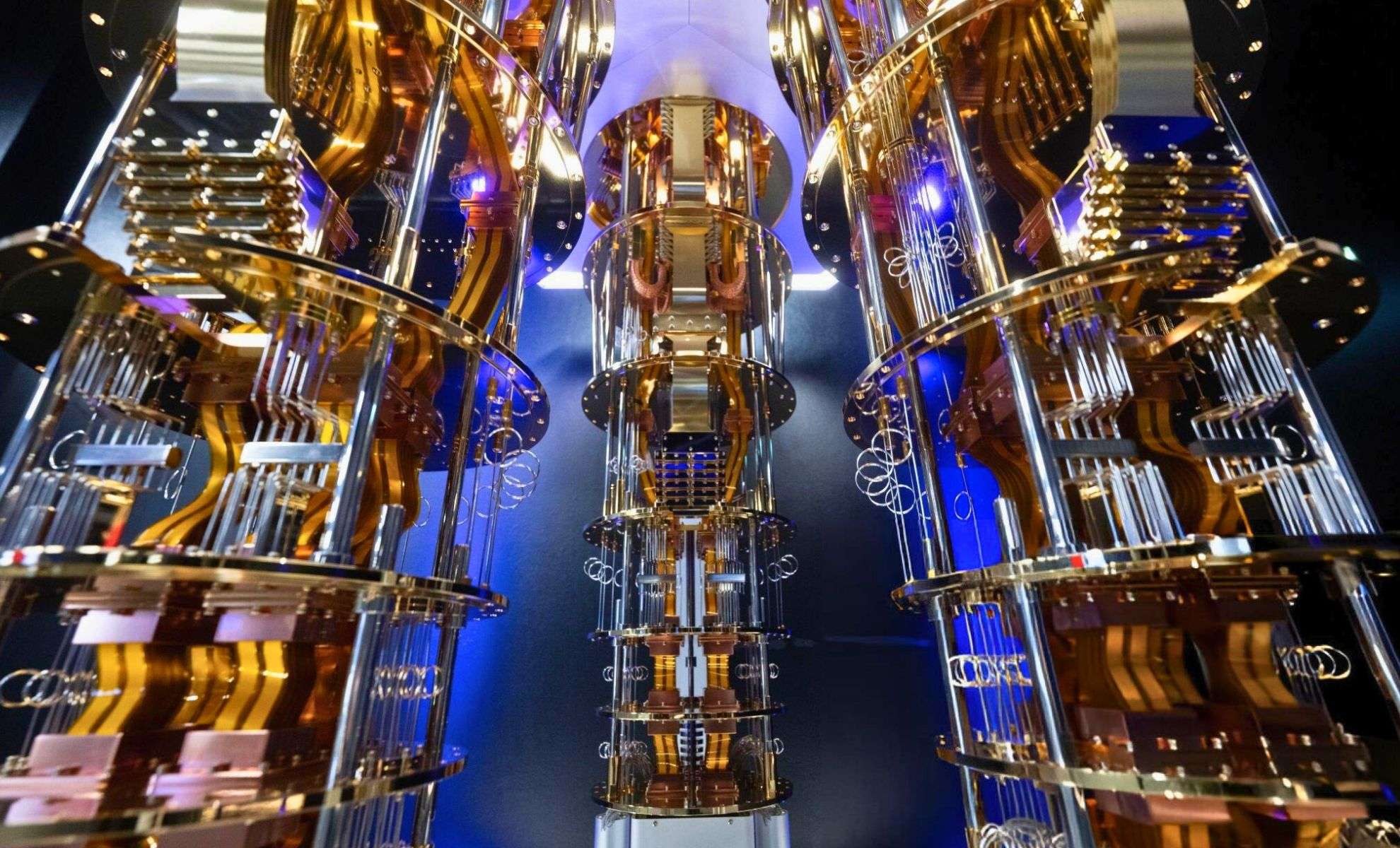
In a revelation that has electrified the technology sector, Google announced that its newest quantum processor, Willow, has delivered an extraordinary computational feat that might imply the existence of parallel worlds. This breakthrough pushes beyond conventional expectations, suggesting that our universe may be part of a larger multiverse.
Willow’s Unprecedented Computational Speed
The Willow chip achieved a quantum calculation in less than five minutes—an operation deemed impossible for even the fastest classical supercomputers, which would require about 10 septillion years to complete it. This staggering time difference—10,000,000,000,000,000,000,000,000 years—highlights the immense progress embodied in Willow. The accomplishment is the result of extensive research by Google Quantum AI at their Mountain View facility in California.
Hartmut Neven, the lead of Google’s Quantum AI team, has suggested that Willow’s extraordinary speed might be due to harnessing computational resources from multiple universes. This provocative idea stems from the chip’s performance exceeding what current physics principles predict.

Exploring the Multiverse Hypothesis
Neven’s proposal that Willow’s power partly originates from parallel realities goes beyond science fiction, extending into established research on quantum computing and quantum theory. This concept builds on theories put forth by eminent physicist David Deutsch in the 1990s, who suggested that the oddities of quantum behavior might be explained by multiple coexisting universes.
Neven remarked:
“Willow’s performance on this benchmark is astonishing: It performed a computation in under five minutes that would take one of today’s fastest supercomputers 1025 or 10 septillion years. This mind-boggling number exceeds known timescales in physics and vastly exceeds the age of the universe. It lends credence to the notion that quantum computation occurs in many parallel universes, in line with the idea that we live in a multiverse.”
Assessing the Skepticism
Though compelling, the argument about the multiverse has encountered skepticism from some quarters. Critics note that the benchmarking test used to evaluate Willow was developed by Google internally, raising concerns about potential partiality. While the test intends to push quantum processors to their limits, its design might impact how Willow’s performance is judged.
One alternative explanation points to quantum entanglement, where particles remain interconnected across distances, which might contribute to the chip’s impressive output. Nevertheless, even skeptical scientists agree that if Willow’s speeds are reproducible, it marks a major advancement in quantum computing.
- Points of Criticism:
- The benchmark may have been optimized to highlight Willow’s strengths, as it was created internally at Google.
- The concept of multiple universes remains theoretical, lacking conclusive experimental evidence despite supporting some interpretations of quantum physics.
The Future of Quantum Technology
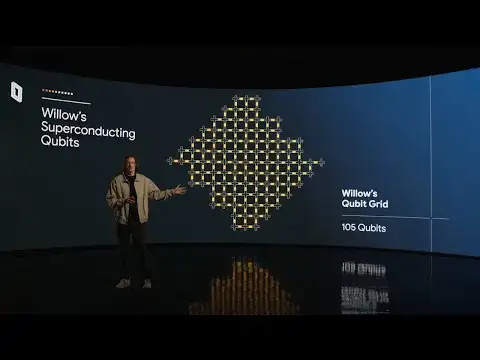
Willow represents more than just a speed record; it embodies Google Quantum AI’s ambition to tackle challenges beyond the reach of classical computers. Unlike regular machines reliant on binary bits, quantum computers utilize qubits that exist in multiple simultaneous states, enabling complex computations at unprecedented speeds.
However, increasing the number of qubits introduces greater error risks, a known hurdle in quantum computing. Willow focuses on enhancing error correction techniques, successfully diminishing computational errors and advancing the reliability of quantum processors, as explained by Neven.
- Willow’s Highlighted Innovations:
- Significant reduction in quantum computation errors.
- Achievement of record-breaking processing speeds.
- Developed at Google’s Mountain View campus with an emphasis on practical quantum applications.

Could This Be Evidence for the Multiverse?
Should Google’s statements about Willow withstand rigorous scrutiny, it could usher in a transformative era for both computing and physics. The possibility that quantum processes explore parallel universes challenges and enriches our understanding of reality’s fundamental nature. Quantum mechanics’ counterintuitive principles may find new explanations if Willow indeed draws computational power from multiple realities.
Despite the excitement, this area remains speculative. The multiverse hypothesis has yet to be empirically validated, making it difficult to confirm the scientific validity of these interpretations at present.
Regardless, Willow’s breakthroughs in quantum computing stand undeniably significant, sparking crucial conversations about what lies ahead for science and technology.











0 comments
Sign in to Comment