
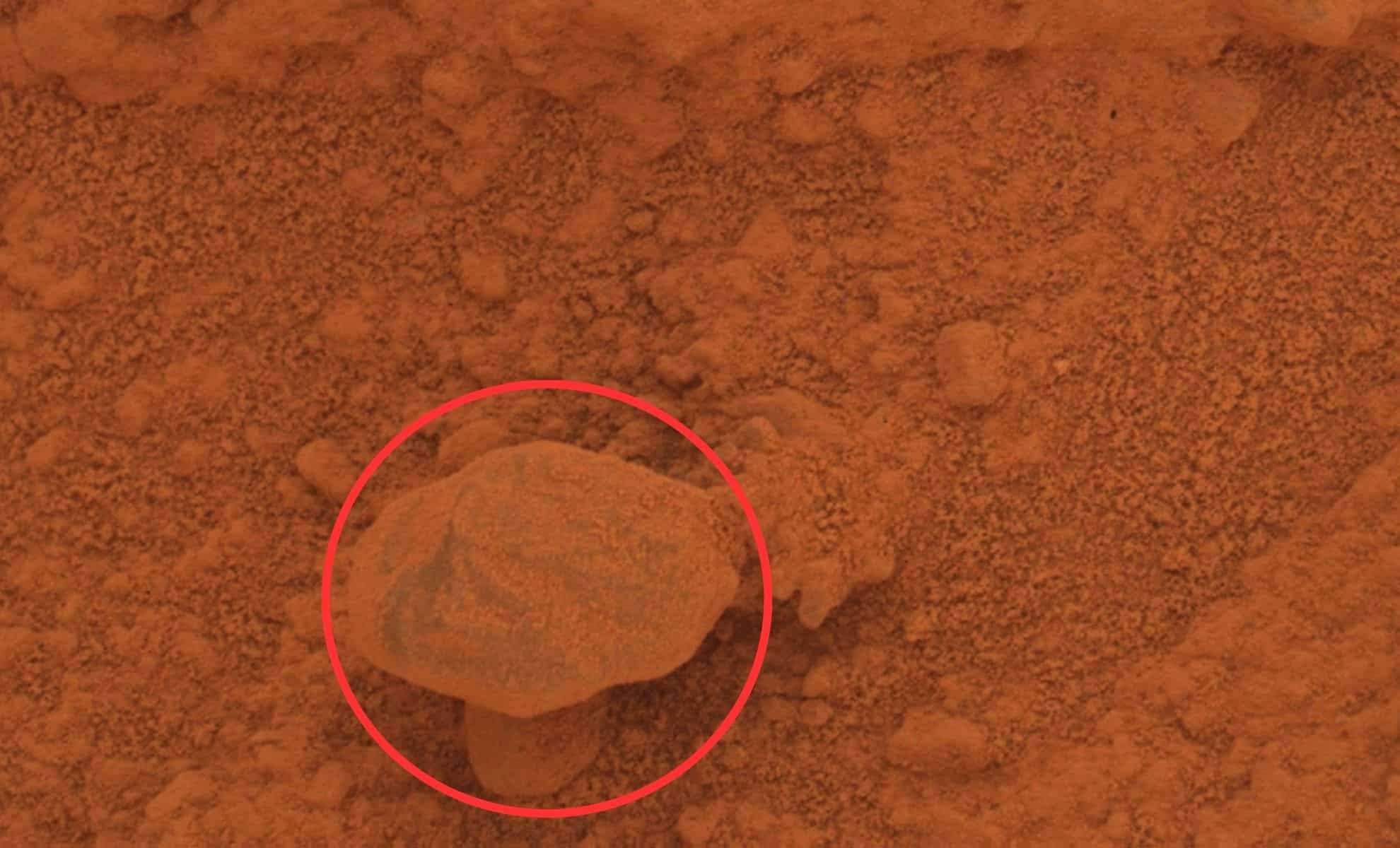
On September 19, 2013, NASA’s Curiosity rover captured an intriguing photo that has reignited discussions about the existence of life on Mars. The snapshot shows an object some observers describe as a “mushroom” growing on the Martian ground, triggering a wave of speculation and various conspiracy theories. Enthusiasts and UFO aficionados have seized upon this image as potential proof of extraterrestrial life, with some alleging NASA may be concealing what it truly discovered. These debates come amid the rover’s ongoing mission to investigate Mars’ capacity to support life, as it continues to uncover unexpected and puzzling sights. But does this image genuinely indicate life, or is it simply a misreading of natural Martian features?
This image, documented by UFO investigator Scott Waring, portrays an object with a stem-like base and a rounded top resembling a mushroom cap. Waring expressed surprise that NASA might have missed such an unusual form. Nevertheless, experts maintain that this is probably a rock shaped over millennia by Mars’ extreme environmental influences rather than organic matter.
The Curious Form That Sparked Interest
Over recent years, the Curiosity rover has transported us numerous images showcasing Mars’ rugged terrain. Among them, this particular photo shows a peculiar structure seemingly protruding from the soil, resembling what enthusiasts label a “mushroom.” This likeness has encouraged some to speculate it might be evidence of Martian life. UFO enthusiast Scott Waring remarked, “This object has a curved bottom part of a stem, same as those on Earth,” hinting that the formation could be biological.

Waring further expressed frustration over NASA’s oversight, stating, “I’m not sure how or why NASA could overlook such a thing… since NASA’s mission is to find life on other planets and moons.” This perspective gained popularity online, with many accusing NASA of withholding findings from the public.
However, researchers advise prudence before jumping to conclusions. They point out that Mars hosts numerous formations that resemble earthly objects and that these are commonly shaped by geological activity. Dr. Gareth Dorrian, a planetary scientist, suggests that the shape is more likely a disc-shaped rock modified by wind erosion, a common and powerful force sculpting Mars’ landscape.
Wind Erosion and Geological Forms: Explaining the Illusion
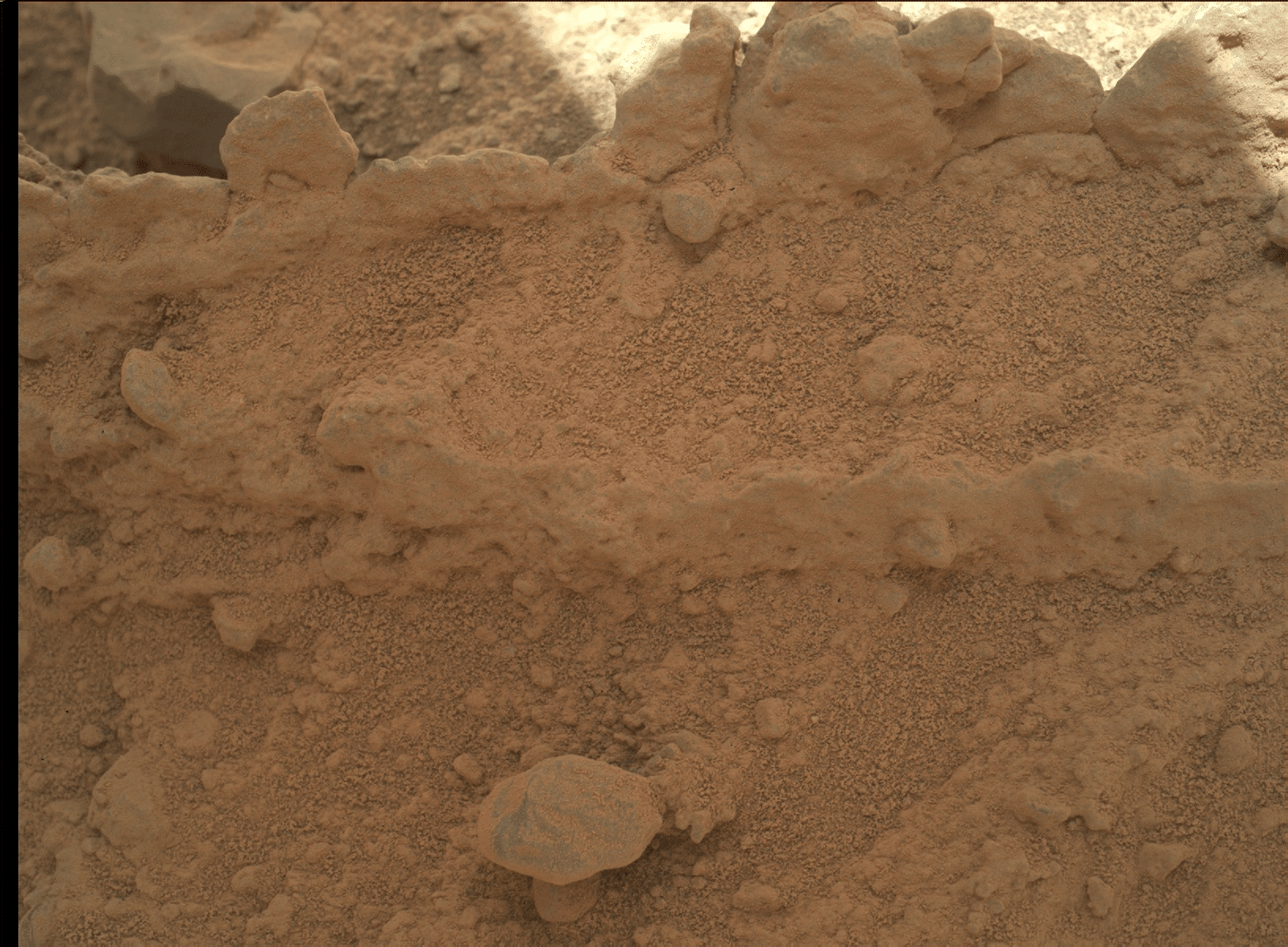
Mars’ winds are known to carve extraordinary rock shapes. The Curiosity rover has previously captured similar formations, including rocky structures that resemble mushrooms or other life forms, but these are in fact concretions — hardened mineral deposits created when water once infused sediments. Wind and sediment erosion subsequently remove softer materials, leaving these solid objects behind in unusual shapes.
Dr. Dorrian notes, “It’s probable that these rocks weren’t originally stacked like that, but rather one embedded beneath the sand and the other resting on top. Over time, wind erosion exposed and shifted them, creating their current appearance.” This explanation aligns well with Mars’ frequently gusty environment, known to reshape the surface continuously.
Similar phenomena occur on Earth, where erosion forms distinctive rock spires called hoodoos, many with mushroom-like crowns sculpted by natural forces. Mars’ historical presence of liquid water and intense environmental factors have similarly designed complex rock shapes that could be easily mistaken for biological entities.
Why Mars’ Surface Is Hostile to Life
Despite the fascination with the “mushroom” image, scientists remain skeptical about the presence of life on Mars’ surface today. Dr. Dorrian emphasizes the planet’s harsh conditions that challenge survival. “Martian atmospheric pressure is comparable to what is found about 20 miles above Earth’s surface,” he explains, exposing the ground to intense cosmic and UV radiation that would quickly sterilize any organisms.
Temperature variations also pose a significant challenge. While daytime highs can reach around 20°C (68°F), nighttime temperatures plunge drastically to approximately -100°C (-148°F). These extremes, combined with the thin atmosphere and radiation, create an environment unsuitable for complex life forms such as fungi.
“If life exists on Mars,” Dr. Dorrian concludes, “it would most likely be subterranean, protected underground where liquid water might persist and shielded from surface hazards.” Current understanding suggests that the most promising habitats for Martian organisms lie beneath the surface, rather than on the arid, exposed ground visible in rover photos.
- Categories:
- News









0 comments
Sign in to Comment