
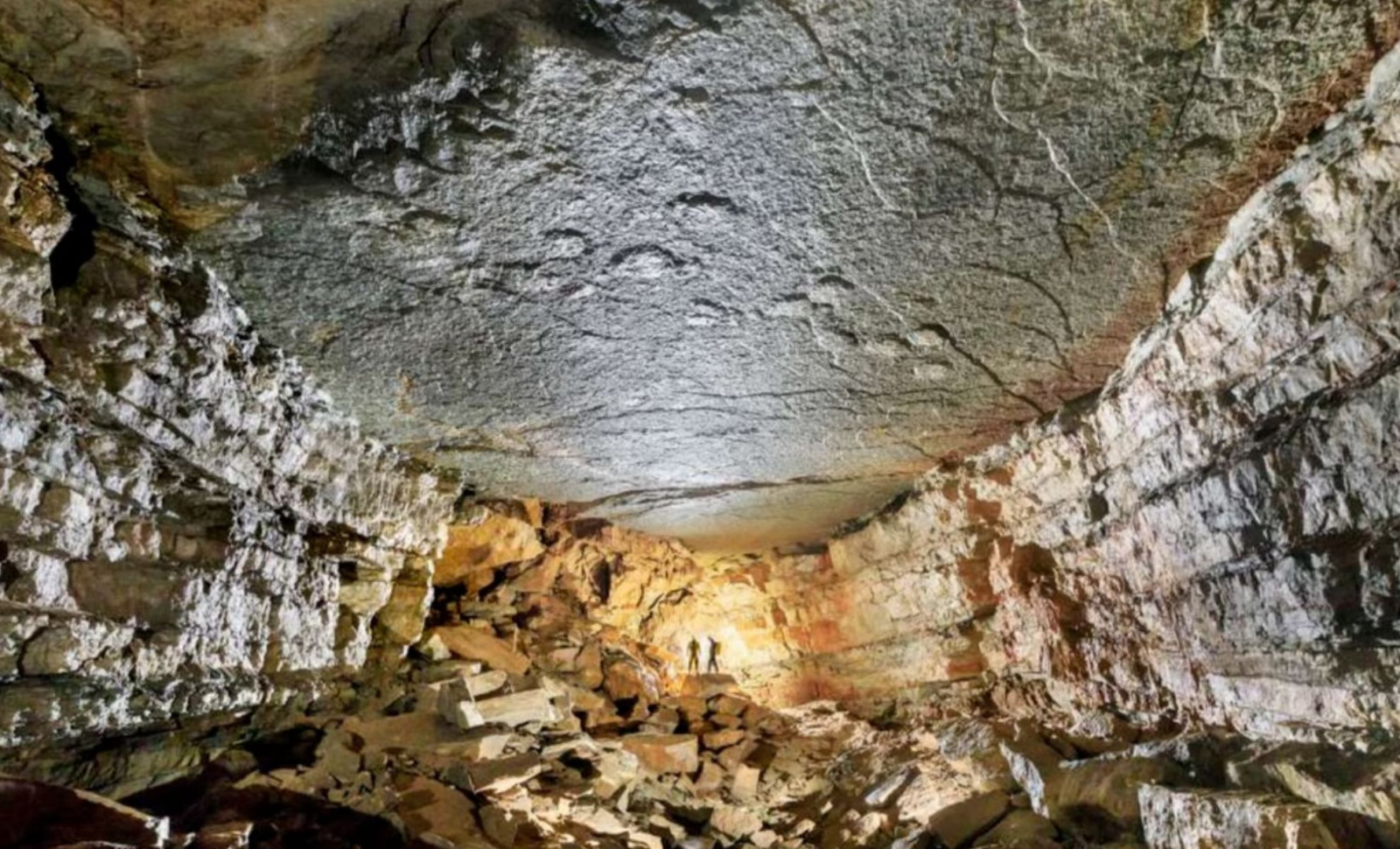
Remarkable dinosaur footprints fossilized on the ceiling of a cave in southern France challenge traditional ideas about where and how such traces can be found. These remarkable trackways, discovered in 2015 inside the Castelbouc cave within the Causse Méjean area, lie deep beneath the surface and were accessed via a tight, twisting passage prone to flooding.
Such footprints serve as important direct evidence revealing movement patterns and foot anatomy. In this instance, the orientation and preservation quality provide an extraordinary glimpse into dinosaur locomotion.
Unearthing a Rare Site Far Underground
Situated roughly 500 meters beneath the surface at the terminus of a challenging 100-meter descent, researchers identified three distinctive trackways documented in a paper published by the Journal of Vertebrate Paleontology.

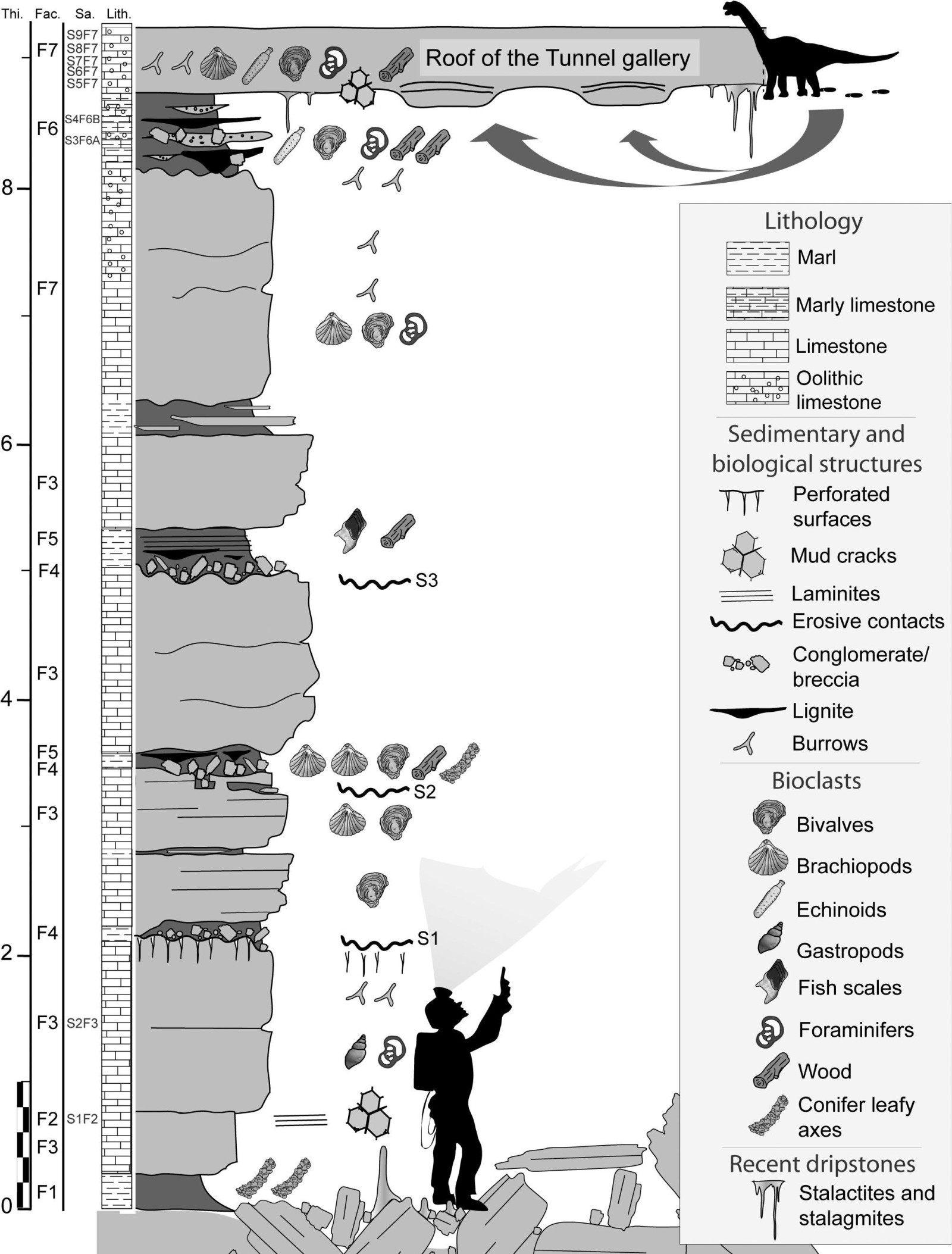
What makes this site particularly unique is the placement of the footprints on the cave’s ceiling, meaning scientists had to study the tracks from below. These are three-dimensional mold impressions created when original footprints were filled with sediment that later became exposed.
“Although the deep galleries of natural underground cavities are difficult to access and are sometimes dangerous, they have the potential to preserve trace fossils. Here, we report on the first occurrence of sauropod dinosaur tracks inside a karstic cave,” wrote the authors.
Detailed Impressions From Prehistoric Giants
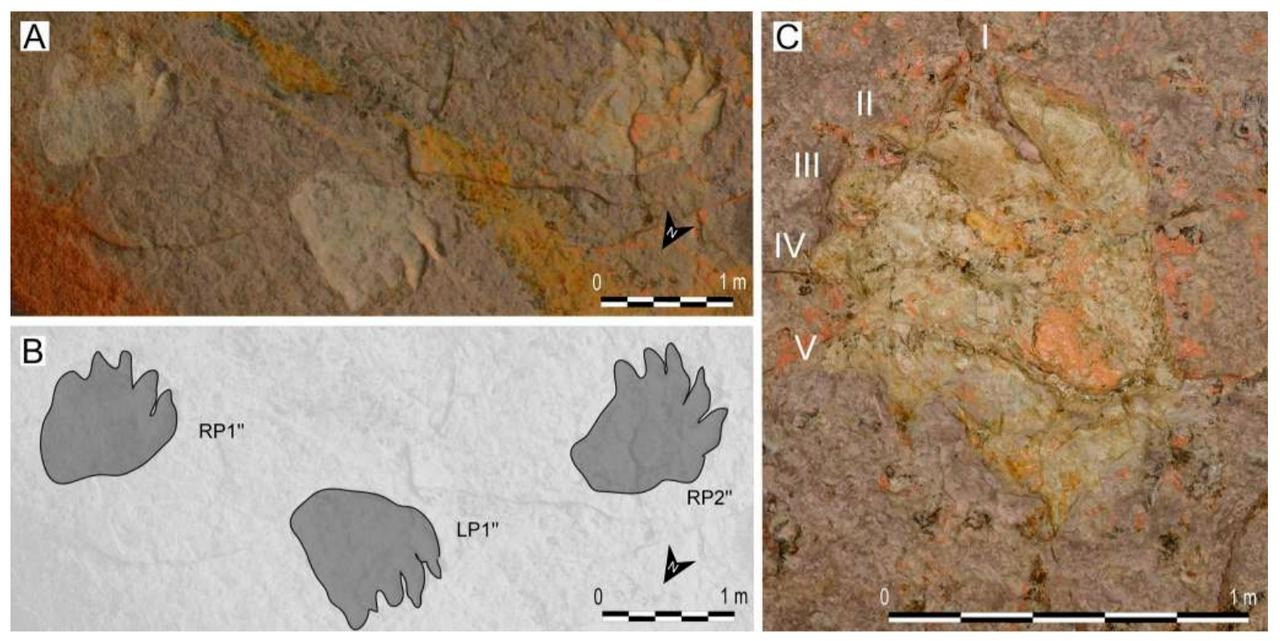
Some footprints measure up to 1.25 meters long, suggesting they were made by colossal herbivorous dinosaurs. The team links these to titanosauriform sauropods, creatures that could grow beyond 30 meters in length and weigh as much as 50 tons.
These tracks, dating from approximately 166 to 168 million years ago, indicate these dinosaurs traversed coastal zones. Moreau and colleagues reported several prints preserving intricate anatomical features like toe outlines, foot pads, and claw marks.
This remarkable preservation allows researchers to analyze foot structure and movement in detail. Notably, one footprint distinctly displays five toes on a right foot, an unusual find among dinosaur trace fossils.
A Distinctive Trackway and Ichnotaxon
One of the three dinosaur trackways reveals a unique set of characteristics. Researchers noted that these footprints exhibit features not previously observed in Jurassic and Cretaceous sauropod tracks. This prompted the classification of a new ichnotaxon named Occitanopodus, honoring both the discovery locale and the prints' unusual shape.
“This discovery demonstrates the great potential of prospecting in deep karst caves that can occasionally offer larger and better-preserved surfaces than outdoor outcrops,” the study team concluded.
The research emphasizes that the evolutionary trajectory of sauropods in this period is still not fully grasped. The variation observed in these prints underscores the need to refine current ichnotaxonomic classifications.
- Categories:
- Science




0 comments
Sign in to Comment