
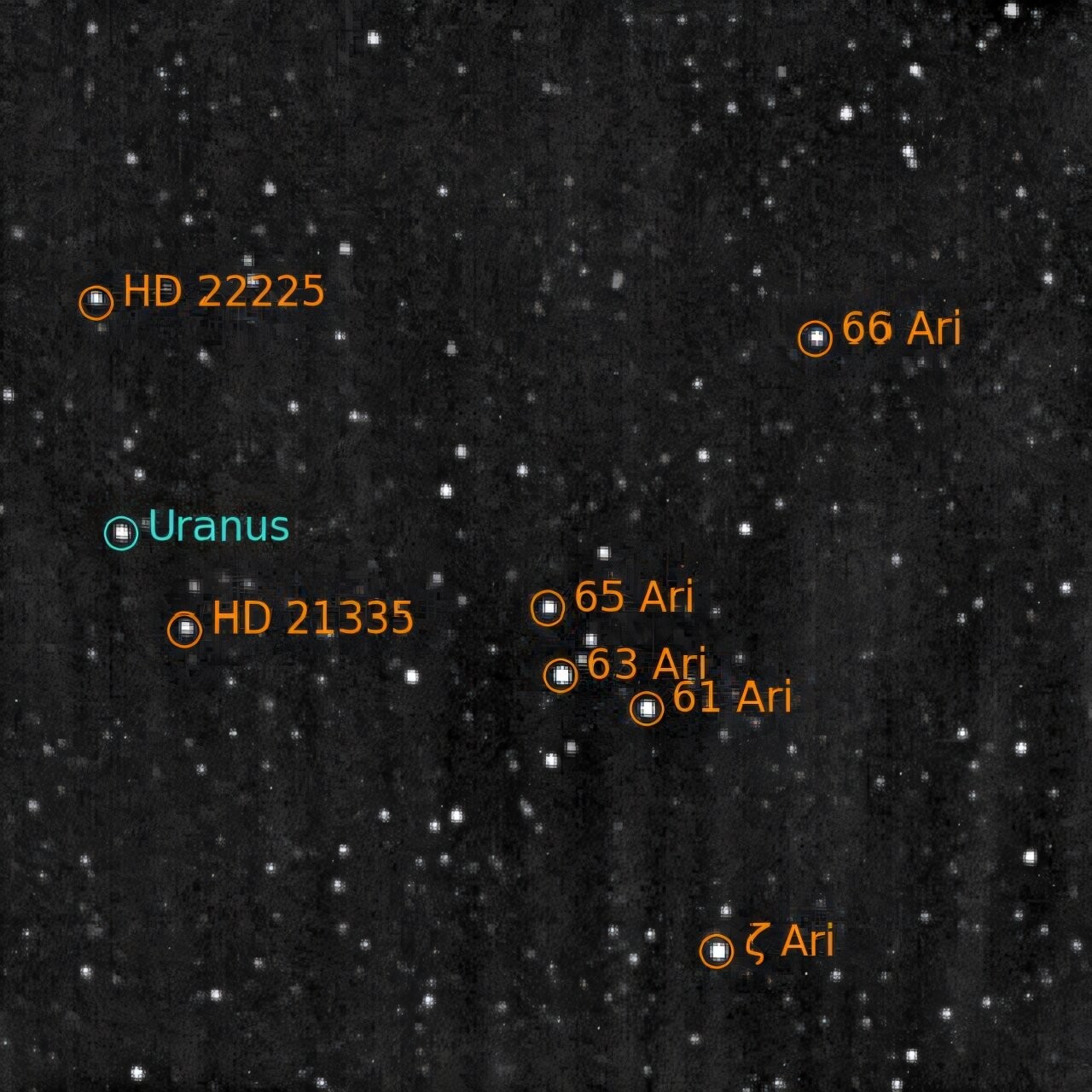
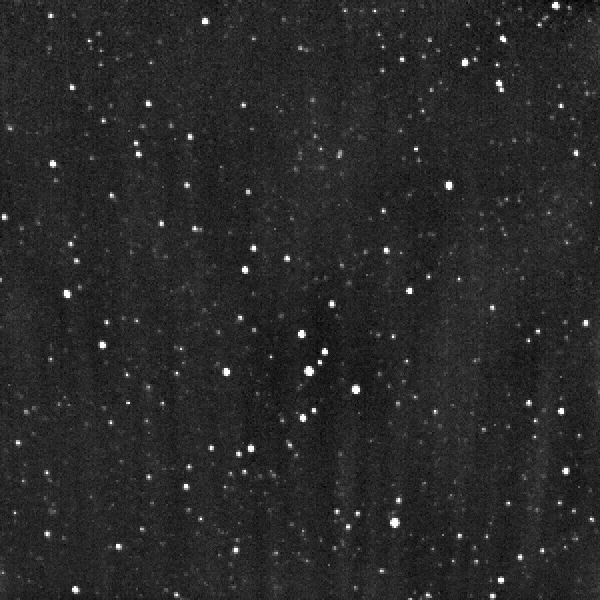
On November 5, 2025, NASA’s Europa Clipper captured a striking photo of Uranus, showcasing a significant milestone in its solar system voyage. Taken as part of a calibration test for the spacecraft’s star-tracking system, the image depicts Uranus as a faint dot surrounded by a field of distant stars.
This snapshot signals a crucial step as the spacecraft prepares for its main mission: investigating Jupiter’s icy satellite Europa. Successfully utilizing the star-tracking cameras highlights the spacecraft’s navigation precision on its way to this key target.
The Europa Clipper Endeavor: Advancing the Frontier of Space Science
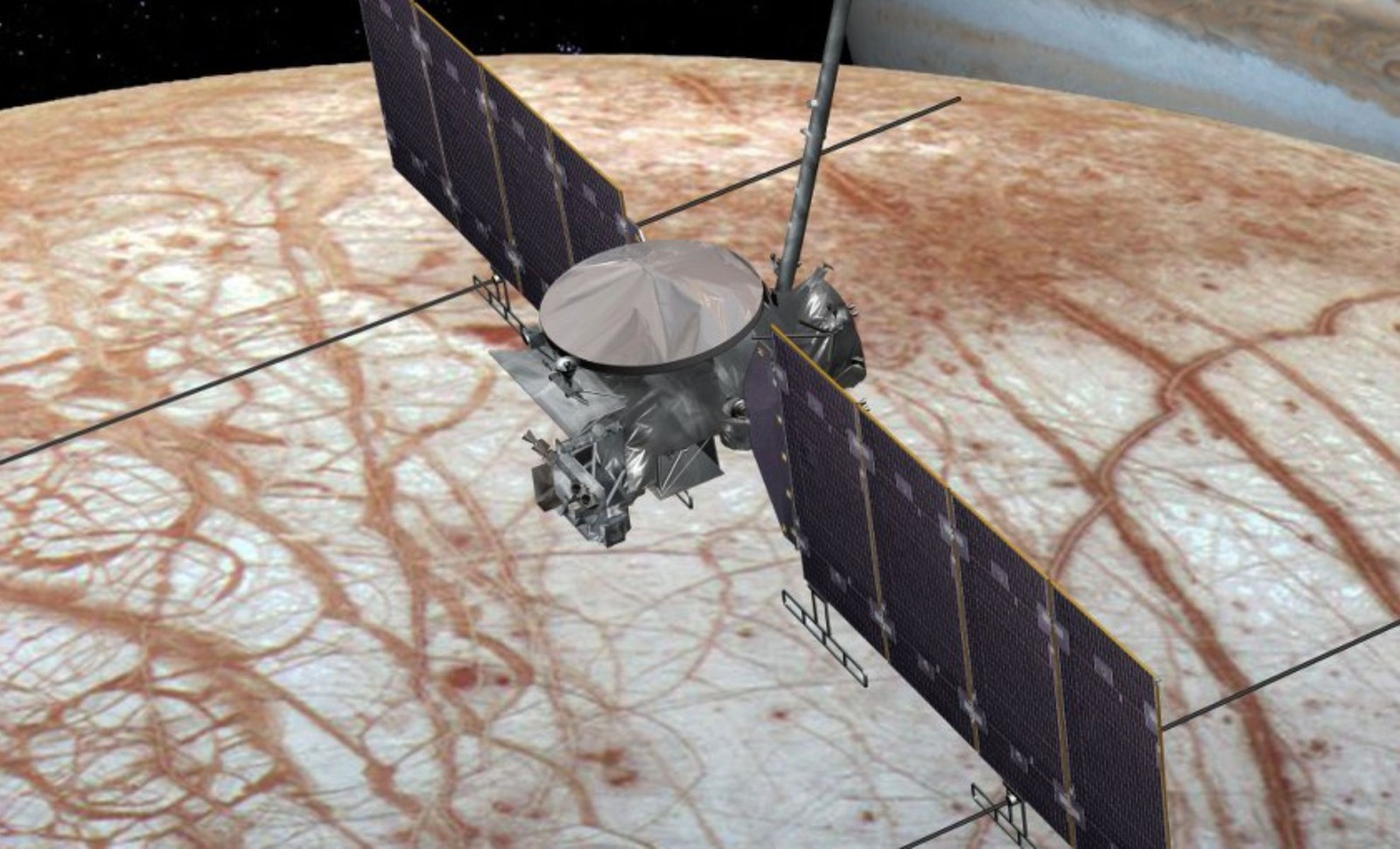
Europa Clipper, which launched in October 2024, embarks on a long-range quest to study Europa, one of the most captivating moons orbiting Jupiter. The spacecraft will arrive at the Jupiter system by 2030 and conduct close flybys, completing nearly 50 passes over the moon’s frozen surface. The mission’s key objective: to assess if Europa’s concealed ocean beneath its thick ice crust has the potential to harbor life.

Its scientific aims include determining the thickness of Europa’s icy exterior, understanding how the surface interacts with the ocean below, and examining the moon’s geological makeup.
Precision Orientation Through Star-Tracking Camera Tests
Europa Clipper is rigorously testing its star-tracking cameras, an integral component of its stellar reference systems, which ensure the spacecraft’s correct orientation during its prolonged space journey. NASA explains these cameras have a very narrow viewing angle, capturing only 0.1% of the entire sky, yet can successfully identify stars and planets with remarkable precision.
The recent capture of Uranus is part of an ongoing series of evaluations to verify the optimal performance of these instruments. The ability to photograph Uranus, even from such an immense distance, attests to the cutting-edge technology onboard. These cameras are vital for maintaining orientation in the months and years ahead as Europa Clipper journeys onward.
Mastering Deep Space Navigation
Operating in deep space demands extraordinary navigational accuracy, especially when millions or billions of miles separate the spacecraft from Earth. As Europa Clipper advances toward the Jupiter system, precise orientation is essential. Its star-tracking cameras play a critical role in guiding the spacecraft through the vast cosmic expanse, a crucial factor for mission success.
When the image of Uranus was taken, Europa Clipper was located roughly 2 billion miles from the distant planet, reflecting the incredible scope of its voyage. As the spacecraft nears its target, it will depend heavily on this advanced navigational technology to ensure a safe and timely arrival at Europa, Jupiter’s intriguing moon.
As can be read in the report from the U.S. space agency, “The mission’s detailed exploration of Europa will help scientists better understand the astrobiological potential of habitable worlds beyond our planet.”
- Categories:
- Space










0 comments
Sign in to Comment