
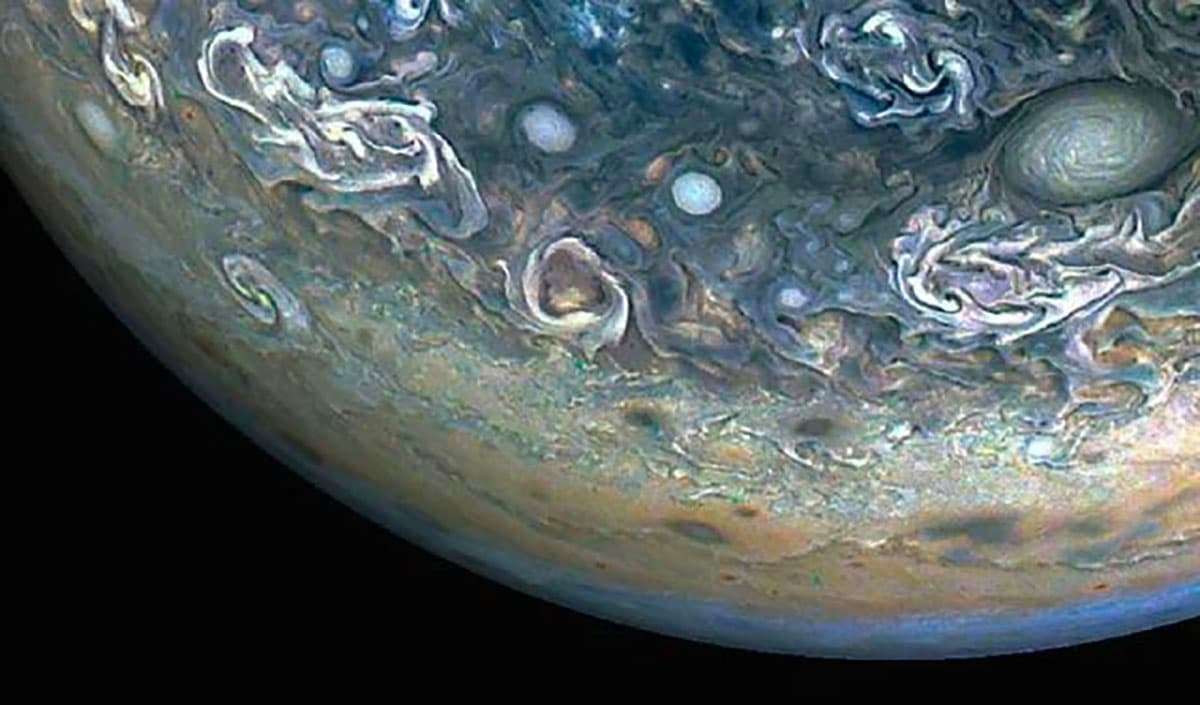
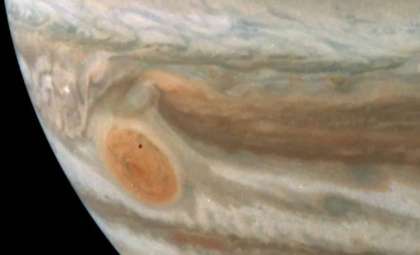
NASA’s Juno spacecraft has delivered yet another captivating glimpse of Jupiter’s turbulent atmosphere, capturing a cloud formation that strikingly resembles a dolphin swimming through the planet’s southern temperate belt. This fascinating sight blends scientific discovery with a touch of natural artistry in the ongoing exploration of the gas giant.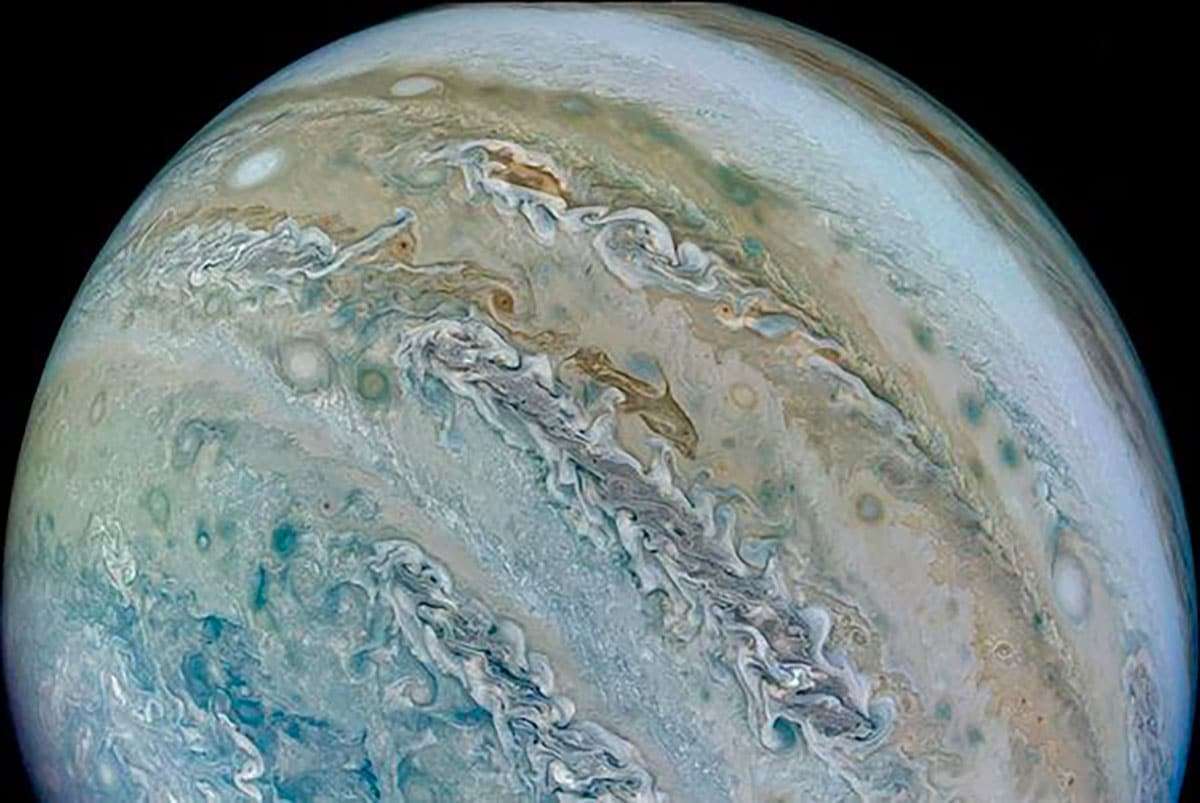
Juno’s Quest to Unveil Jupiter’s Secrets
Launched in 2011, the Juno spacecraft reached Jupiter’s orbit in 2016, beginning its mission to explore the planet’s hidden depths. Jupiter’s thick atmosphere conceals many mysteries, but Juno’s suite of instruments is designed to probe beneath the cloud tops, providing insights into the planet’s makeup, magnetic environment, and atmospheric behaviors. These findings offer clues about the formation of gas giants and the evolution of our early solar system.
Juno’s groundbreaking data has already transformed our knowledge of Jupiter’s dynamic weather systems, powerful magnetosphere, and intriguing moons such as Europa and Ganymede. Its vivid imagery often resembles colorful abstract artwork, showcasing swirling patterns and intense storms that mesmerize scientists and the public alike.

The Dolphin Formation: Where Science Meets Visual Wonder
One particularly striking photograph from Juno shows a cloud pattern in Jupiter’s southern temperate zone shaped much like a dolphin in motion. This occurrence is a classic case of pareidolia, the tendency for the human mind to see recognizable shapes in random patterns. Similar phenomena frequently appear in Earth’s cloudscapes, making it a familiar but thrilling discovery on another planet.
The ever-shifting atmosphere of Jupiter, propelled by winds that can soar up to 620 kilometers per hour (385 miles per hour), creates constantly evolving cloud formations. Scientists believe this dolphin-like pattern was likely ephemeral, disappearing moments after the image was taken.
The Forces Behind Jupiter’s Constantly Changing Skies
Jupiter’s atmosphere, composed mainly of hydrogen and helium with traces of methane and ammonia, drives colossal storm activity, including the famed Great Red Spot, a raging storm larger than Earth itself. The whimsical dolphin cloud exemplifies the breathtaking visual phenomena generated by the planet’s extreme weather.
The immense diameter of Jupiter—142,984 kilometers (88,846 miles)—combined with its strong gravity and rotating magnetic field, creates extraordinary conditions unseen elsewhere in the solar system. These factors make Jupiter a remarkable environment for studying large-scale atmospheric physics.
Understanding Pareidolia in Space Exploration
The dolphin-shaped cloud highlights how human perception shapes the way we interpret celestial images. While scientifically significant, such shapes also spark imagination and wonder, merging the realms of scientific inquiry and artistic appreciation. This blend has become a signature aspect of Juno’s mission, deepening our comprehension of Jupiter while captivating the public imagination.
Continuing the Journey of Discovery
Juno’s ongoing mission continues to unveil Jupiter’s secrets, providing unprecedented views of its complex storm systems and core composition. Though transient, the dolphin cloud formation stands as a beautiful reminder of the complexity and grandeur of our universe.
Through Juno’s eyes, exploration proves that even the farthest, most challenging corners of our solar system have surprises and moments of awe to offer.
- Categories:
- Space







0 comments
Sign in to Comment