
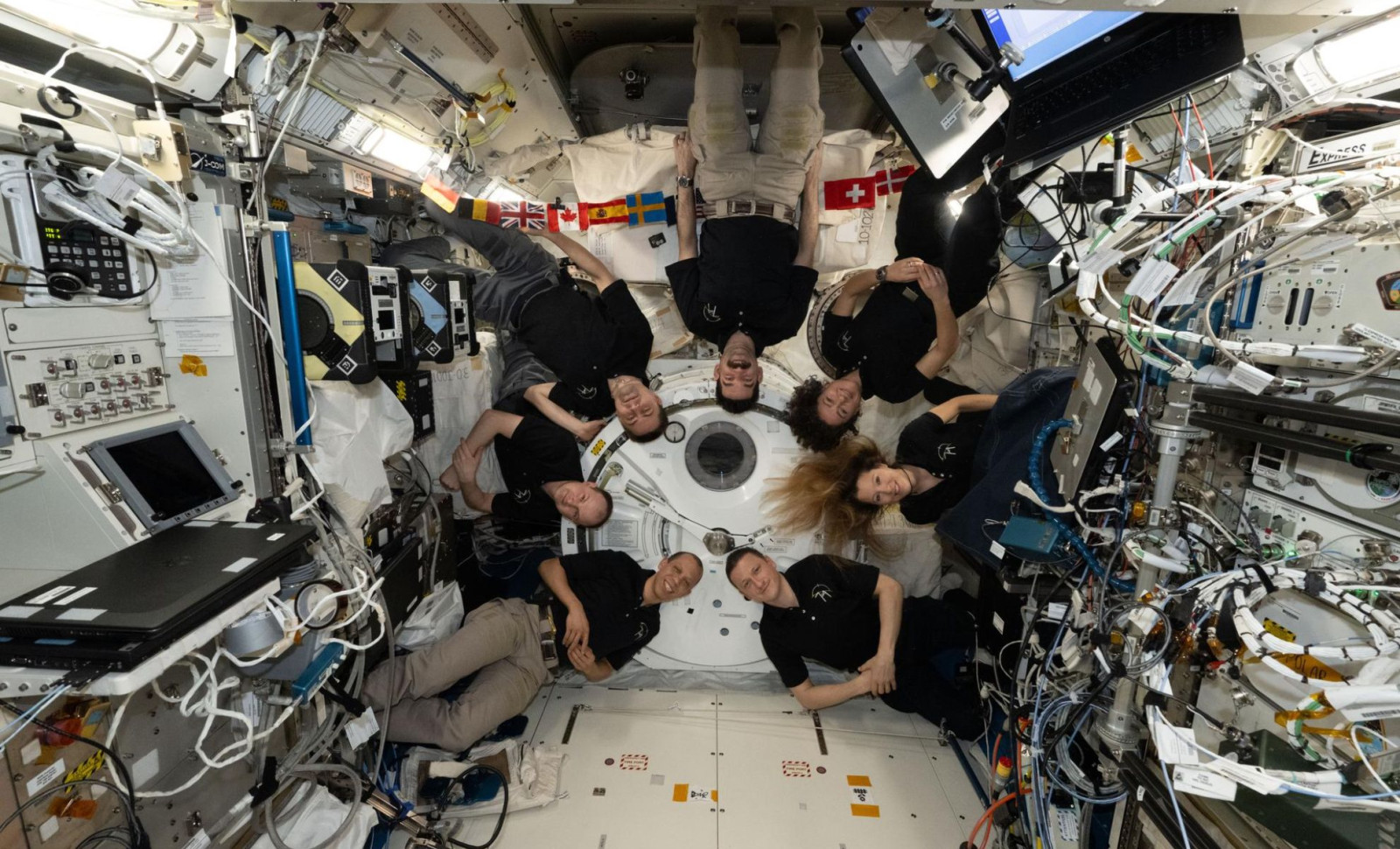
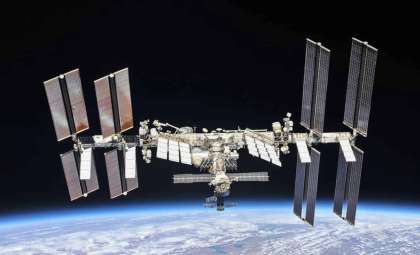
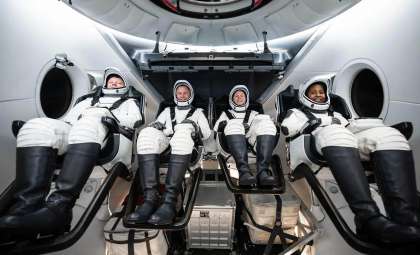
The International Space Station is currently experiencing a surge in activity as ten astronauts and cosmonauts collaborate on experiments, training sessions, and mission transitions, reports NASA. This enlarged Expedition 74 team is examining human responses to weightlessness while gearing up for a change in station command. Three fresh crew members are familiarizing themselves with life in microgravity, while three seasoned astronauts finalize preparations before their return to Earth. This unique time frame allows for a rich exchange of expertise, scientific data, and operational wisdom among spacefarers from different generations.
NASA Highlights an Intense Phase of Research and Crew Changeover
NASA has indicated that ISS inhabitants are engaged in a broad array of investigations related to human physiology, spacecraft systems, and biological studies. The station is hosting representatives from NASA, Roscosmos, and the European Space Agency (ESA), fostering a diverse team dedicated to researching extended space habitation.
As part of these efforts, the newly augmented crew supports studies on how the body adapts to microgravity. NASA flight engineer Anil Menon has embarked on adaptation exercises following his arrival, tackling tasks such as organizing gear, mastering laboratory protocols, and acclimating to the weightless environment.

Menon is also involved in experiments using compact wearable sensors called thermo-mini-sensors that track body temperature fluctuations and sleep cycles, supplying crucial insights into how space affects biological rhythms.
The initial phase aboard the station is invaluable for observing physical and physiological adjustments. Researchers closely monitor shifts in movement, rest patterns, balance, and bodily regulation, vital information for planning missions beyond Earth orbit.
Day 1 in orbit and I’m overwhelmed by gratitude, love, and beauty for this Earth we share. Hello from the international space station! pic.twitter.com/N3azT84Wa9— Anil Menon (@astro_anil) July 15, 2026
Fresh Crew Members Begin Adjusting to the Weightless Environment
Two fresh Roscosmos flight engineers, Pyotr Dubrov and Anna Kikina, are engaged in similar adaptation research after reaching the station via the Soyuz MS-29 vehicle. Both experienced cosmonauts are embarking on their second tenure aboard the orbital outpost.
They have utilized virtual reality headsets and monitoring technology to track neural activity and eye movements. This study investigates how astronauts' balance and spatial orientation evolve without gravity.
Microgravity alters neural input because the brain receives unfamiliar signals regarding movement and positioning. Understanding these adaptations is critical to ensuring astronauts can effectively carry out daily functions during prolonged missions.
In addition to research, the cosmonauts unpacked newly delivered supplies and familiarized themselves with station systems. Their initial days are focused on understanding protocols and gaining confidence in the ISS’s unique surroundings.
Veteran Astronauts Ready for Earth Return
While some crew members settle into their space routine, three astronauts are preparing to conclude their mission. NASA flight engineer Chris Williams and Roscosmos cosmonauts Sergey Kud-Sverchkov and Sergei Mikaev are nearing the end of their expedition that began November 27, 2025.
The team is actively conducting pre-return activities aboard the Soyuz MS-28 capsule, including inspecting their Sokol spacesuits and rehearsing descent and landing procedures.
These astronauts are also organizing their gear and personal items for departure, alongside transferring essential knowledge to the new arrivals, ensuring that research, maintenance, and station operations continue seamlessly.
Such transitions are pivotal in the ISS program. Outgoing astronauts pass down firsthand insights gleaned over months in orbit, helping newcomers navigate the demands of life on the station.
The Expedition 74 crew is continuing its microgravity research, helping three new arrivals adjust to life in space, and preparing for the departure of another three crewmates. More… https://t.co/BOOgEWapga pic.twitter.com/e6ELBWiMtj
— International Space Station (@Space_Station) July 16, 2026
ISS Research Advances Health, Technology, and Spaceflight Safety
In addition to crew adaptation, ongoing experiments span numerous disciplines. NASA’s Jessica Meir is investigating microgravity production of saline solutions using station water supplies.
This study aims to develop on-demand medical resources for astronauts during distant missions, where external resupply is scarce.
NASA’s Jack Hathaway and ESA's Sophie Adenot are overseeing station logistics, supporting maintenance, and engaging in educational outreach. Their duties include unloading cargo from the Cygnus XL spacecraft, servicing life support equipment, and creating educational materials for Earth-based learners.
Meanwhile, Roscosmos flight engineer Andrey Fedyaev is leading the Aseptic biotechnology study, which addresses the challenge of preserving sterile conditions in spacecraft research environments to control microbe growth.
These projects highlight the ISS’s dual role as a center for scientific discovery and a proving ground for technologies critical to future space exploration missions.
- Categories:
- News







0 comments
Sign in to Comment