
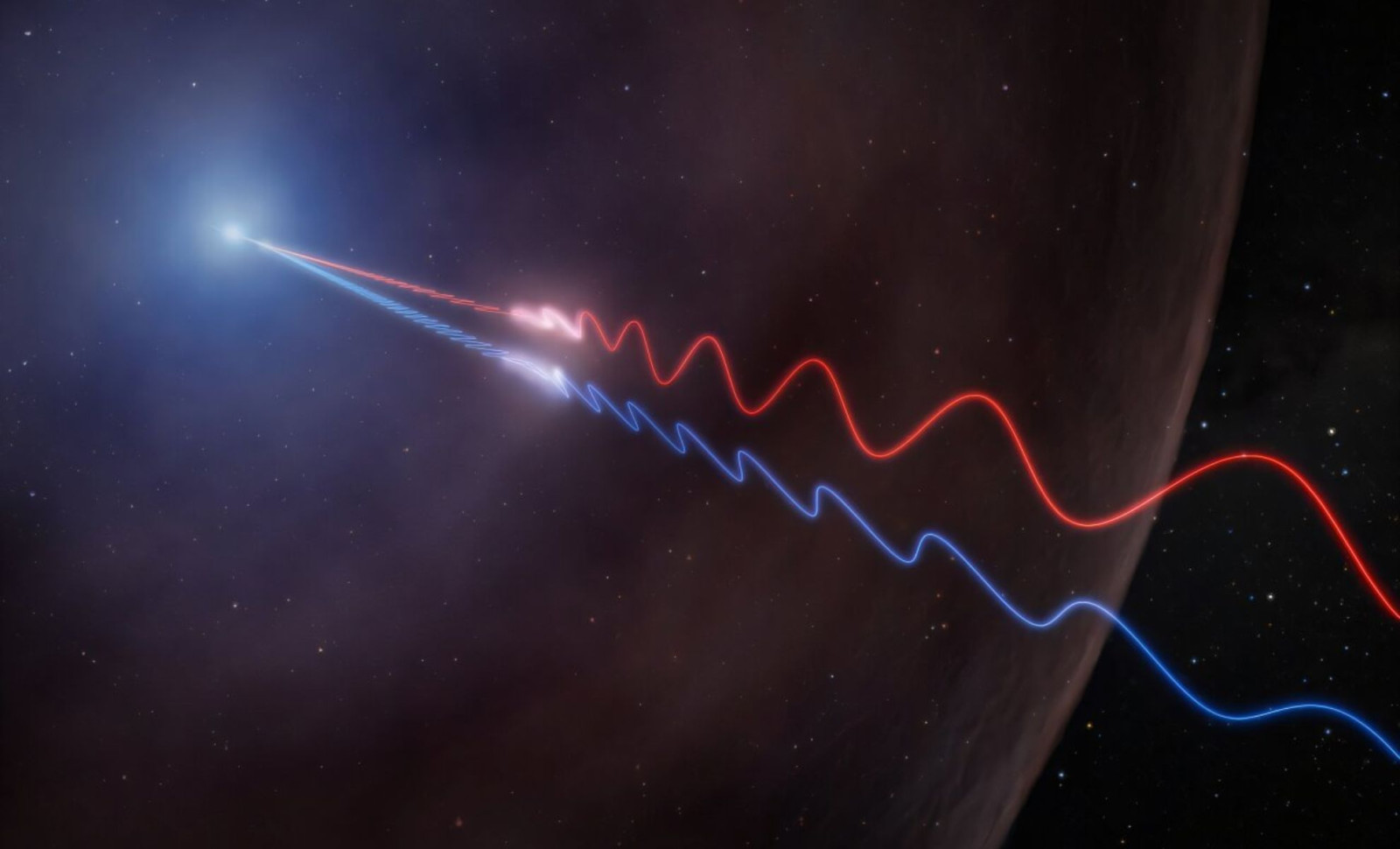
For the first time, researchers have identified the magnetic fingerprint embedded in the afterglow of a gamma-ray burst, offering fresh insights into the energetic processes that drive these cosmic detonations. Using the National Science Foundation Very Large Array (NSF VLA), the team uncovered how intense magnetic fields influence the environment surrounding a star’s catastrophic demise.
A Breakthrough in Understanding the Universe’s Fiercest Explosions
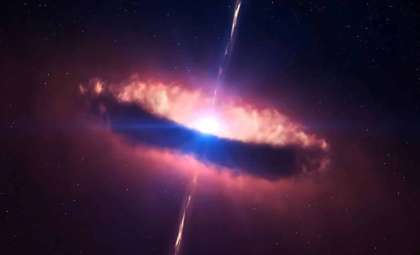
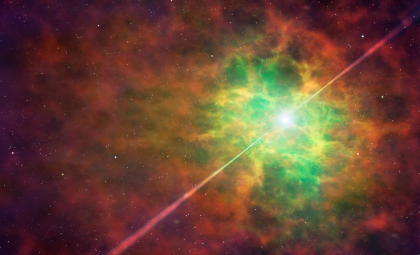
Gamma-ray bursts (GRBs) rank among the most potent phenomena in the cosmos, unleashing within seconds as much energy as the Sun emits over billions of years. Originating from narrow, ultra-fast particle jets, their afterglows endure across the electromagnetic spectrum for extended periods following the initial blast.
While scientists have long aimed to decipher the mechanics behind the formation and energy discharge of these jets, direct detection of their root magnetic fields has remained elusive, masked by the brilliant radiation these explosions emit.

The close proximity of GRB 260310A enabled astronomers to observe one of the brightest radio afterglows recorded in decades, allowing precise analysis of the emission’s characteristics. This landmark observation revealed a feature never before detected in gamma-ray bursts.
Specifically, the presence of polarized radio signals indicated that the radiation waves were oriented in a consistent direction, unveiling key magnetic influences shaping the light’s journey from the explosion.
“GRBs are the most powerful explosions in the universe, and magnetic fields are thought to play a central role in powering them, but probing those fields has been extraordinarily difficult,” said Tanmoy Laskar, assistant professor at the University of Utah. “By detecting polarized radio emission, we can now directly measure the magnetic environment of one of the universe’s most violent events. Our new GRB observations allow us to use the universe as our laboratory to test our understanding of how physics operates in such extreme conditions.”
Astronomers detect magnetic fingerprint of a cosmic explosion for the first time.https://t.co/ybNEgB3My4
— University of Utah (@UUtah) July 14, 2026
Faraday Rotation Uncovers Hidden Magnetic Fields
A pivotal aspect of the discovery involved observing Faraday rotation, an effect in which magnetic fields twist the polarization angle of light passing through charged plasma. This phenomenon provides a detailed record of the magnetic field structure between the source and the observer.
As radio waves travel through magnetized plasma, their polarization rotates by an amount dependent on wavelength. Measuring this rotation across various frequencies allows astronomers to map the strength and arrangement of magnetic fields along the light’s path.
NSF VLA’s data revealed that the magnetic influence near GRB 260310A far exceeds what could be attributed to interstellar or intergalactic media. Instead, the field originates in a dense, magnetized gas cloud enveloping the star that triggered the burst.
Presented as a preprint on arXiv, this work constitutes the first direct measurement of Faraday rotation from a gamma-ray burst, creating new opportunities to explore the environments in which massive stars meet their explosive end.
“Previous searches for polarization in GRBs used facilities like the Atacama Large Millimeter/submillimeter Array (ALMA) telescope that measure shorter wavelengths and had to happen early, before the afterglow light faded,” said Collin Christy, a graduate student at the University of Arizona and lead author of the study. “Now, with the NSF VLA, we’ve pushed into the centimeter bands and made the first-ever measurement of Faraday rotation in a GRB. Each new observation reveals another layer of the magnetic story these explosions are telling us.”
Insights into Gamma-Ray Bursts’ Origins
The magnetic data also shed light on the site of GRB 260310A. Findings suggest this burst occurred within an HII region, a zone of ionized hydrogen gas formed by the energetic radiation and stellar winds from young, massive stars.
This scenario aligns with the prevailing view that many gamma-ray bursts arise from the deaths of extremely large stars, which live briefly but end their lives in vigorous collapses that send jets hurtling across space.
By learning more about the surroundings of these bursts, astronomers can better identify the types of stars that produce gamma-ray bursts and the environmental conditions needed for their births. This discovery creates a direct link between radio signal behavior and the physical characteristics of the explosion’s birthplace.
Radio polarization studies, unlike optical or high-energy methods, reveal magnetic field structures cloaked at other wavelengths. Combining these observations provides a fuller understanding of massive star collapses, jet formation, and magnetic energy roles in these cataclysmic events.
Tracking Cosmic Magnetism with Future Radio Studies
The detection of Faraday rotation in a gamma-ray burst establishes a novel tool for examining the magnetic fields tied to relativistic jets and extreme cosmic conditions. coming observations may track how these magnetic properties evolve as the burst’s afterglow dims and expands.
With instruments like the NSF VLA, astronomers anticipate following these dynamic magnetic changes, offering real-time views of how energy is transported within the remains of a colossal explosion.
“Future monitoring of GRB afterglows with the NSF VLA and other radio telescopes will allow scientists to watch magnetic field structures evolve in real time,” said Dr. Kate Denham Alexander, an assistant professor and Christy’s Ph.D. adviser. “This is a capability that could transform our understanding of how relativistic jets form, how they are powered, and how magnetic energy is released in the most extreme environments the universe has to offer.”
This breakthrough redefines magnetic fields in gamma-ray bursts from invisible components into measurable phenomena. As radio telescope technology advances, these far-reaching bursts will continue to illuminate the fundamental physics driving the universe’s most intense explosions.
- Categories:
- Astronomy

0 comments
Sign in to Comment