
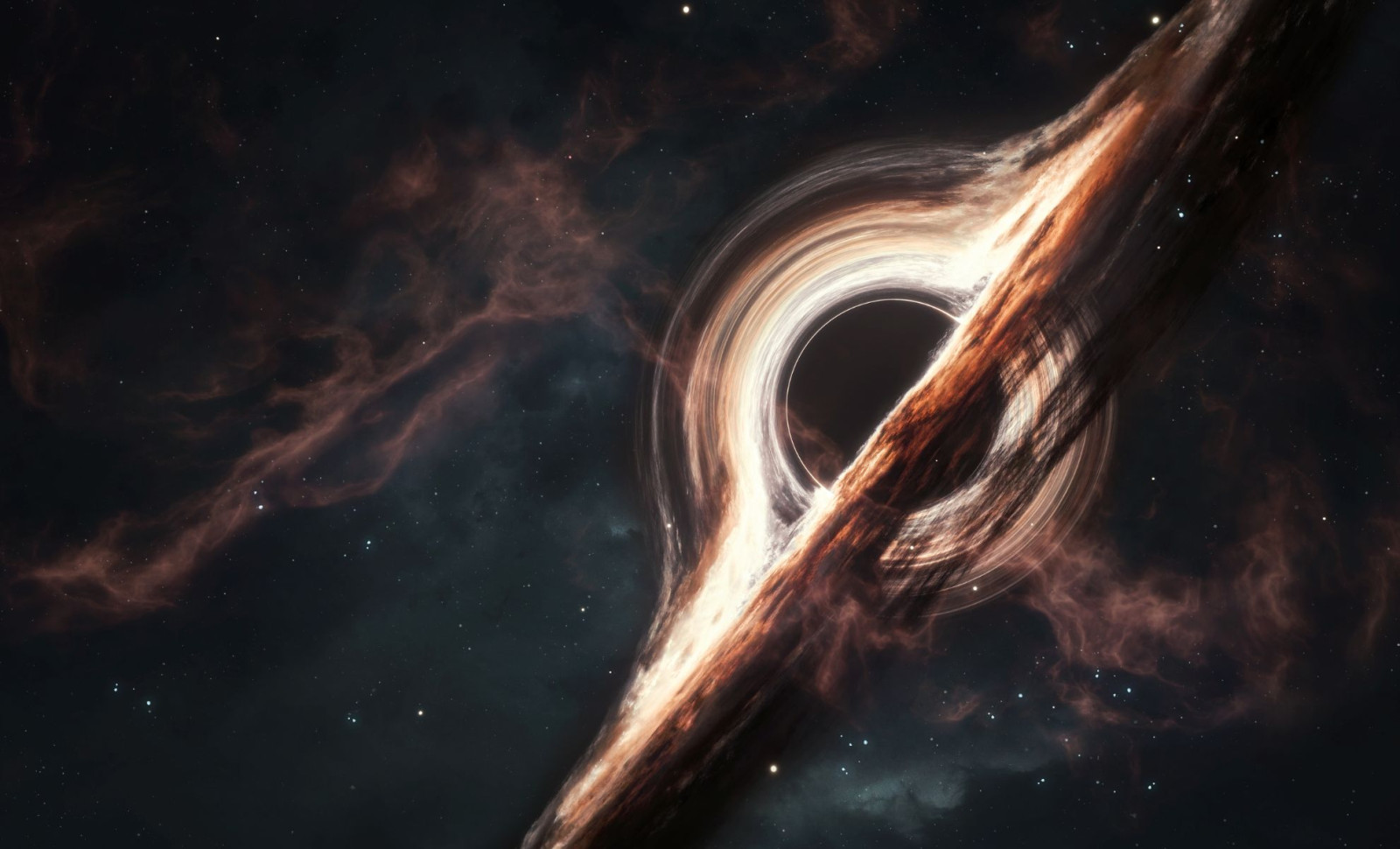
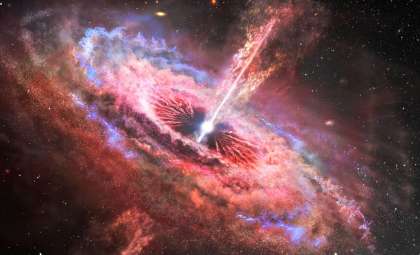
Scientists have uncovered a promising new approach to locating some of the cosmos’s hardest-to-find entities: supermassive black holes propelled out of their galactic cores. Recent research suggests that the dust encircling quasars might reveal whether these colossal black holes were expelled following a galactic merger.
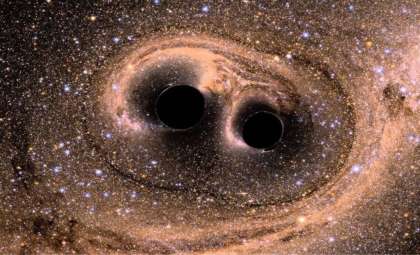
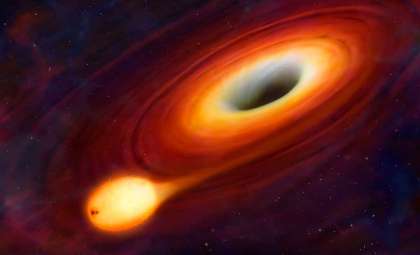
When two galaxies merge, the ensuing turbulence affects more than just stars and gas clouds. Their central supermassive black holes gradually spiral inward and eventually combine into a larger black hole. This powerful collision doesn’t always remain anchored at the galaxy's center; occasionally, the resulting black hole is flung outwards at tremendous velocity.
Despite extensive efforts to detect these so-called recoiling black holes, identifying them has proven challenging. Instead of simply seeking black holes visually detached from their host galaxies, a newly published paper on arXiv proposes examining the dust that may accompany these speeding giants.

The Force Behind the Black Hole’s Ejection
This recoil effect arises from Einstein’s general relativity. As supermassive black holes merge, they emit gravitational waves. When the black holes differ in mass or spin orientations, the waves transfer momentum asymmetrically.
The research team describes how this asymmetry imparts a strong kick to the combined black hole. In extreme scenarios, this thrust can propel the black hole through space at speeds of hundreds to thousands of kilometers per second.
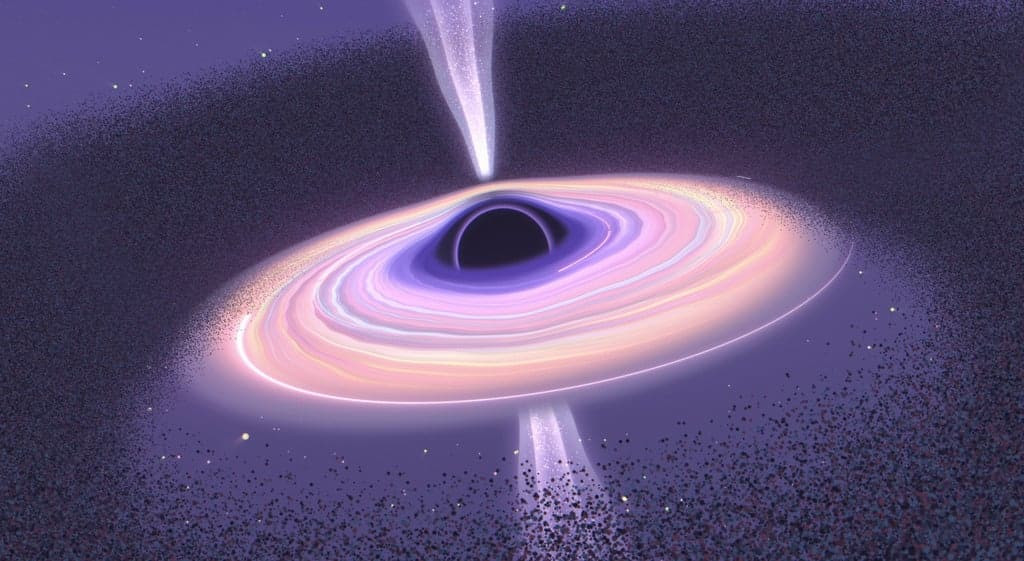
Although theoretical predictions about this process have existed for some time, concrete evidence for recoiling supermassive black holes remains scarce due to subtle observational markers.
Dust: The Key to Detection
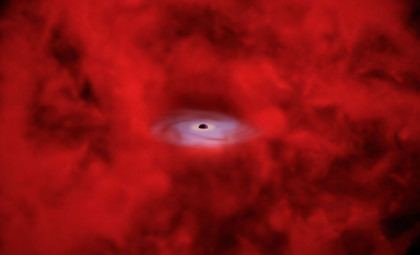
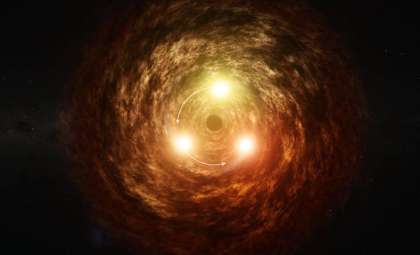
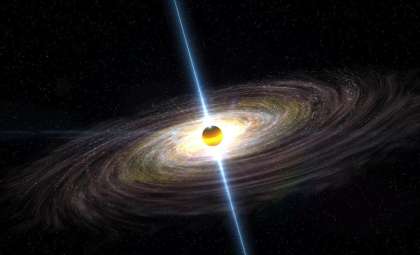
The recent study investigates the matter that remains gravitationally bound to a black hole after it’s pushed away from the galactic nucleus. The researchers suggest the innermost section of the accretion disk, tightly clinging to the black hole, travels along with it during its journey.
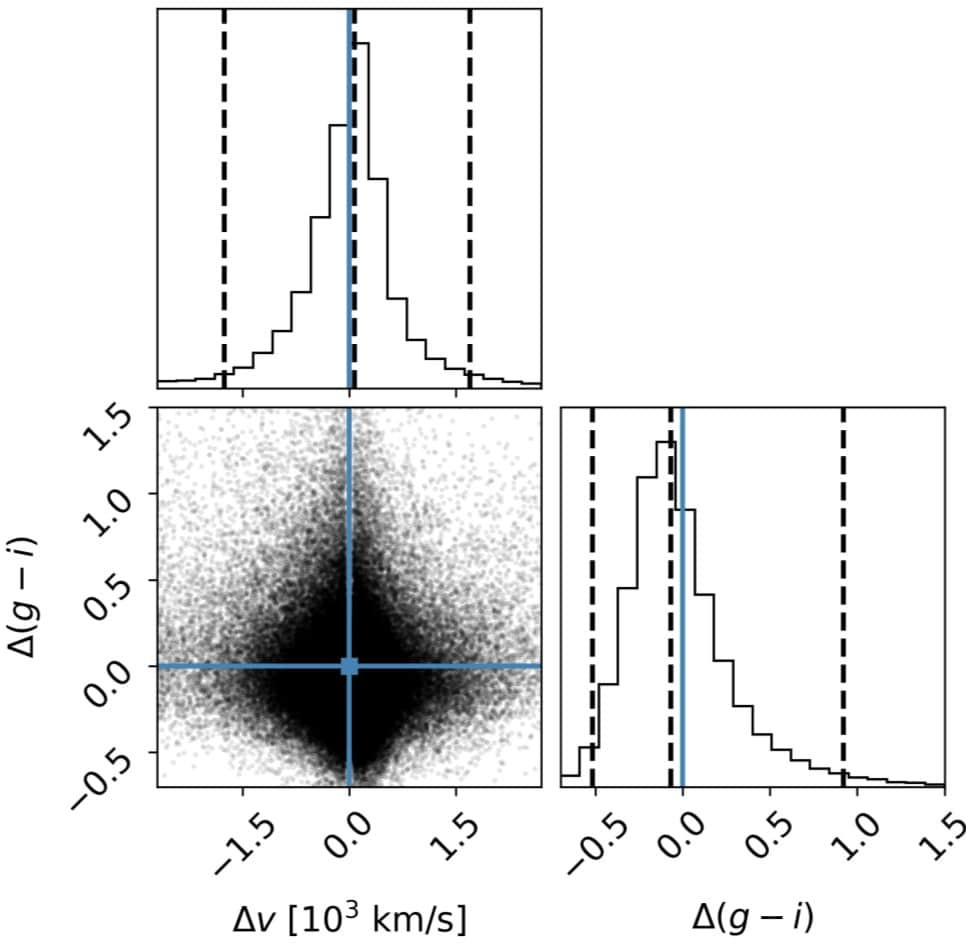
This portion corresponds to the Broad Line Region, characterized by quickly moving gases generating emission lines altered by Doppler effects. Building on patterns from prior simulations, the scientists examined associations between a quasar’s velocity shift and surrounding dust quantities.
The outcome revealed a modest yet statistically meaningful positive correlation between these factors. To ensure the result wasn’t coincidental, they repeated the process focusing on Narrow Line Regions, which likely remain behind post-recoil. This test showed no such correlation, aligning with theoretical expectations.
An Unexpected Discovery
Some findings diverged from predictions. Blue-shifted supermassive black holes—those approaching Earth—appeared enveloped by more dust compared to receding ones.
The authors note this contrasts with a simple recoil scenario and propose the disparity may stem from spectral line fitting biases or simultaneous physical mechanisms influencing the black holes. No single explanation was confirmed.
The team emphasizes their findings indicate a statistical relationship, not direct causation. They estimate that up to half of known quasars could have emerged from recent supermassive black hole mergers, positioning them as promising candidates for future searches targeting this newly identified dust signature.
- Categories:
- Space

0 comments
Sign in to Comment