
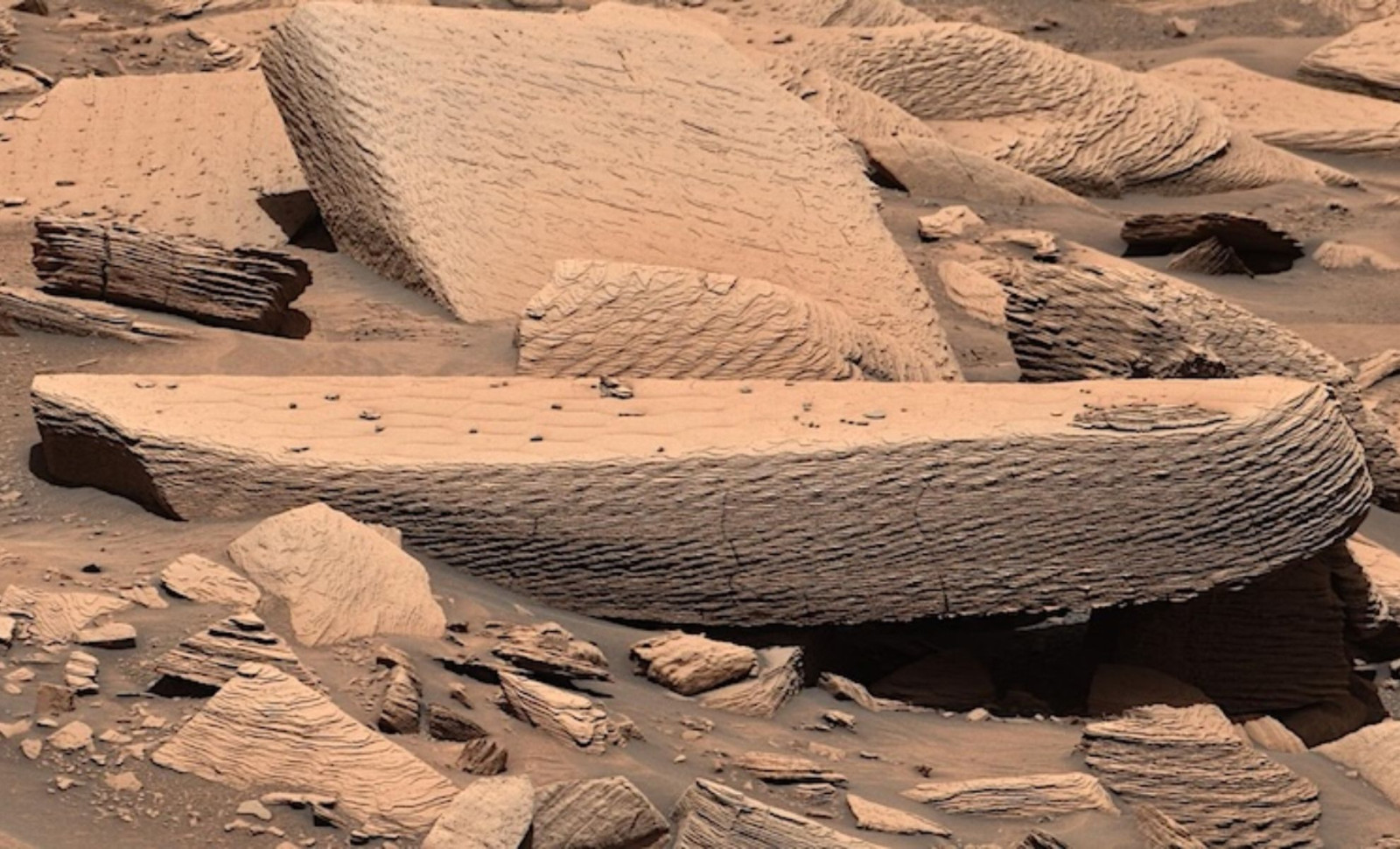
NASA's Curiosity rover has uncovered the earliest direct signs of a fierce sandstorm that swept across Mars billions of years ago. Buried in the stratified rocks of Gale crater, this finding reveals a fleeting yet intense wind event, providing a rare glimpse into ancient Martian atmospheric conditions.
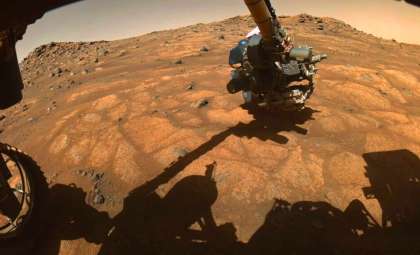
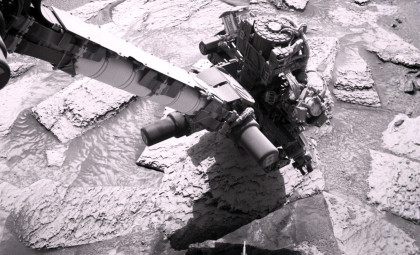
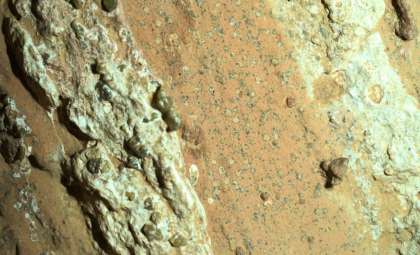
This discovery took place at Jawbone Canyon, an area studied by Curiosity during its survey of the Mirador formation on the flanks of Mount Sharp. The rover recorded images of these distinctive rock formations on December 12, 2024, during its 4,391st sol on Mars.
Findings from the investigation were published on July 1, 2026, in the journal Geology. Researchers confirmed that these structures represent the first identified supercritical climbing wind ripple layers on Mars, shedding new light on the planet's ancient wind dynamics.

A Rare Insight into Martian Atmospheric History
Mars exhibits a wealth of ancient wind-formed features, such as sedimentary dunes and deposits. While most suggest prolonged wind interactions, the layers at Jawbone Canyon capture a much shorter and more intense event.
The rock outcrop features two distinct wind ripple types: standard planar ripples and climbing ripples. These formed as sand steadily built up on shifting ripples rather than just spreading flat across the landscape.
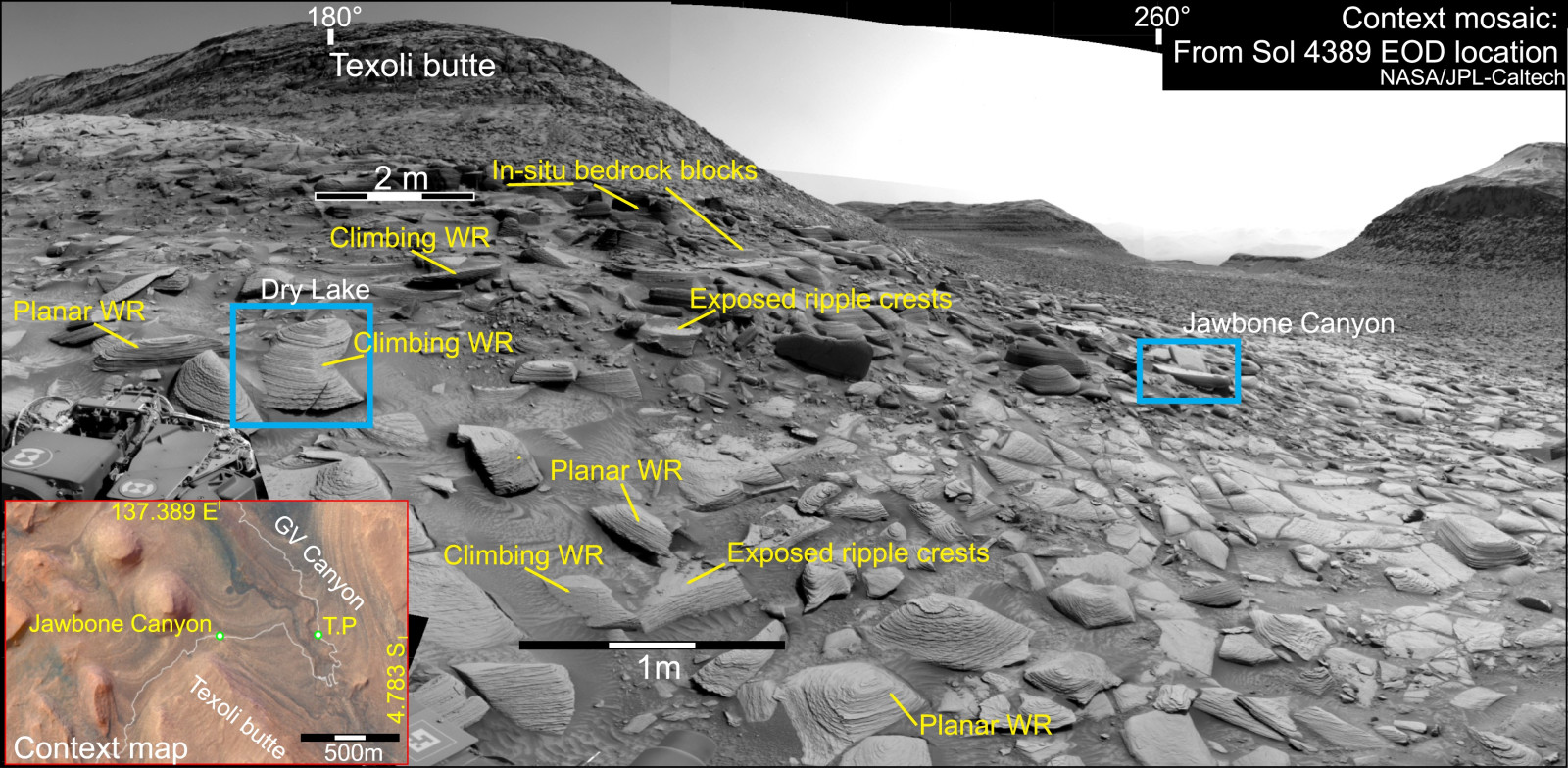
Scientists identified six distinct ripple strata packages within the rock. Some layers are uniform, while others display curved and overlapping patterns indicative of rapid sediment deposition.
The study explains these structures formed when wind velocity fluctuated and airflow was disturbed by a slope, causing sand grains to fall out rapidly and accumulate.
The main rock block at Jawbone Canyon measures approximately 1 meter wide and 0.2 meters tall. Similar ripple formations have been observed at Dry Lake and near Texoli butte.
Evidence of a Massive Ancient Martian Gale
The patterns preserved in these rocks provide clues about the strength and direction of the wind that created them. The orientation indicates that sand drifted northward, implying winds blew from the south.
The climbing ripple formations formed at angles between 10 to 18 degrees, signalling sediment accumulated faster than the ripples could move—pointing to intense winds and large sand availability.
“These climbing ripple sets occur in a thin succession, which suggests that they record a broader sustained event, such as a sandstorm or gale, lasting several hours or more. This is the first direct physical evidence of such an event on Mars,” the authors stated.
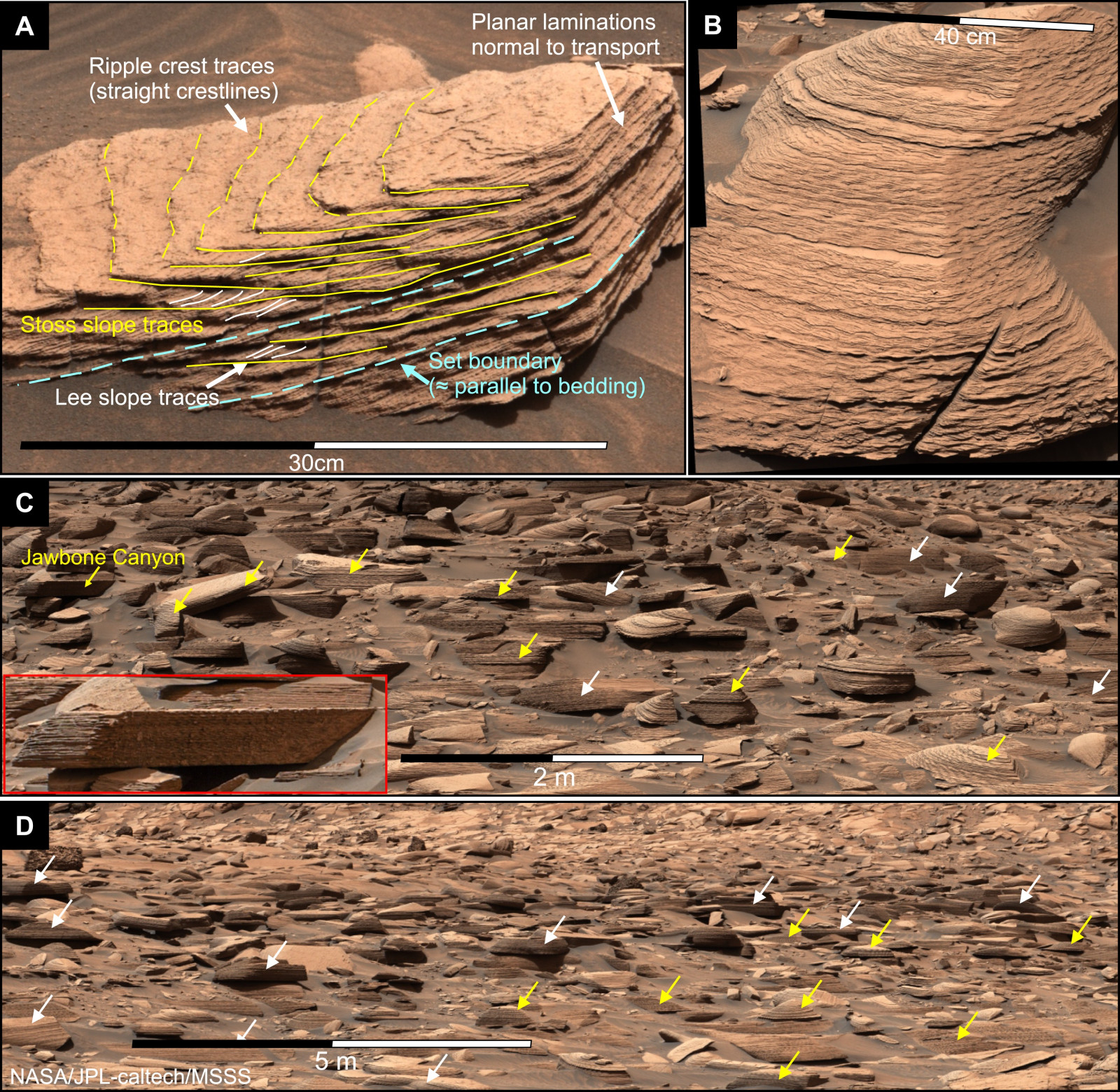
The team believes this process likely occurred near the border of an ancient large dune or a shallow depression carved by wind, where airflow changes led to fast sand accumulation.
The event's duration was remarkably brief. The study estimates that a single 50-millimeter sediment layer formed in roughly 6 to 20 minutes, with the full set of layers indicating a storm event lasting several hours or longer.
Unlocking Mars' Long-Lost Climate History
This finding offers crucial insights into Mars’ transition from a more dynamic environment to the cold, arid planet we see today.
The Mirador formation showcases numerous signs of ancient aeolian activity, enhancing scientists' understanding of Mars’ atmospheric and surface interplay billions of years ago. These newly identified ripple structures demonstrate that even short-lived weather phenomena could imprint lasting geological records.
The researchers highlight that these wind-deposited layers serve as a reminder that Mars and Earth can share comparable sedimentary patterns, despite differing environments. According to the authors, these climbing ripple deposits represent the briefest known wind-driven variations detected in ancient Martian rocks so far.
- Categories:
- Science





0 comments
Sign in to Comment