

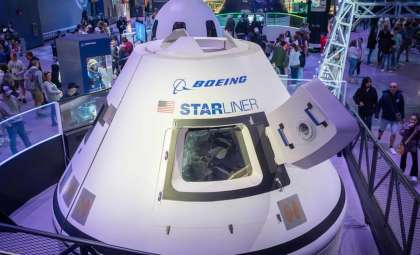
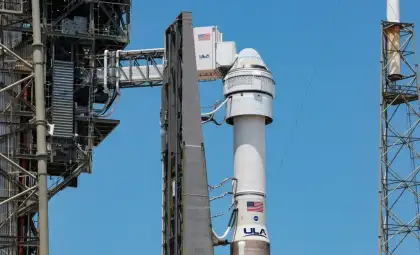
Boeing’s CST-100 Starliner, now on its first crewed orbital test flight, has reported a total of five minor helium leaks, NASA and Boeing officials have announced.
Following its successful docking with the International Space Station (ISS) on June 6, the mission timeline for Starliner has been extended through June 18 as it continues critical in-space evaluations.
Insights into the Helium Leak Incidents
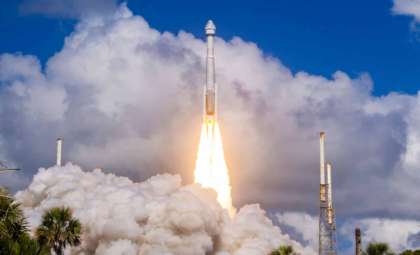
The helium leaks were found within the spacecraft’s service module, which contains vital avionics and propulsion components. Helium plays an important role in pressurizing the reaction control system (RCS) thrusters, crucial for maneuvering the vessel throughout its mission. These leaks first emerged after the June 5 launch, with an initial leak noticed following an earlier aborted launch attempt on May 25.

NASA spokesperson Josh Finch noted that the fifth and most recent helium loss was detected near the time of the post-docking status update. This leak measured 1.7 psi per minute, significantly less than the largest leak recorded at 395 psi per minute post-launch. Despite these findings, engineers confirm the spacecraft retains adequate helium supplies to complete its mission, requiring only about seven hours of free flight for final maneuvers while currently stocked for around 70 hours.
Mitigation Efforts and Ongoing Mission Activities
To mitigate further helium depletion, NASA has shut off key helium manifolds within the propulsion system while the Starliner remains attached to the ISS. These valves will be reopened when undocking and reentry procedures commence. Investigations continue into a valve within the RCS that failed to fully close, along with analysis of a thruster that deactivated en route to the station, to ensure secure spacecraft operation through to landing.
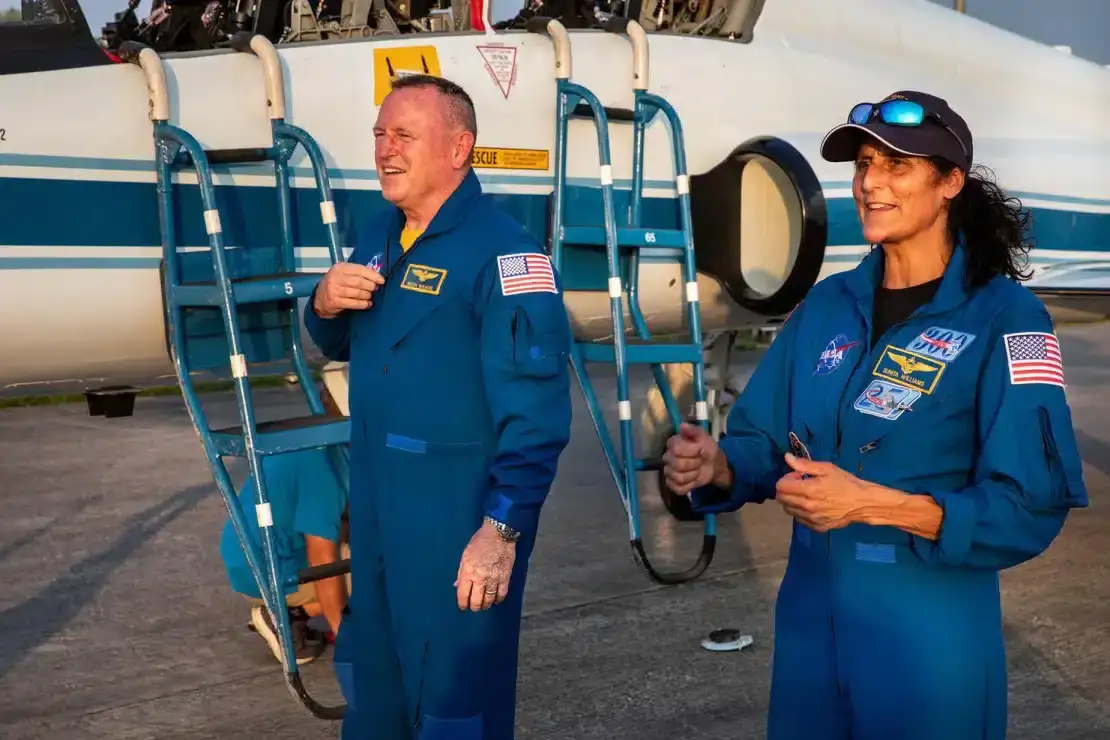
ISS astronauts Barry “Butch” Wilmore and Sunita “Suni” Williams are actively participating in Starliner test protocols aimed at securing NASA’s certification for operational crewed flights. Their assessments include restarting the spacecraft from a low-power state, verifying life support system performance, and testing battery functionality within the service module.
Consequences for Boeing’s Starliner Development
The recurring helium leak issues add to a series of technical struggles in the Starliner program, which has faced multiple delays over the years. This flight is pivotal for Boeing as it aims to earn NASA’s approval for routine astronaut and cargo transport missions alongside SpaceX’s Dragon spacecraft. Despite the challenges, NASA and Boeing express confidence in the spacecraft’s performance. Mark Nappi, Boeing’s vice president and commercial crew program lead, remarked, “Our experienced pilots are very positive about their Starliner flight, and we're eager to gather more data to enhance the vehicle.”
The mission extension provides valuable additional time for system validation and prepares for upcoming ISS spacewalks, including one scheduled for June 13 with NASA astronauts Tracy Dyson and Matt Dominick. Following the completion of onboard testing, Starliner is planned to undock and safely land in the southwestern United States, concluding this significant demonstration flight.
In closing, while the presence of multiple helium leaks presents operational hurdles, the successful docking and ongoing testing events show a strong commitment from Boeing and NASA to address issues and advance the Starliner program. The insights gained during this mission will play a key role in improving spacecraft design and ensuring future crewed missions to space are safe and reliable.
- Categories:
- Astronomy ,
- News ,
- Space ,
- Nasa ,
- Aircraft





0 comments
Sign in to Comment