
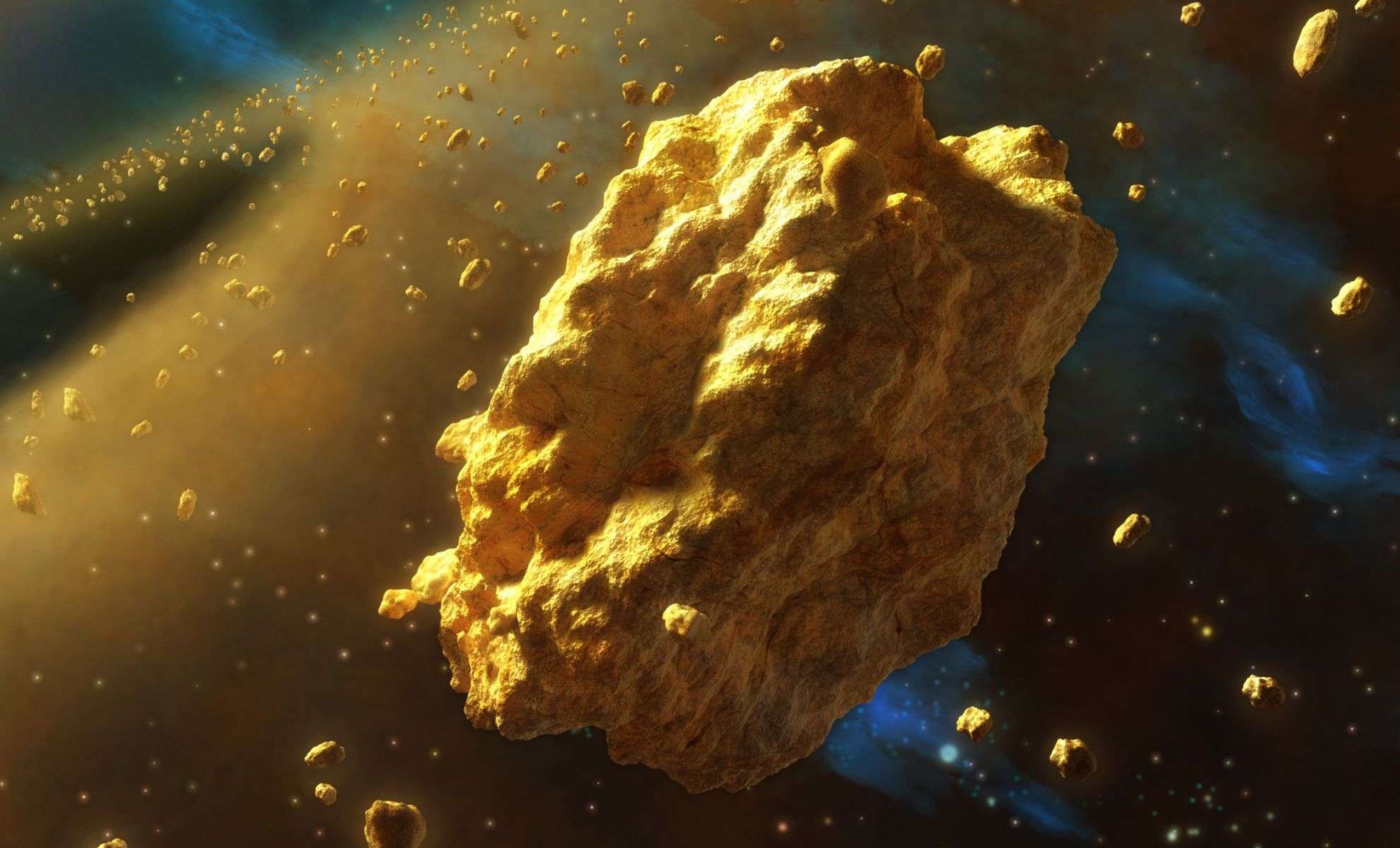
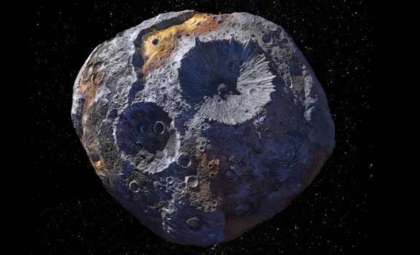
In late 2023, NASA initiated a mission targeting 16 Psyche, a colossal asteroid rich in metals and gold, situated between the orbits of Mars and Jupiter. Valued at approximately $100,000 quadrillion in rare materials, this giant space rock has captured imaginations as a symbol of untapped wealth in our solar system. Despite this, actual mining efforts remain unrealized. A recent Live Science investigation sheds light on the hurdles keeping asteroid mining from becoming a reality, even with advancing technology and rising commercial interest.
A Valuable Planetary Relic
16 Psyche spans more than 140 miles (226 kilometers) and is thought to be the exposed metallic core of a once proto-planet that failed to fully develop. Unlike typical rocky asteroids, it contains a substantial amount of iron, nickel, and precious metals like platinum and palladium, elements vital for a range of industries including electronics and automotive manufacturing.
While its staggering estimated value has garnered public fascination, the primary goal of NASA’s Psyche expedition is to enhance understanding of planetary formation. Studying this unusual metal-rich object offers scientists a rare glimpse into what a protoplanet’s core might look like.

Mining Technologies are Within Reach but Not Yet Viable
Philip Metzger, a planetary physicist at the University of Central Florida, explains that the obstacles to mining asteroids are smaller than commonly perceived.
“The only difference between mining on an asteroid versus on Earth is the need for equipment that can withstand low-gravity, high-radiation conditions,” he said in the Live Science article.
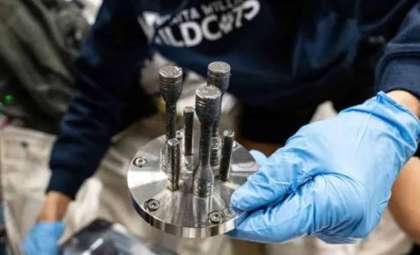
Although many robotic systems designed for space operations have been developed and laboratory-tested, the technologies specific to asteroid mining remain between Technology Readiness Levels (TRL) 3 and 5. For actual space missions, a TRL of 6 or 7 is essential, indicating that the technology has been proven in relevant environmental conditions or in orbit.
“The technologies need to be advanced — about a 6 to 7 — before we’re ready to start building a flight mission,” Metzger said. “What’s lacking right now is funding.”
Private Companies Take on the Challenge
While government space programs have prioritized exploration and research, several commercial enterprises are developing technologies aimed at mining asteroids. Companies such as AstroForge and TransAstra are advancing hardware to extract valuable elements from celestial bodies, although they face significant financial and operational barriers.
Kevin Cannon, assistant professor at the Colorado School of Mines, told Live Science that returning mined materials to Earth might not be economically practical. He described such missions as “economically dubious,” owing to the immense costs and the market depreciation of some metals, including those in the platinum family.
Instead, utilizing asteroid resources in space itself holds greater potential. Water-rich asteroids could be converted into rocket propellant by extracting hydrogen and oxygen, and metals could be incorporated into the construction of spacecraft or orbital installations, reducing the need to launch materials from Earth.
The Moon: Closer but Less Concentrated
Although the Moon is a more accessible source of materials, its deposits are far less concentrated than those found in asteroids like 16 Psyche. Experts suggest that lunar mining, while more immediate, may yield fewer valuable resources.
Asteroids present unique logistical challenges: even near-Earth asteroids require precise mission timing for safe return journeys. For example, NASA’s Psyche probe will take six years to arrive, with expected arrival in 2029.
Current missions such as OSIRIS-REx, Hayabusa2, and Hera are paving the way by improving spacecraft navigation, surface sampling techniques, and return strategies—critical capabilities for future asteroid mining ventures.
- Categories:
- Space







0 comments
Sign in to Comment