

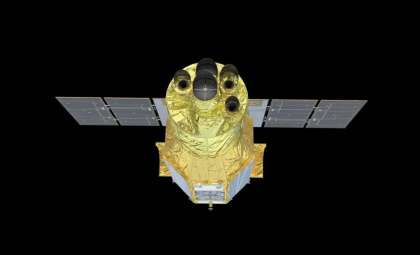
NASA’s Psyche spacecraft has reached a key milestone by powering up its Hall thrusters, enabling its trek toward the asteroid belt.
This mission represents a major leap in space exploration through the use of cutting-edge propulsion systems to explore distant regions of our solar system.
Exploring Asteroid 16 Psyche
Psyche’s goal is to investigate 16 Psyche, an extraordinary asteroid comprised predominantly of metal, situated within the belt between Mars and Jupiter. Unlike typical rocky or icy asteroids, this one is thought to consist mainly of iron and nickel, resembling Earth's core. Studying it promises to shed light on the early building blocks of planets and the evolutionary timeline of our solar system.

Measuring roughly 140 miles across, 16 Psyche ranks among the largest bodies in the asteroid belt. Its metallic nature makes it especially captivating for researchers aiming to uncover clues about the formation processes of terrestrial planets. The mission aspires to address key scientific questions about the makeup of planetary cores and the origins of asteroids, thereby deepening our understanding of how Earth-like planets emerged.
Innovative Hall Thruster Propulsion
The spacecraft utilizes Hall thrusters, a type of ion engine that accelerates charged particles through electromagnetic fields to generate thrust. This propulsion method offers sustained and efficient acceleration, ideal for navigating the vast distances of space while optimizing fuel usage.
Though Hall thrusters have been employed in prior missions, Psyche showcases one of the most ambitious implementations to date. After thorough testing, the thrusters are now active, enabling speeds reaching 133,200 km/h (82,800 mph). Such velocity is essential for covering the expansive distance to its destination in the asteroid belt.
This ion propulsion offers a substantial upgrade over conventional chemical rockets by delivering steady but gentle thrust, allowing gradual speed buildup over time. This is crucial for long voyages that demand precise navigation and extended operational periods far from Earth.
A Multi-Year Voyage to 16 Psyche
The spacecraft’s expedition toward the asteroid is expected to take several years, arriving by 2026. Throughout this journey, it will perform carefully timed maneuvers and flybys to adjust its course and gather momentum. These steps are vital for ensuring a precise approach for orbital insertion around Psyche, after which the spacecraft will execute comprehensive studies of the asteroid’s surface and composition.
The mission unfolds in stages designed to optimize scientific outcomes. Initially, Psyche will conduct a broad survey of the asteroid from a higher orbit before descending closer to capture detailed imagery and data. This layer-by-layer examination will enable thorough mapping, compositional analysis, and investigation of the asteroid’s magnetic characteristics with exceptional precision.
Scientific Goals and Investigations
The mission’s chief scientific objectives include:
- Detailed surface mapping: Producing high-resolution maps of Psyche’s terrain and structural features.
- Compositional study: Identifying elemental constituents to better understand the asteroid’s origin.
- Magnetic field analysis: Examining any magnetic signatures to infer its interior and thermal history.
- Insights into planet formation: Advancing our grasp of how rocky planets like Earth developed.
Mapping Psyche’s surface in detail will reveal its craters, ridges, and textures, offering vital evidence about its geological past. Compositional analysis seeks to decode the minerals and elements present, offering clues about conditions during the early solar system.
Exploring the asteroid’s magnetic properties could confirm whether it once harbored an active molten core, similar to Earth’s. Such a discovery would enrich understanding of planetary differentiation and evolution processes, vital for piecing together solar system formation and habitability dynamics.
Impact on Future Space Exploration
Successfully deploying Hall thrusters on Psyche could transform propulsion approaches for future deep-space missions. The efficiency and controllability of ion engines make them highly attractive for sustained missions beyond Earth’s neighborhood, possibly supporting eventual human exploration of Mars and farther targets. Psyche’s progress underscores the promise and practical application of these propulsion systems in advancing planetary science.
Discoveries and technical achievements from Psyche may shape the design and goals of upcoming missions focused on metal-rich asteroids and other intriguing celestial objects. Building upon the Psyche foundation, space agencies worldwide can advance exploration strategies and technology, pushing the horizons of our cosmic knowledge ever further.
- Categories:
- Astronomy ,
- News ,
- Space ,
- Nasa









0 comments
Sign in to Comment