
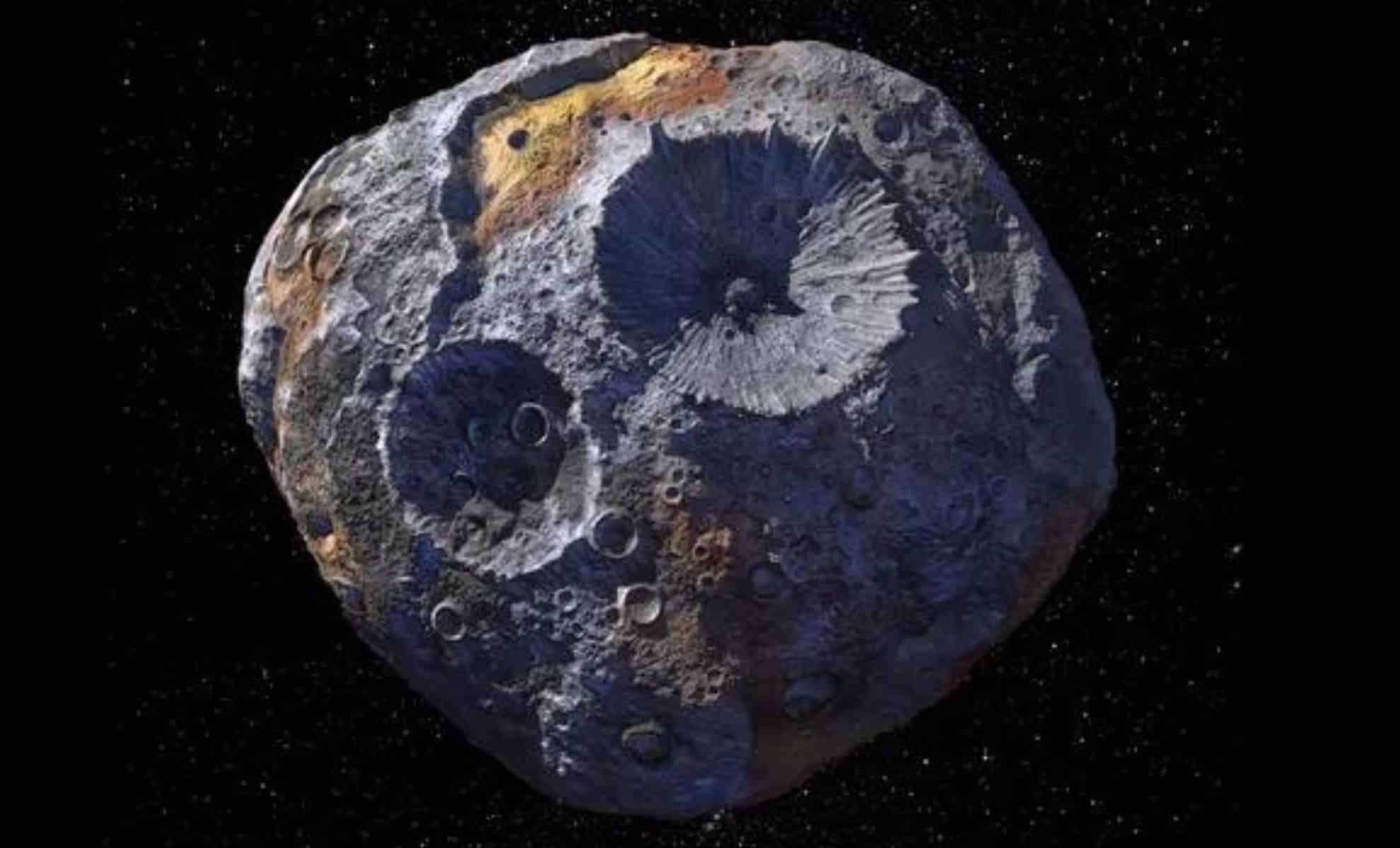
New James Webb Space Telescope observations are providing surprising insights into the asteroid Psyche, indicating its metallic surface may be undergoing rusting.
Previously thought to be predominantly composed of iron and nickel, Psyche's makeup now appears to be more intricate than scientists assumed.
Recent findings highlight the presence of hydroxyl groups—chemical markers related to water—bound to metals on Psyche’s surface, implying the asteroid could be experiencing corrosion akin to rust.

Revealing Psyche’s Composition with Cutting-Edge Instruments
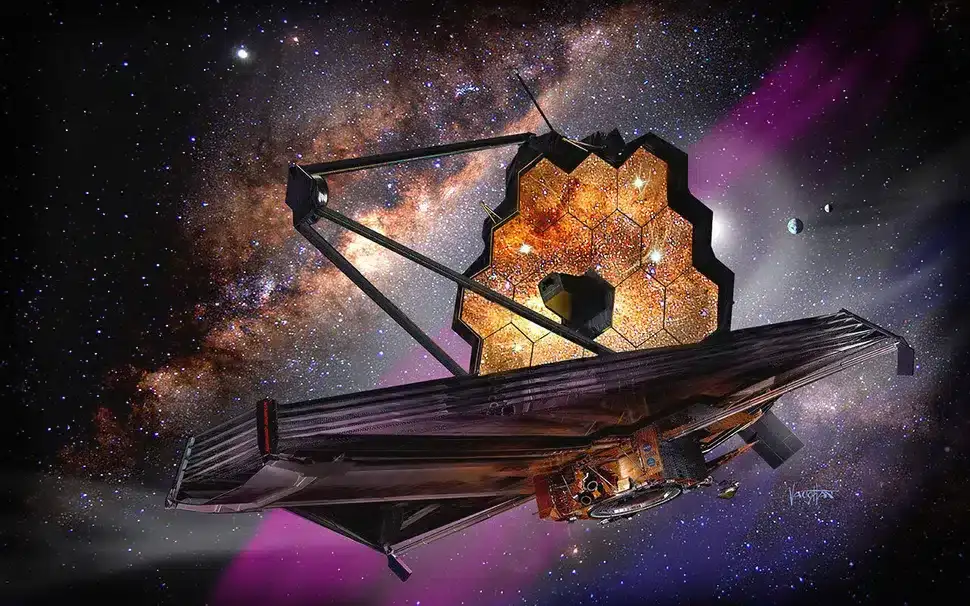
The JWST utilized its sophisticated Near Infrared Spectrograph (NIRSpec) and Mid-Infrared Instrument (MIRI) to collect in-depth spectral data from Psyche’s surface. In March 2023, the telescope focused on the asteroid’s north pole, capturing reflected light that uncovered chemical details not visible before.
This analysis detected hydroxyl groups, which form through interactions between water molecules and metal elements. This is a key discovery, indicating Psyche may have encountered water or hydrated compounds during its history.
Planetary scientist Stephanie Jarmak from the Harvard and Smithsonian Center for Astrophysics explained, “The hydroxyl groups likely bond with metals on Psyche’s surface, resulting in rust formation.”
The presence of rust on such an ancient, isolated asteroid questions the earlier idea of Psyche as a purely metallic core of a protoplanet. Instead, the new evidence points to a more complex past involving chemical activity with water-based substances, suggesting Psyche’s journey through the solar system was more dynamic than once believed.
Researchers are now exploring scenarios for Psyche’s water exposure. Possibilities include impacts from water-carrying objects or formation in the solar system’s outer region before migrating inward. Confirming these theories could reshape our understanding of this asteroid’s development and its broader significance in planetary science.
The Intricate History Behind Psyche
Situated in the asteroid belt between Mars and Jupiter, Psyche spans around 173 miles (280 kilometers) across and was long considered the exposed nickel-iron core of an early protoplanet. This belief motivated NASA’s launch of the Psyche mission in October 2023, aiming to orbit the asteroid in 2029 to study it closely.
However, the discovery of hydroxyl groups introduces new complexity. Some researchers propose that collisions with water-rich asteroids could have delivered the hydroxyl-bearing materials to Psyche’s surface.
Alternatively, Psyche might have originated in colder, ice-rich regions of the outer solar system before moving inward to the asteroid belt. Such a background would imply a composition more diverse than metal alone, potentially including silicate minerals associated with hydration.
“Detecting these hydroxyl signatures is critical because it challenges the view of Psyche as a simple metallic world,” Jarmak stated. The JWST’s findings are prompting scientists to reconsider Psyche’s role in solar system formation, suggesting it harbors clues essential for understanding early planetary processes.
NASA’s Psyche Spacecraft to Investigate Further
The JWST’s revelations come as NASA’s Psyche spacecraft, launched in October 2023, is on course to reach the asteroid by 2029. This mission is equipped to analyze Psyche’s surface composition, magnetic properties, and geological features at close range. It aims to clarify whether Psyche truly represents a planetary core remnant or a body altered by interactions with water and other compounds.
Rob Lillis, lead scientist at the UC Berkeley Space Sciences Laboratory, said, “Successfully delivering the spacecraft to Kennedy Space Center is a milestone reflecting years of dedicated collaboration, especially with partners at Rocket Lab.”
The mission will examine whether the rust-like features result from external water influences or internal processes. It will also probe deeper into the mineralogy and magnetic environment, revealing details about Psyche’s internal structure and history.
With the arrival of the spacecraft on the horizon, excitement is high for further discoveries. JWST’s identification of rust on Psyche’s surface hints at a complex narrative for this asteroid, offering valuable insights into the early solar system’s watery and chaotic environment. These findings may ultimately enrich our broader understanding of how planets, including Earth, evolved.
- Categories:
- Astronomy ,
- News ,
- Space ,
- Nasa









0 comments
Sign in to Comment