
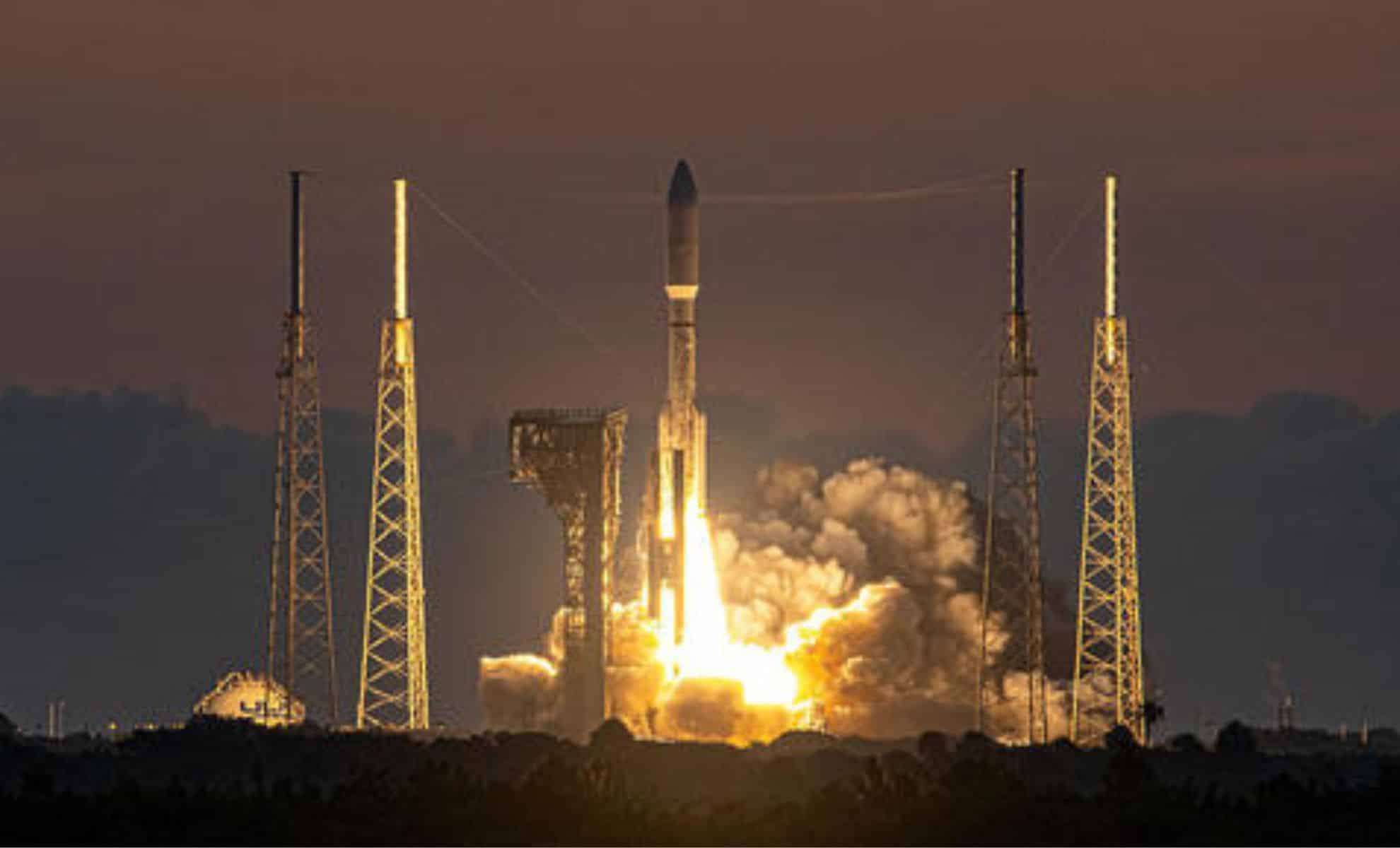
The United Launch Alliance (ULA) successfully executed its last Atlas V rocket launch for a U.S. Space Force national security mission, marking a historic moment in American space endeavors.
On July 30, 2024, from Cape Canaveral Space Force Station, the Atlas V lifted off, closing a remarkable chapter for a vehicle that has reliably supported national security missions for more than 20 years.
A Landmark Launch Event
The Atlas V rocket, powered by a Russian RD-180 engine alongside five solid rocket boosters supplied by Northrop Grumman, ignited at 6:45 a.m. EDT. The launch, generating an impressive 2.7 million pounds of thrust, provided a dramatic display for onlookers early that morning.

The specifics of this classified mission remain under wraps, consistent with typical practices for national security payloads. This flight represents the culmination of the Atlas V’s indispensable role in U.S. space activities over nearly a quarter-century.
The Enduring Legacy of Atlas V
Since debuting in 2002, the Atlas V has been instrumental in over 80 missions, including launching NASA’s famed Curiosity rover to Mars and numerous vital scientific and reconnaissance satellites.
Celebrated for its flexibility and dependability, the Atlas V has served a wide range of government and commercial needs. This last national security flight highlights a transition period as the U.S. Space Force and ULA pivot toward newer, more cost-efficient launch platforms.
The rocket’s impact extends beyond security; it has propelled telecommunications satellites and deep-space probes alike. Its unparalleled reliability earned its reputation as a true workhorse—yet evolving technology and budgetary demands have shifted preferences toward more modern alternatives.
Moving Forward: The Vulcan Centaur Era
Attention is now on the Vulcan Centaur, ULA’s innovative successor to the Atlas V. Featuring American-made engines developed by Blue Origin, the Vulcan Centaur aims to remove reliance on Russian propulsion systems such as the RD-180 engine.
This transition enhances technological self-sufficiency and introduces improved performance alongside better economy. The Vulcan is designed to serve a spectrum of missions while offering increased versatility and cost-effectiveness.
The rocket’s successful inaugural flight earlier this year showcased its strong potential. Future launches will include deploying Amazon’s Project Kuiper satellite network to offer worldwide broadband and facilitating crewed flights to the International Space Station utilizing Boeing’s Starliner. This shift marks a new milestone in ULA’s legacy of dependable space launches.
Looking Back and Ahead
Colonel James Horne, a lead launch official at the Space Systems Command, shared thoughts on the final Atlas V mission with a sentiment combining pride and reflection. He emphasized the rocket’s essential role in national security over many years.
The last payload, described as "one of the most critical" in recent times, remains classified, highlighting the sensitive nature of these defense-oriented missions involving advanced surveillance and protection technologies.
As Atlas V retires from the national security forefront, the emphasis moves to the Vulcan Centaur, which promises to maintain ULA’s high standards while integrating next-generation advancements. This handover represents not merely a replacement, but a readiness shift into the future of space exploration and defense.
The Vulcan’s capabilities are set to support diverse endeavors, ranging from deep space science to bolstering national defense and expanding commercial ventures.
The retirement of the Atlas V in these missions signifies a transformative moment in American spaceflight, symbolizing progress in technology and mission strategy. Insights gained from the Atlas V’s long career will continue to guide development of cutting-edge systems like the Vulcan Centaur.
This progression reflects the growing trend toward advanced, resilient space systems designed to meet the challenges of an increasingly contested orbital environment.





0 comments
Sign in to Comment