
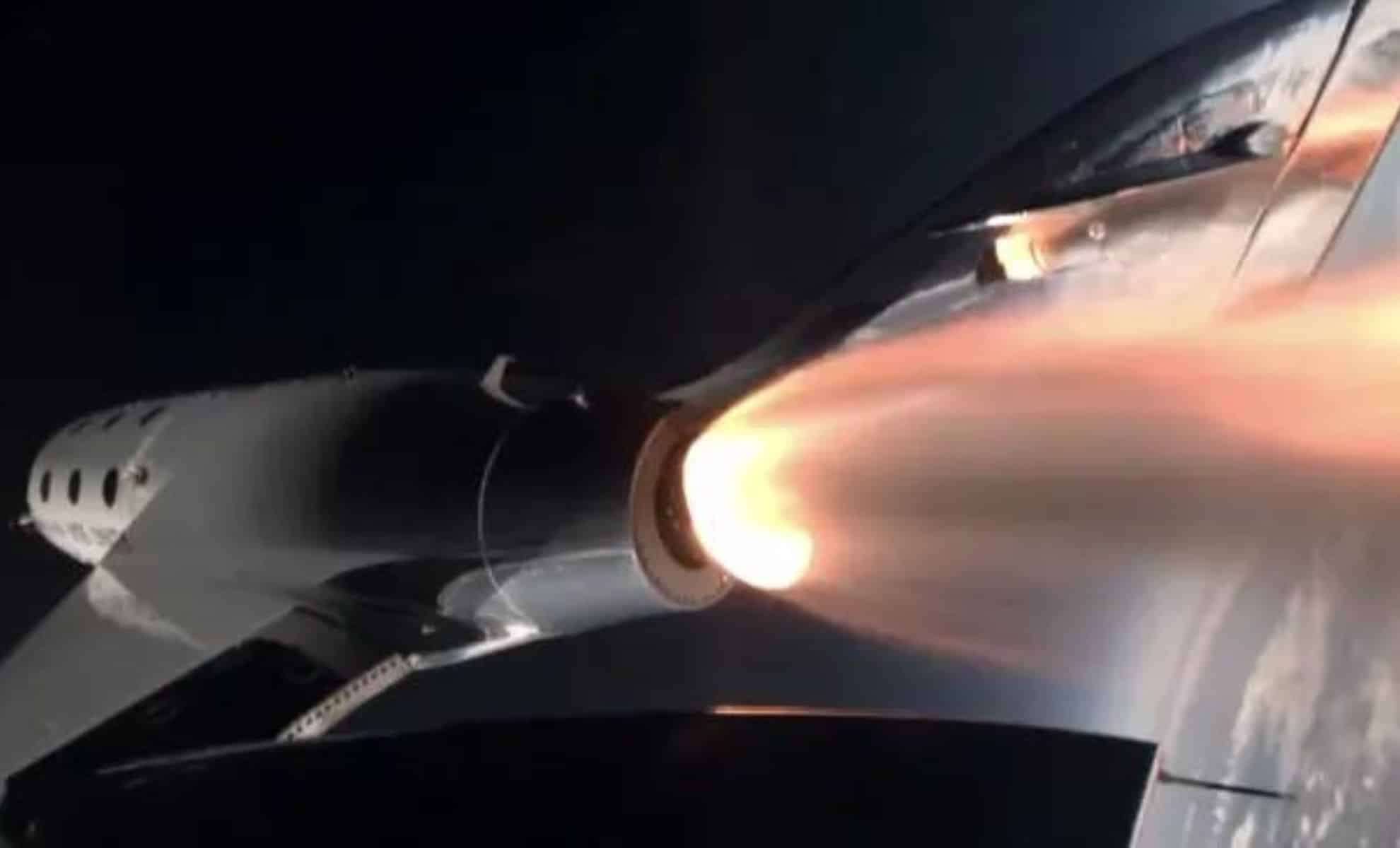
Virgin Galactic has successfully completed its last commercial mission aboard the VSS Unity spaceplane at Spaceport America, New Mexico, signaling a pivotal shift as the company readies its next-generation Delta class vehicles.
On June 8, 2024, at 10:30 a.m. MT (12:30 p.m. EDT / 1630 GMT), the Galactic 07 flight took off, marking Virgin Galactic’s seventh commercial journey and second this year. This milestone reflects years of advancements in the field of commercial spaceflight.
Farewell Flight for VSS Unity
The Galactic 07 mission aboard VSS Unity included a crew featuring Tuva Atasever, the backup astronaut for Axiom Space Mission 3 (Ax-3) representing the Turkish Space Agency, alongside three private passengers. While Virgin Galactic customarily keeps the identities of private astronauts under wraps ahead of liftoff, it is known that the trio hail from California, New York, and Italy.

Each passenger invested $450,000 to experience spaceflight, gaining several minutes of weightlessness and a remarkable perspective of Earth from space. Virgin Galactic’s Chief Astronaut Instructor, Beth Moses, described the journey as “a life-changing experience that very few get to enjoy, offering a perspective of Earth like no other.”
Advancing to the Delta Fleet
With VSS Unity’s final voyage complete, Virgin Galactic is shifting focus toward its upcoming Delta class spaceplanes. Testing is slated to begin in late 2025, with operational flights expected to follow in 2026, embodying significant technological and operational enhancements.
Virgin Galactic President Mike Moses explained that the Delta vehicles will be more economical and simpler to service than Unity, stating, “Delta will enable us to fly twice weekly, a stark increase from Unity’s monthly schedule. This leap will profoundly enhance our operational rhythm.” Designed with cutting-edge materials and an improved architecture, these spaceplanes will be manufactured and maintained more quickly, supporting expanded flight frequency to meet commercial and research demands.
Moses further highlighted, “The Delta type’s modular design streamlines maintenance and curtails turnaround durations. This efficiency is indispensable for scaling our spaceflight frequency and widening space access.” This expanded cadence will not only allow for greater passenger throughput but also bolster scientific missions, driving forward space research and innovation.
Insights from Previous Flights
Kelly Gerardi, a scientist aboard the Galactic 05 flight, shared insights on the mission’s scientific significance. During her 90-minute suborbital flight, she conducted experiments including the inaugural use of a continuous glucose monitor (CGM) in microgravity, a floating fluid dynamics test, and assessments with the Astroskin biometric device.
Gerardi emphasized the transformative role of commercial spaceflights in expanding access and fostering scientific exploration. “It was an extraordinary experience,” she said. “After nearly a decade of incremental tests on the effects of microgravity, directly conducting research in space offers unparalleled opportunities.”
Her experience illustrates how Virgin Galactic’s journeys serve a dual purpose: delivering unforgettable experiences to travelers while advancing scientific progress. “The research outcomes from these flights have broad impact,” Gerardi noted. “They have the potential to shape future missions, enhance medical tech, and motivate educational initiatives.” This blend of commercial and research interests showcases how private space operators like Virgin Galactic are enriching the broader space exploration landscape.
The Galactic 07 flight highlights Virgin Galactic’s dedication to increasing the frequency and accessibility of space tourism. With the Delta fleet's arrival, the company plans to elevate its capacity, continuing to offer exclusive spaceflight adventures and support critical microgravity research.
As Virgin Galactic charts its future course, it remains a leader in commercial space innovation, heralding a new period in space exploration. “We stand at the threshold of a new era in spaceflight,” stated Virgin Galactic CEO Michael Colglazier. “The advances integrated into the Delta spacecraft will revolutionize how humanity accesses and utilizes space.”





0 comments
Sign in to Comment