
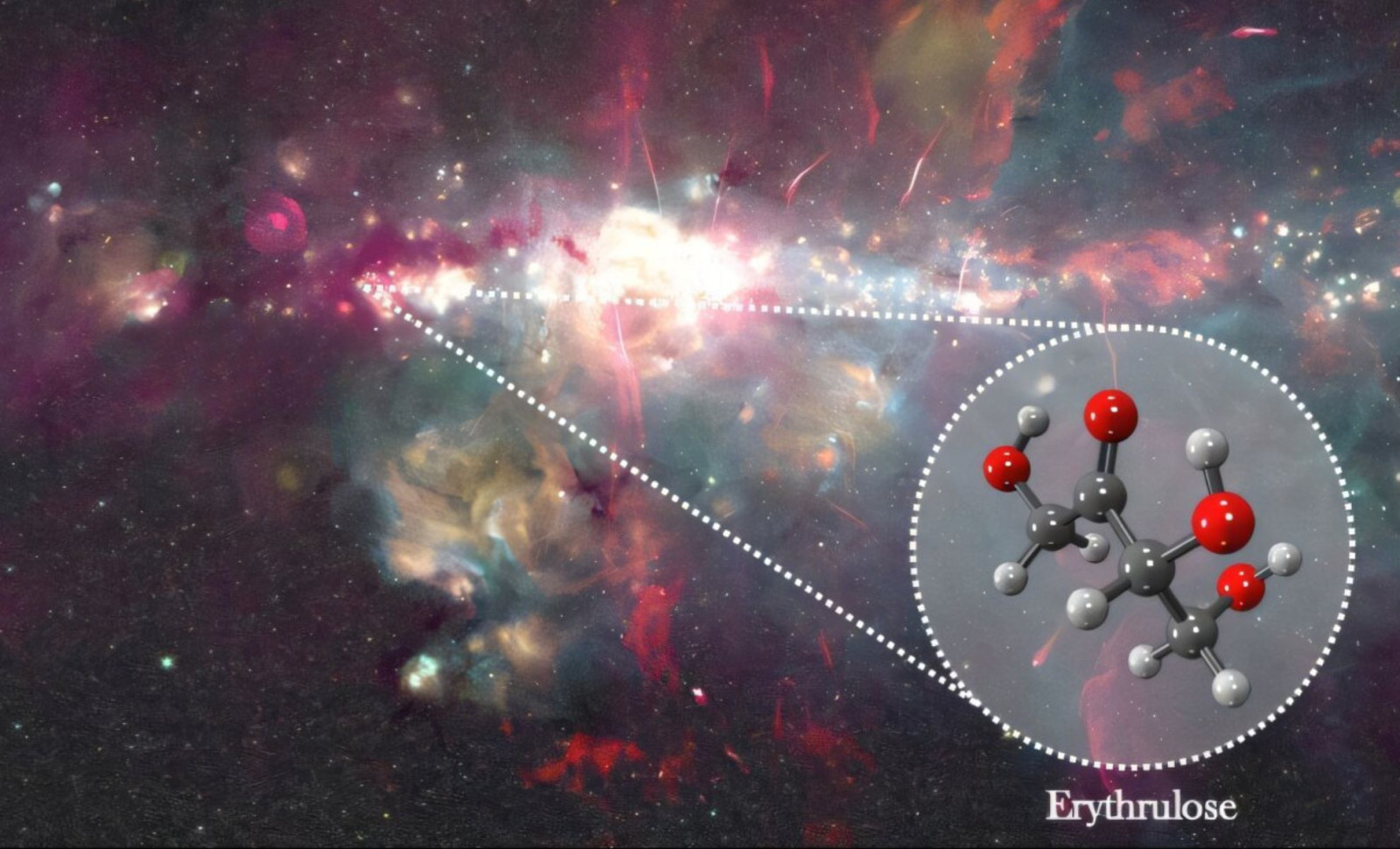
A groundbreaking discovery has confirmed the presence of the first sugar molecule detected in interstellar space, marking a significant leap forward in uncovering the chemical precursors that might have led to life. Featured in Nature Astronomy, scientists identified erythrulose within a colossal molecular cloud near the heart of the Milky Way, offering compelling proof that complex sugars can form naturally well before planets emerge. This breakthrough reshapes our understanding of how fundamental biological molecules may have been delivered to Earth billions of years ago.
Revolutionary Finding in a Molecular Cloud Close to the Galactic Core
For many years, astronomers have sought out increasingly complex organic compounds amidst the vast gas and dust clouds scattered throughout our galaxy. Although amino acids, aldehydes, alcohols, and a variety of other carbon-based molecules have been discovered, sugars had remained elusive despite their essential biological functions. This status quo changed with the unveiling of erythrulose, a unique four-carbon ketose, within the molecular cloud G+0.693−0.027, situated near the Milky Way’s galactic center. The multinational team, spearheaded by Izaskun Jiménez-Serra from the Spanish National Research Council’s Center for Astrobiology (CAB), made use of highly sensitive broadband spectroscopic data gathered via Spain’s 40-meter Yebes radio telescope and the 30-meter IRAM telescope.
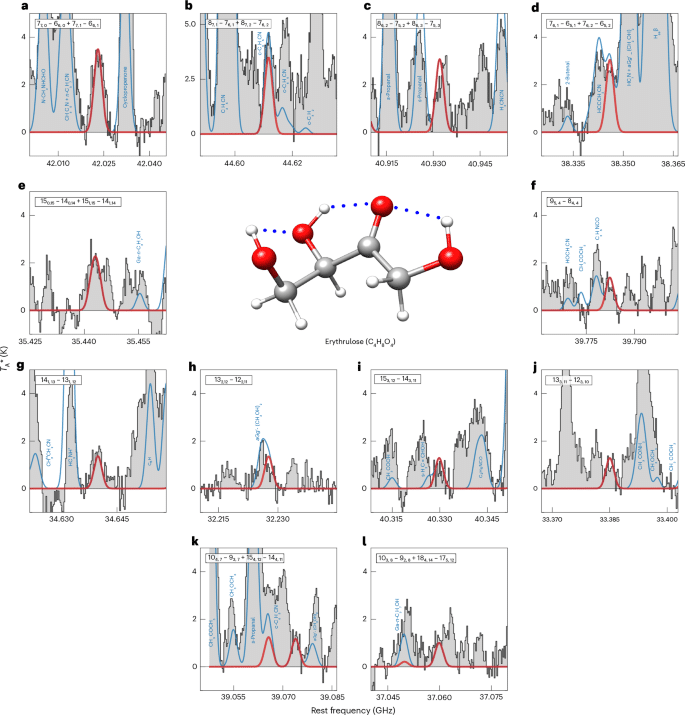
Twelve distinct spectral lines were matched to laboratory spectra of erythrulose synthesized at the University of the Basque Country, leaving little room for doubt regarding the molecule’s identity. The findings, detailed in Nature Astronomy, mark the first confirmed identification of any sugar within the interstellar medium and expand the known catalog of complex molecules existing long before stars and planets form.

An Intriguing Chemical Formation Pathway Challenges Existing Models
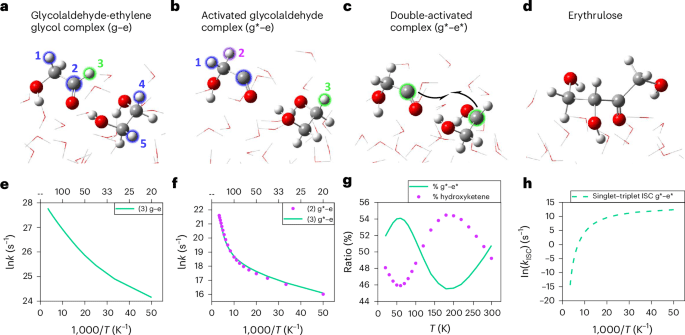
Scientists were taken aback by the abundance of erythrulose, which did not conform to the prevailing theories of molecular complexity growth in space. Conventional astrochemistry proposes that complex molecules arise by adding individual carbon atoms sequentially, gradually enlarging molecular size. Contrarily, erythrulose was more than eight times as abundant as three-carbon sugars—which were entirely absent—indicating a distinct formation process.
Collaborating with chemists from the University of Extremadura and Radboud University in the Netherlands, the research group showed that erythrulose can synthesize within frozen interstellar ices via reactions involving simpler two-carbon alcohols and aldehydes. These icy dust particles act as natural chemical factories, where radiation and cold conditions enable complex reactions not easily replicated in laboratories on Earth.
“This finding was unexpected, as the prevailing view in astrochemistry is that interstellar molecules grow in size through the sequential addition of carbon atoms,” says Jiménez-Serra, lead author of this work.
This alternative chemical route offers a convincing rationale for the high concentration of the sugar discovered and hints at a richer diversity in space chemistry than previously anticipated.
Space Sugars as Potential Contributors to Earth's Early Chemistry
The discovery has implications that extend well beyond the molecular cloud studied. Previous research had uncovered sugars such as ribose and glucose in meteorites and asteroid samples, suggesting these crucial molecules existed before our solar system’s formation. Until now, no direct detection of sugars in the interstellar medium had bridged this gap.
Using the observed quantity of erythrulose in G+0.693−0.027, scientists estimate that Earth may have received between 500,000 and 50 million metric tons of this sugar during the Late Heavy Bombardment period, roughly 3.8 to 4.1 billion years ago. This bombardment bombarded the early planet with asteroids and comets, potentially depositing enormous amounts of organic matter. Such influxes could have provided fertile ground for complex chemical pathways linked to the origins of metabolism and molecular replication.
Opening New Avenues in the Quest for Life’s Molecular Precursors
The detection of erythrulose goes beyond simply adding a new entry to cosmic molecule catalogs. It confirms that complex sugars can emerge in deep space naturally and encourages the search for other critical biological molecules. Among the most promising targets is ribose, integral to the structure of RNA, a fundamental molecule for genetics and life's beginnings. Finding ribose or similar sugars in interstellar space would further support the idea that many essential life components were present before Earth’s formation. Future radio telescope advancements and laboratory experiments replicating interstellar ice chemistry will aid in exploring whether erythrulose is a unique occurrence or part of a broader family of cosmic sugars awaiting discovery. “The detection of erythrulose is very exciting because it opens up the possibility of discovering in space other sugars such as ribose, which is part of RNA, and other important molecules for the origin of life,” says Carlos Briones, co-author of the study. As our view of galactic chemistry deepens, revelations like this suggest that the molecular foundations of life might be far more common across the universe than once thought.
- Categories:
- News







0 comments
Sign in to Comment