
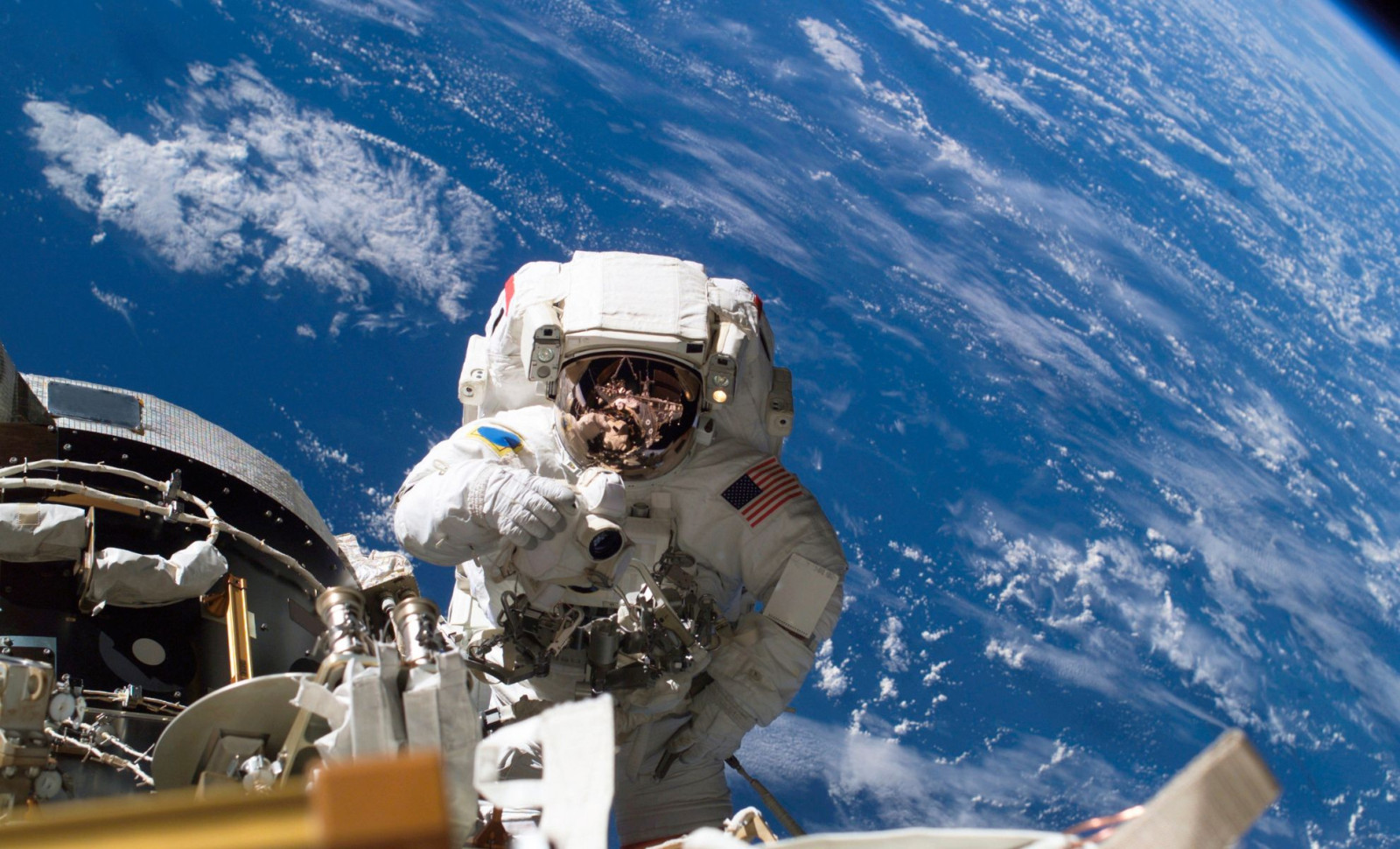
Explorations to the Moon, Mars, and farther into the cosmos will subject space travelers to radiation levels significantly exceeding those experienced in low-Earth orbit. Traditionally, engineers have depended on dense shielding materials to lower these dangers, but their heavy weight complicates spacecraft design and increases launch costs. A recent paper on arXiv proposes an alternative strategy: utilizing powerful permanent magnets to steer charged particles away before they can reach a spacecraft. Instead of blocking radiation with thick layers, the plan is to use magnetic fields to alter the trajectories of energetic particles. If feasible, this technology could play a vital role in future radiation defense systems for extended space missions.
The Continuing Threat of Solar Storms in Deep Space
Radiation represents a major challenge for human travel beyond Earth's natural magnetic shield. Astronauts venturing to Mars or spending prolonged time in cislunar space face exposure from energetic particles generated by solar particle events and the steady stream of galactic cosmic rays. Intense solar storms can propel vast quantities of charged particles into the Solar System, sharply elevating radiation levels over short durations. Although modern spacecraft offer some level of protection, their shielding thickness—and thus effectiveness—is limited by launch weight constraints.
High doses of radiation heighten the likelihood of cancer, brain damage, eye issues like cataracts, and heart problems; very strong events can even cause immediate radiation sickness. While mission teams monitor solar activity and use forecasting techniques to safeguard crews, predictions alone cannot fully eliminate risks. As missions extend in duration and distance, scientists seek new solutions to reduce radiation exposure without making spacecraft overly heavy.

Exploring the Magnetic Shielding Approach
The study, published on arXiv, investigates whether modern arrays of permanent magnets could create magnetic fields strong enough to deflect many charged particles generated during solar storms. Unlike active shielding systems requiring superconducting electromagnets and continuous power, permanent magnets generate magnetic fields inherently without energy consumption. This characteristic makes them appealing for spacecraft where power is limited.
The research analyzes various magnet layouts, intensities, and shapes to assess how effectively charged particles might be diverted from crewed modules. Charged particles curve when passing through magnetic fields, so a well-designed magnetic setup could lessen the flux reaching astronauts. Findings indicate such systems could be especially beneficial against lower-energy particles common during solar events, which are generally easier to deflect than ultra-high-energy cosmic rays. While this method won't eliminate all radiation, it could augment existing shielding and enhance overall crew safety.
Potential Benefits of Permanent Magnetic Shields
Conventional radiation protection involves placing dense materials between astronauts and incoming particles. Substances like aluminum, polyethylene, or water can absorb some radiation, but increasing effectiveness usually means adding significant mass. Permanent magnets offer a different idea by aiming to prevent many particles from reaching the spacecraft at all. Since they don’t require constant electrical power, they sidestep major challenges faced by active magnetic shielding. Advances in high-strength rare-earth magnets have also made much more powerful permanent magnets available compared to previous generations.
Scientists believe that carefully engineered magnetic arrays could deliver substantial protection without the complexity associated with superconducting magnet systems requiring cryogenic cooling. This technique could be combined with existing spacecraft shielding instead of replacing it entirely, establishing multiple radiation defense layers. Such hybrid approaches could be advantageous for future missions, balancing weight, power efficiency, and reliability.
Challenges Remaining for Magnetic Shield Implementation
Although promising, this permanent magnet shielding concept is still in its infancy and must overcome various engineering obstacles before it can be used operationally. Creating magnetic fields sufficiently strong to protect an entire crew compartment demands optimized magnet placement, and the overall magnet mass must remain competitive with traditional shielding. Engineers must also ensure strong magnetic fields don’t disrupt spacecraft electronics, scientific instruments, sensors, or crew activities.
Space radiation includes a broad spectrum of particle energies, implying no single shielding method can provide full protection. Permanent magnets show greatest potential against some charged particle groups, while the most energetic galactic cosmic rays remain very challenging to deflect. Further research must assess durability, manufacturing feasibility, integration into spacecraft, and mission cost-effectiveness. Comprehensive computer models, laboratory experiments, and eventually space tests will be necessary before mission planners can reliably adopt magnetic shielding for crew safety.
Advancing Human Space Exploration Safety
As both government agencies and private companies gear up for deeper space missions beyond low-Earth orbit, managing radiation exposure remains a top priority for spacecraft design and mission planning. The arXiv study adds to a growing body of investigation exploring novel methods to reduce one of the most significant dangers astronauts face.
While permanent magnets are unlikely to replace traditional shielding entirely, they could become an integral part of a comprehensive protection strategy that also includes passive shielding materials, operational protocols, enhanced solar monitoring, and advanced spacecraft technologies. Each improvement to radiation mitigation boosts the feasibility of longer journeys and more distant goals. If validated through future testing, magnetic shielding might play a crucial role in the next era of human space exploration across the Solar System.
- Categories:
- News







0 comments
Sign in to Comment