
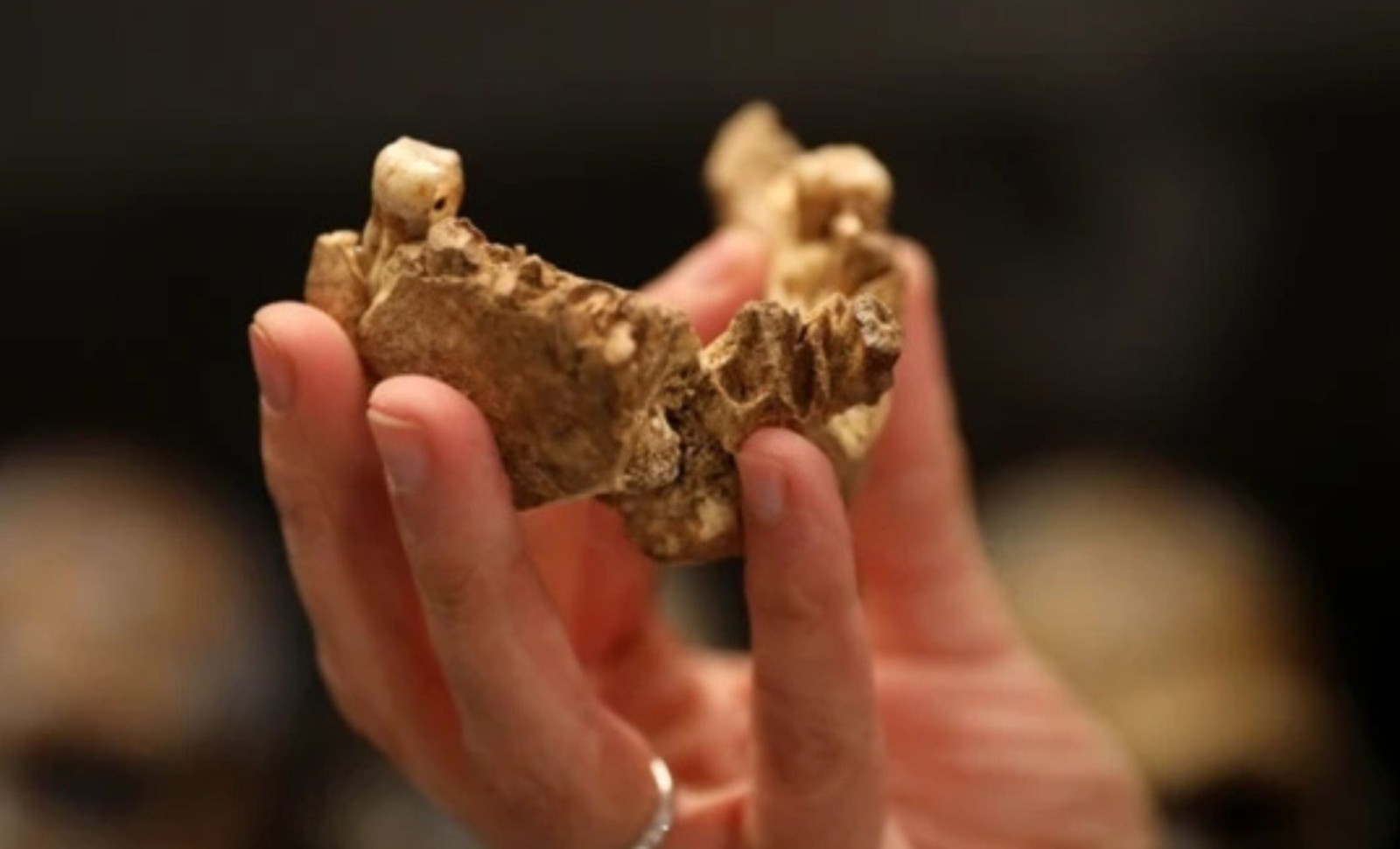
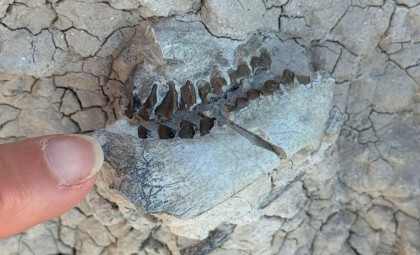
A minute fossilized jaw unearthed in southern Brazil is shedding light on the early evolutionary history of reptiles that ultimately evolved into today’s lizards, snakes, and the tuatara. This specimen pertains to Cargninia enigmatica, a rare reptile species that existed approximately 225 million years ago during the Late Triassic period.
New findings based on this reptile fossil enhance previous knowledge by revealing anatomical details absent from the initial fragment discovered over ten years ago. Utilizing advanced imaging technology and a fresh phylogenetic assessment, scientists now have a more precise understanding of how this mysterious reptile fits into the evolutionary lineage.
Modern lepidosaurs represent one of the most varied vertebrate groups on the planet, but piecing together their early origins is challenging due to the scarcity of fossils from their earliest relatives. As a member of Lepidosauromorpha, the broader group that ultimately led to existing lepidosaurs, every fossil from this lineage is particularly valuable for research.

Living during the early Norian stage of the Late Triassic, Cargninia enigmatica coexisted with some of the earliest dinosaurs, synapsid ancestors, primitive crocodilian-line reptiles, and the earliest relatives of the tuatara. Prior to recent discoveries, knowledge of this species came from only one partial lower jaw fragment, leaving many anatomical features unknown.
New Jaw Fragment Provides Crucial Anatomical Insights
The initial description of Cargninia enigmatica in 2010 was based solely on a partial left dentary, limiting the ability to fully investigate its evolutionary connections.
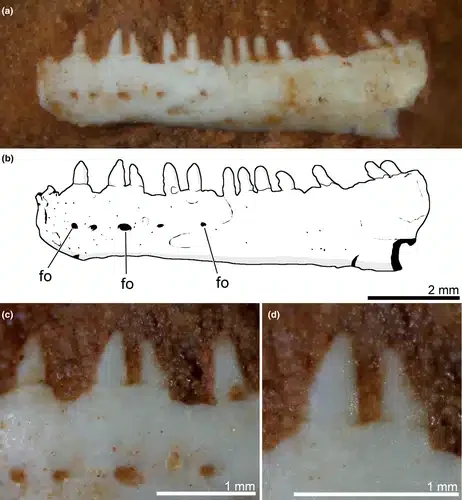
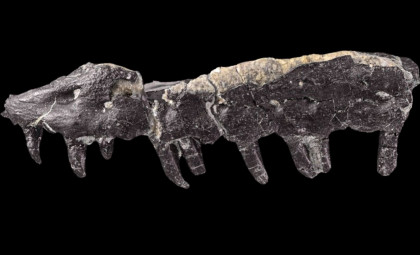
The latest specimen was excavated from the Linha São Luiz locality in Faxinal do Soturno, within Brazil’s Rio Grande do Sul State—the same site as the first find. Measuring less than 9 millimeters in length, the preserved partial left lower jaw contains 12 teeth and indicates that a complete jaw might have housed up to 18 teeth.
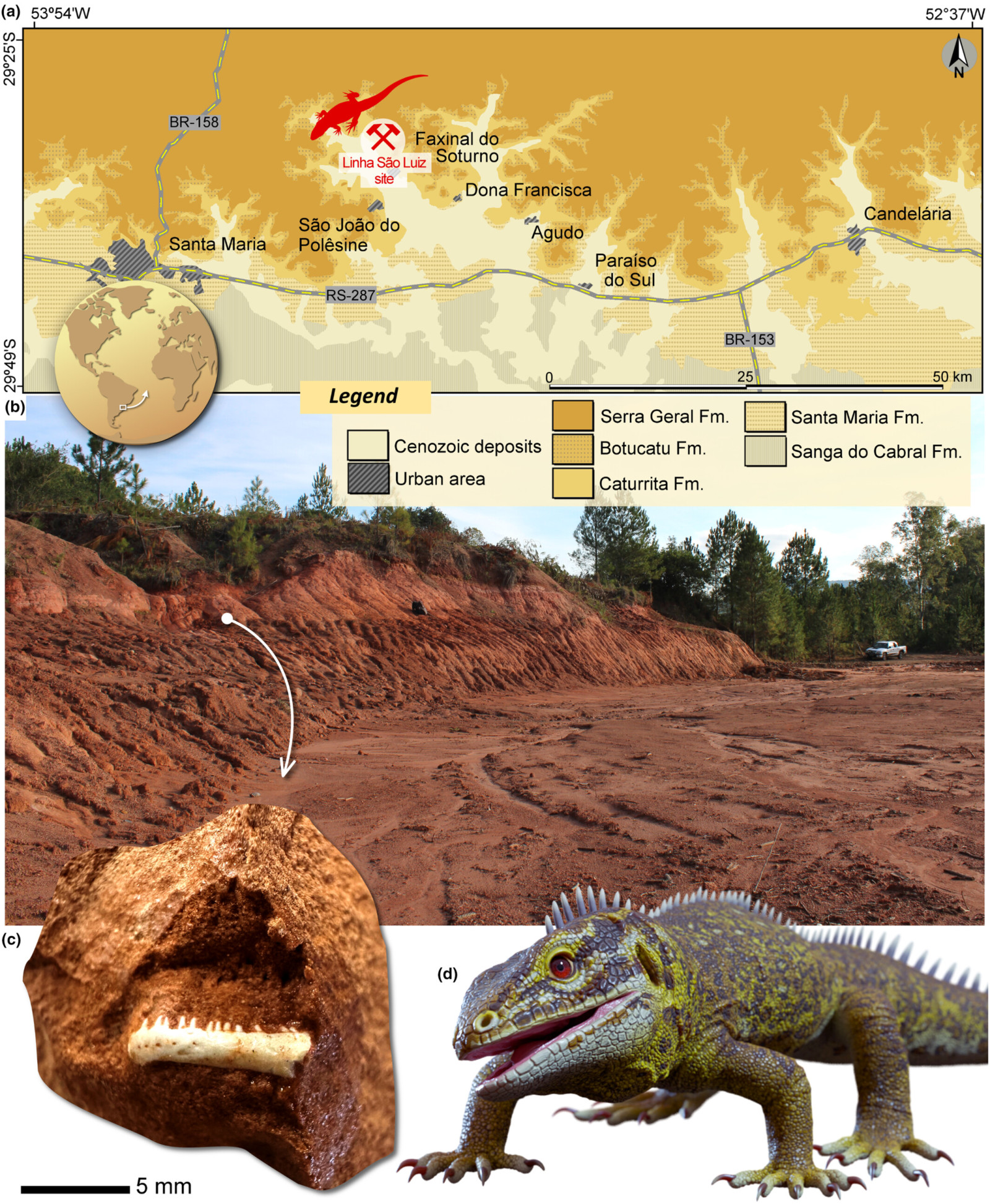
Researchers note that Cargninia enigmatica remains the sole known representative of this stem lepidosauromorph lineage from Brazilian rock layers. When first studied, its tiny teeth, measuring approximately 0.4 to 0.5 millimeters in width, and a likely subacrodont tooth implantation pointed to a non-rhynchocephalian lepidosaur status. The initial research also remarked that:
“They also noted similarities between the tooth implantation of Cargninia and that of Icarosaurus, a kuehneosaurid reptile from the Late Triassic Lockatong Formation of the United States.”
Micro-CT Imaging Reveals Internal Features
The team utilized micro-CT scanning to non-destructively examine the fossil, uncovering internal structures of the jaw.
The imaging detailed the pathway of the trigeminal nerve, which plays a vital role in facial sensation and jaw movements. According to the report in The Anatomical Record, this nerve’s branching pattern corresponds closely to that seen in extant lepidosaurs.
This suggests that the reptile processed sensory input via the trigeminal nerve similarly to its modern relatives. The new fossil offers anatomical insights that were not possible to discern from the limited fragment described in 2010.
Placing Cargninia enigmatica on the Reptile Family Tree
For the first time, Cargninia enigmatica was assessed as part of an extensive phylogenetic study. The species consistently appeared as a non-lepidosaur lepidosauromorph, confirming earlier hypotheses about its evolutionary position.
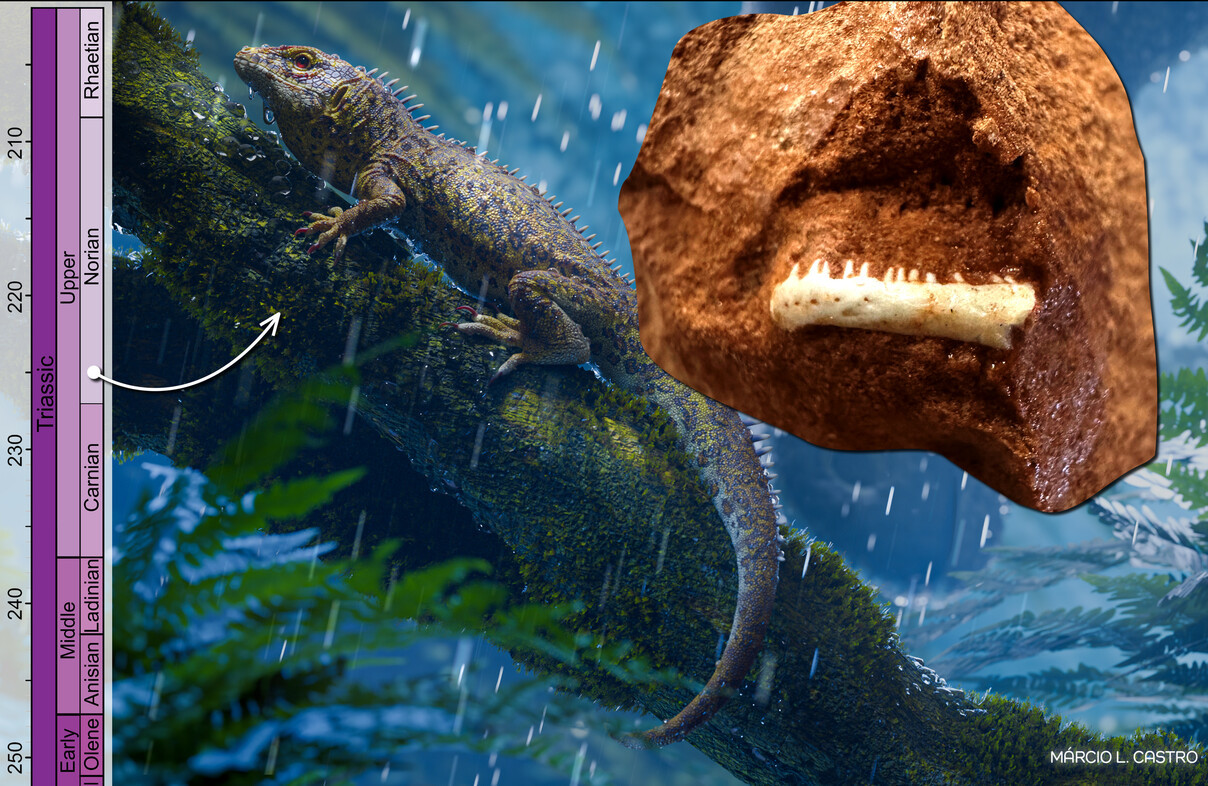
The research also underscores how much remains unknown about the early stages of lepidosauromorph evolution. Lepidosauromorpha and Archosauromorpha separated near the end of the Permian, but many early lepidosauromorph species have yet to be securely positioned within the evolutionary framework.
- Categories:
- Science



0 comments
Sign in to Comment