

Modern sloths are well-known as slow-moving mammals that spend most of their lives in trees, digesting food at a leisurely pace and descending only when necessary. Fascinatingly, their closest living relatives are anteaters and armadillos, revealing an intriguing evolutionary lineage.
While just two sloth species remain today, their ancestors were far more diverse — ranging from small, tree-dwelling animals to colossal terrestrial giants. Recent research sheds light on the reasons behind the enormous size of these extinct ground sloths and explores the causes behind their eventual disappearance.
Environmental Influences on Sloth Size and Lifestyles
Fossil evidence shows that ancient sloths thrived in a variety of ecological niches, including lush forests, arid deserts, and rugged mountains. Differences in these habitats significantly influenced their size disparities. Some of the largest species, like those belonging to the genus Megatherium, could weigh up to 8,000 pounds — comparable to an Asian elephant. Rachel Narducci, vertebrate paleontology collection manager at the Florida Museum of Natural History, notes, “They resembled grizzly bears but were about five times bigger.”

Unlike the petite tree sloths we observe today, many extinct species were too massive to climb vegetation and instead lived on the ground. Size variations were substantial; for example, the Shasta ground sloth was smaller but robust enough to adapt to desert landscapes. Conversely, tree sloths remained relatively small, averaging approximately 14 pounds, because branches cannot support heavy weights without breaking.
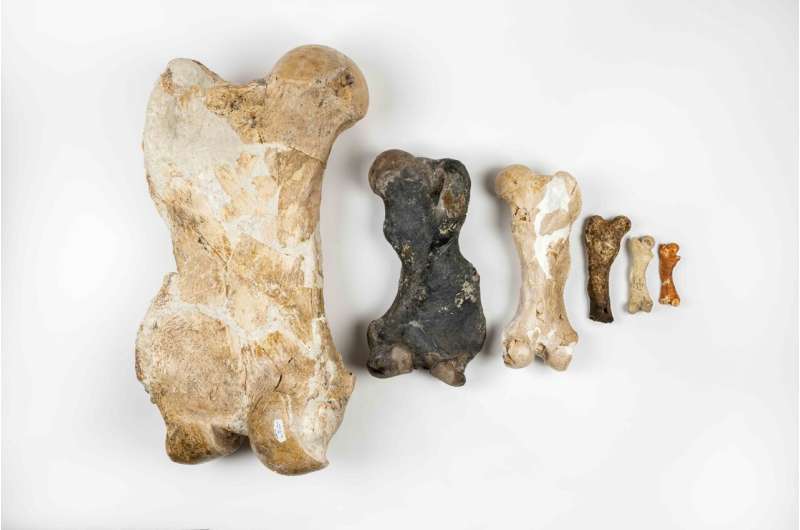
Decoding Giant Sloth Evolution Through Ancient Genomes
A groundbreaking study published in Science integrated ancient DNA analyses with comprehensive fossil measurements, examining over 400 specimens from 17 natural history institutions to map sloth evolution. The scientists assembled an extensive evolutionary tree spanning 35 million years, detailing size and habitat changes through time.
Initial sloths were relatively small, terrestrial animals roughly the size of a large dog breed like a Great Dane. Their size evolution closely tracked global climate shifts. Around 15 million years ago, volcanic eruptions in the Pacific Northwest released greenhouse gases, triggering the Mid-Miocene Climatic Optimum and global warming.
During this warmer phase, sloths became smaller, likely because expanded forest environments favored more nimble creatures and smaller bodies facilitated better heat regulation. As the climate cooled later, sloths grew larger again, reaching their maximum dimensions during the Pleistocene ice ages, probably to efficiently conserve energy and retain water in harsher conditions.
Human Arrival and the Extinction of Giant Ground Sloths
Despite their impressive size and adaptations, giant ground sloths disappeared approximately 15,000 years ago, coinciding with the arrival of humans in North America. Their large bodies, which once deterred most predators, rendered them vulnerable to hunting by early humans due to their slow speed and minimal defense mechanisms.
Smaller tree sloths survived longer, with some Caribbean species persisting until about 4,500 years ago — roughly the same time humans colonized those islands. The extinction of these last sloth populations overlaps historically with the period when ancient Egyptians were constructing the pyramids.
- Categories:
- News













0 comments
Sign in to Comment