
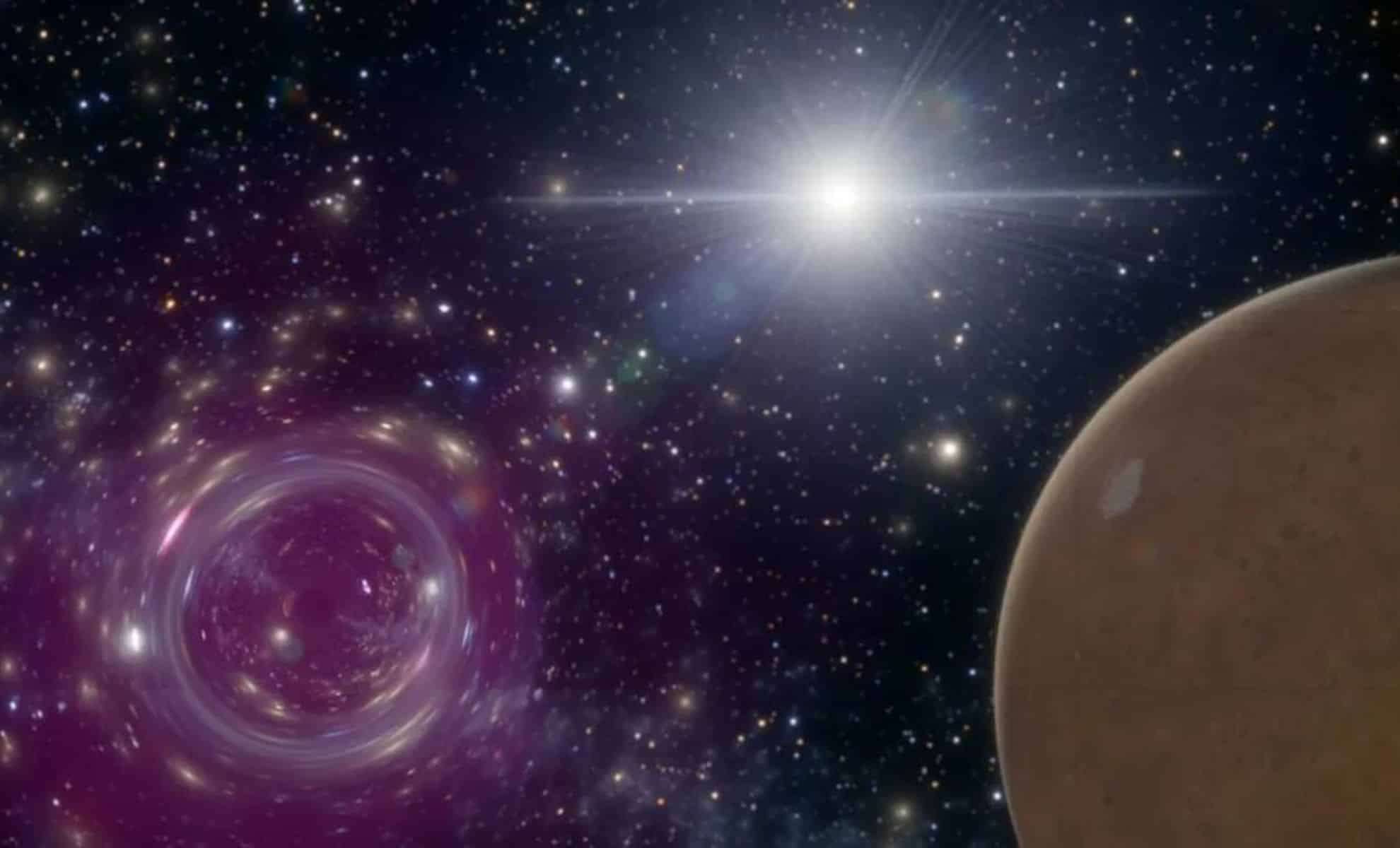
The idea that black holes might occasionally traverse our solar neighborhood is a captivating topic for astrophysics.
Recent theoretical work proposes that primordial black holes, remnants possibly formed just moments after the Big Bang, could be passing through the solar system at intervals. Detecting these elusive objects would not only verify their existence but might also shed light on the enduring enigma of dark matter.
Understanding Primordial Black Holes: What Sets Them Apart?
Black holes vary in scale, with stellar-mass black holes being familiar examples, created when massive stars collapse under gravity. Such black holes typically weigh several times the mass of our Sun. By contrast, primordial black holes likely originated from minute density variations in the early cosmos before stars existed. They could be astoundingly tiny—comparable in mass to asteroids and only slightly larger than a speck of sand.

What distinguishes these primordial black holes is their cause of formation. "The black holes we analyze are at least 10 billion times less massive than the Sun and only marginally bigger than a hydrogen atom," explained Sarah Geller, a theoretical physicist at UC Santa Cruz. These are not products of star collapse but are thought to have emerged from the density peaks in the infant universe, positioning them as intriguing candidates for dark matter.
Should primordial black holes indeed be real, they might account for the elusive dark matter, which constitutes about 85% of the universe's matter. "If many such black holes exist, some must occasionally pass through our solar vicinity," Geller noted. Detecting them directly is challenging due to their small size and mass, yet their gravitational effects could betray their presence.
Is It Possible for a Black Hole to Traverse Our Solar System?
Current research suggests that if primordial black holes are plentiful, one might journey through the inner solar system roughly every ten years. Their gravitational fields could subtly alter the orbits of planets, moons, and other objects. Though faint, these disturbances might be measurable with sufficiently sensitive instruments.
The study targets potential effects on the inner planets—Mercury, Venus, Earth, and Mars—which could experience slight orbital “wobbles.” As Benjamin Lehmann, a theoretical physicist at MIT, explained, "The gravitational attraction of a primordial black hole could in principle induce shifts in planetary orbits detectable by our instruments." Observing such oscillations may offer indirect proof of their reality.
Despite this, detecting these fine perturbations remains a significant challenge. The researchers acknowledge that current observational capabilities might not be sufficient to capture these subtle influences. Lehmann highlighted the necessity for enhanced computer simulations and improved observational strategies. The team is seeking cooperation with scientists at the Paris Observatory to refine their predictive frameworks and hunt for telltale signs of primordial black holes.
Can We Detect These Black Holes with Today's Technology?
While the concept of primordial black holes passing close to Earth is scientifically plausible, contemporary observational setups may lack the precision required to capture them. An investigation published on arXiv analyzed the potential impact of such black holes on the paths of planets, asteroids, and comets. Their simulations suggest that even monitoring over a decade could fall short of identifying their faint gravitational influence.
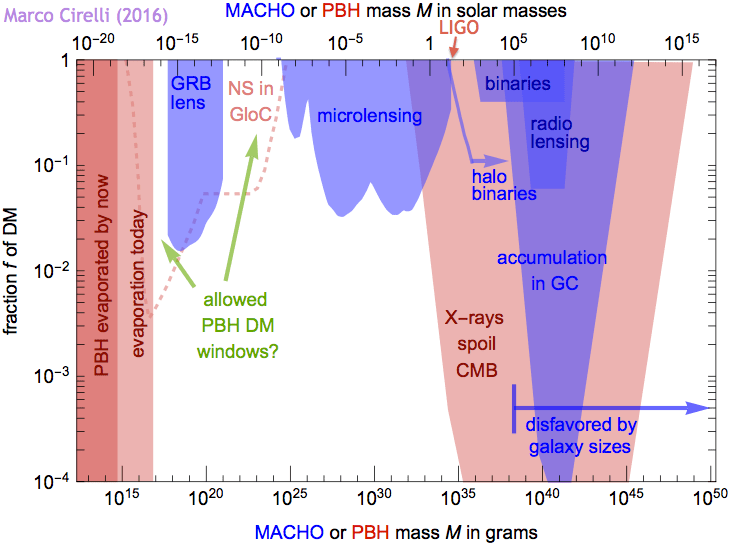
The team concluded that although primordial black holes remain a compelling dark matter candidate, current instruments are unlikely to detect them. “Even if primordial black holes exist, their effects on our solar system are simply too subtle to notice,” wrote Brian Koberlein, a physicist and writer for Universe Today. This tempers expectations but does not invalidate their existence, highlighting the need for more advanced detection technology.
Despite these hurdles, the researchers remain hopeful. They are enhancing their modeling approaches to improve detection probabilities. By scrutinizing long-term variations in ephemerides—precise tables charting the locations and movements of celestial bodies—they aim to identify possible gravitational irregularities caused by primordial black holes. Success here could provide the crucial evidence needed to confirm these enigmatic objects.
Implications of Primordial Black Holes on Dark Matter Exploration
Confirming the existence of primordial black holes would represent a breakthrough in the quest to understand dark matter. For decades, the focus has been on finding exotic particles that compose this mysterious matter dominating the cosmos. Yet, all efforts to detect such particles have so far failed. Primordial black holes offer a different path, suggesting dark matter might consist of these compact cosmic relics rather than undiscovered particles.
If validated, primordial black holes could constitute a substantial portion of dark matter. Their gravitational effects on stars, galaxies, and large-scale structures might explain many observations currently attributed to dark matter. Still, as Sarah Geller cautioned, “We are not asserting that primordial black holes definitely exist, nor that they account for most or all of dark matter, or that they’re present in our solar system.” The research indicates, however, that if primordial black holes are real, they could be a vital piece in the cosmic puzzle of dark matter.
- Categories:
- Astronomy ,
- News ,
- Science ,
- Space






0 comments
Sign in to Comment