

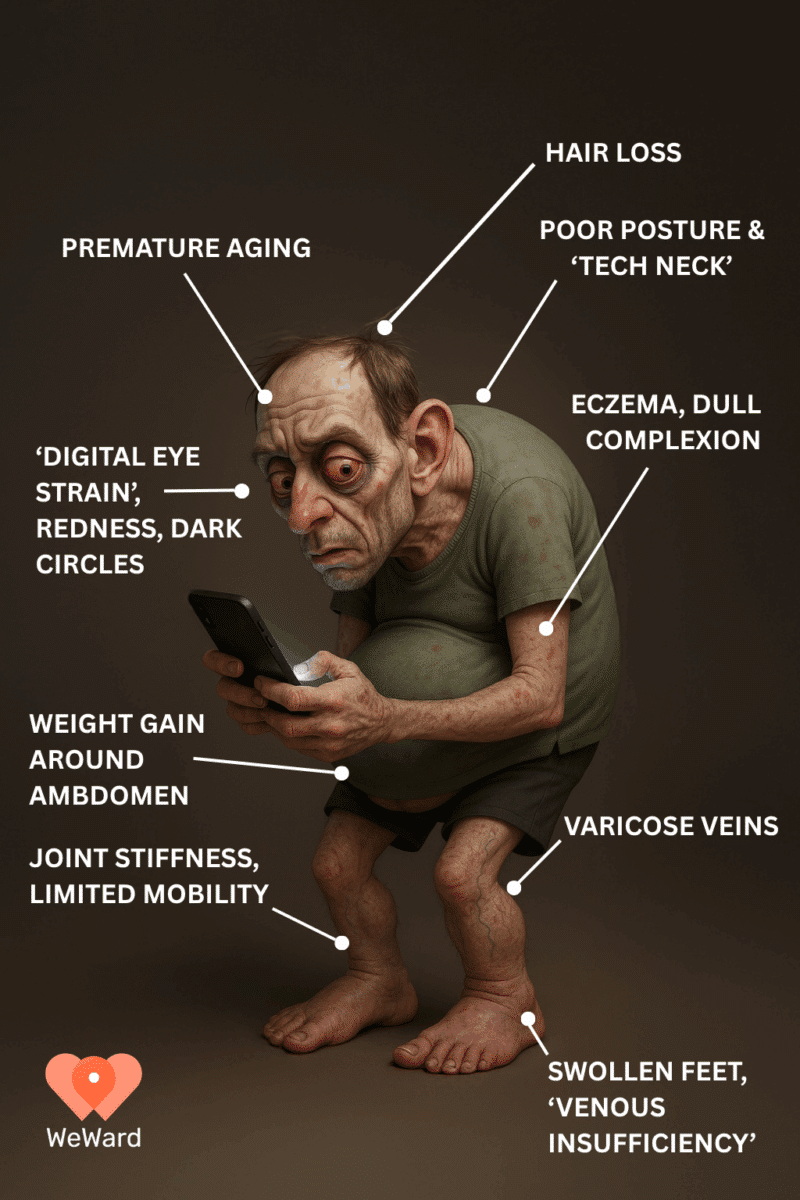
Have you ever caught yourself endlessly scrolling through social media or binge-watching one more episode before bed? A striking AI-generated figure named Sam, developed by the walking app WeWard, offers a stark visual warning. This futuristic depiction imagines how constant screen exposure may reshape our bodies and health by 2050, illustrating potential posture problems, appearance changes, and physical ailments if current habits persist.
How Digital Devices Are Influencing Our Posture
Modern life is almost inseparable from the presence of smartphones. Whether it’s Instagram or TikTok, endless scrolling has become second nature. Yet, this growing screen time quietly contributes to chronic physical strain on our bodies.
It’s no secret we overspend on mobile usage—statistically, people dedicate an average of 2 hours and 24 minutes daily to social media, translating to roughly 34 days each year spent glued to our screens. While convenience tempts us to linger longer, WeWard stresses that these habits carry significant health consequences.

Following the example of Ava, another AI visualization of the future influencer body from what the year 2050 may hold, Sam embodies the physical toll of screen addiction—rounded posture, abdominal weight gain, and stiff joints.
“Backed by medical research, Sam illustrates the long-term physical impact and health risks that result from a life defined by limited mobility, excessive screen use, and convenience-driven habits,” explained WeWard.

Could Your Screen Habits Be Increasing Stress?
Constant exposure to social media and digital content can lead to harmful comparisons and influxes of negative news, heightening anxiety and the risk of depression, as emphasized by WeWard. The prolonged use of screens influences not just posture but also cognitive and emotional health.
Health professionals caution that overuse of social platforms increases feelings of loneliness and stress. As screen time rises, our real-world connections weaken, fostering mental health struggles such as anxiety and depression. This feedback loop combines physical inactivity and psychological distress, undermining overall wellness.
Simple Steps to Combat Excessive Screen Time Effects
Although the outlook may seem worrying, positive change is achievable. Experts recommend incorporating more daily physical activities like walking or stretching to alleviate the harmful impact of sedentary lifestyles.
For those struggling with screen dependence, WeWard advises app time restrictions and finding hobbies that promote movement—whether that means trying new crafts, cooking, or joining fitness sessions. Embracing gradual, sustainable lifestyle modifications can yield significant health improvements over time.
- Categories:
- Science













0 comments
Sign in to Comment