
An extraordinary cosmic eruption may offer the first definitive proof of an intermediate-mass black hole consuming a white dwarf star. Detected by the China-led Einstein Probe space observatory in July 2025, this phenomenon could reveal insights into a previously elusive category of black holes.
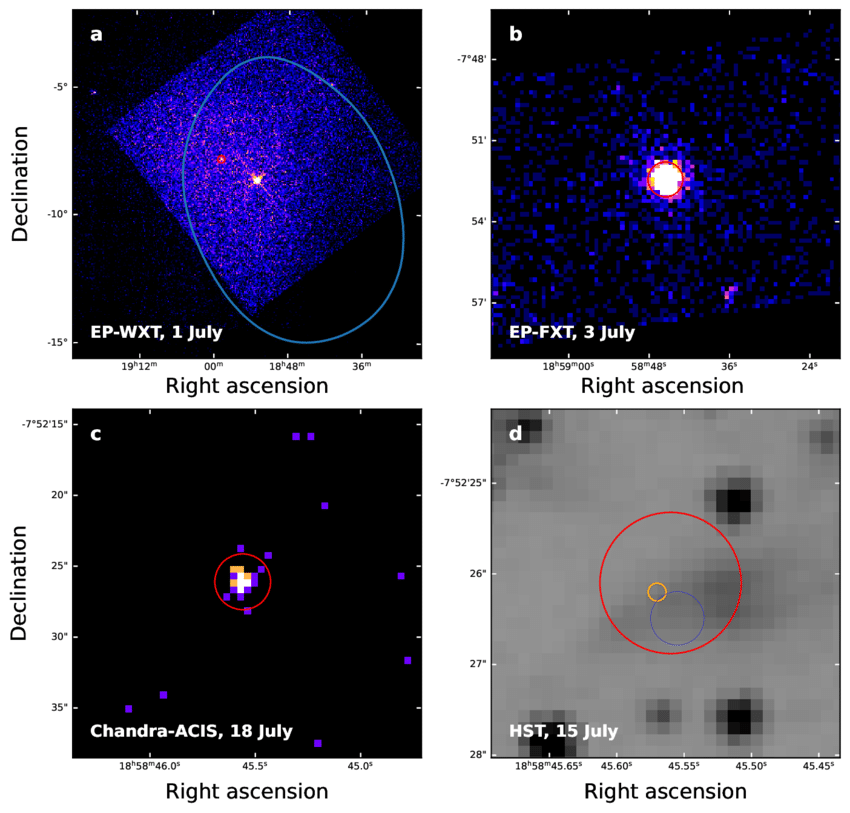
On July 2, 2025, astronomers utilizing the Einstein Probe’s Wide-field X-ray Telescope (WXT) identified an unexpected signal in the night sky. A rapidly fluctuating X-ray source emerged out of nowhere, exhibiting dramatic changes in brightness over very short timescales. Scientists immediately recognized the significance of this discovery.
An Unprecedented Cosmic Explosion
What distinguished this cosmic flash was its extraordinary luminosity. Researchers from the National Astronomical Observatories of China (NAOC) reported that the X-ray transient, named EP250702a, ranked among the most energetic explosions ever detected. Additionally, the timing of this event defied typical patterns: unlike conventional gamma-ray bursts which follow an expected sequence, the X-ray emission was observed first, presenting an unusual sequence that prompted further detailed analysis.

In the wake of the initial detection, leading observatories worldwide responded swiftly. Thanks to the WXT’s accurate locating, researchers pinpointed the source at the periphery of a distant galaxy. The Follow-up X-ray Telescope (FXT) monitored the event over three weeks, observing the brightness plunge by over 100,000 times and a spectrum shift from a high-energy “hard” X-ray state to a lower-energy “soft” state. Such a transformation had not been recorded before in similar cosmic phenomena.
Explaining the White Dwarf and Black Hole Interaction
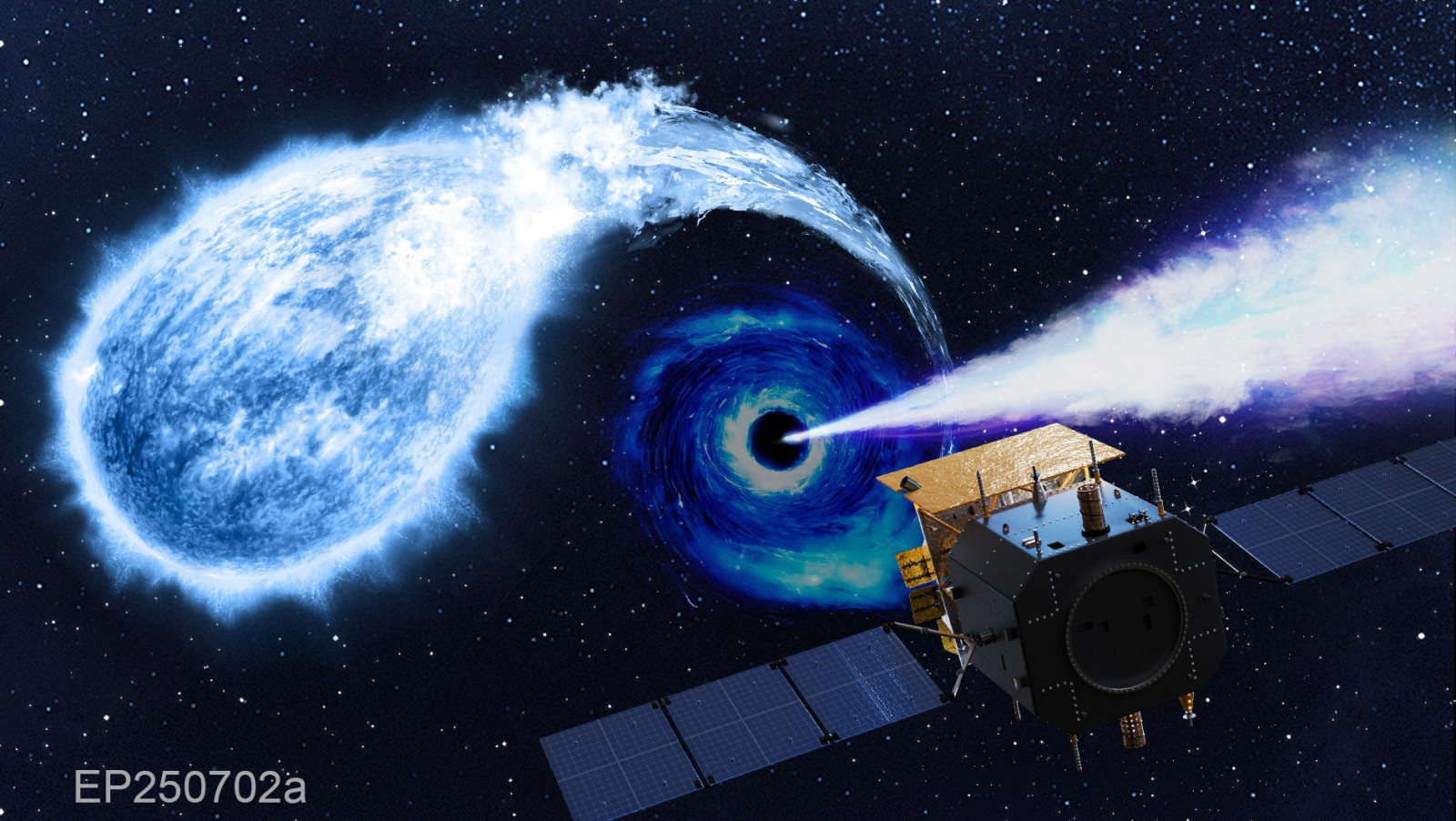
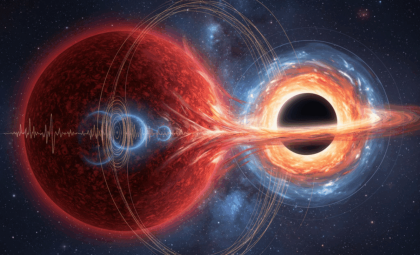
So what triggered this unusual event? Scientists at the University of Hong Kong (HKU) propose that an intermediate-mass black hole disrupted a white dwarf star. Their theoretical model indicates the immense gravitational pull of the black hole, combined with the star’s dense composition, generated a powerful burst of energy which aligns closely with the observed data.
Details from their study, published in Science Bulletin, are supported by comprehensive simulations conducted by Dr. Chen Jinhong, a Hong Kong University postdoctoral researcher, demonstrating how these combined forces explain both the swift changes and intense energy output recorded during the event.
The contribution of the HKU team plays a pivotal role in interpreting this cosmic enigma. Professor Dai Lixin, a study co-author, emphasized that international cooperation was essential for decoding this complex cosmic phenomenon. She remarked:
“The white dwarf–intermediate-mass black hole model can most naturally explain its rapid evolution and extreme energy output.” She added, “The robust discussion among international teams, each with their competing models to explain this event, is precisely what highlights its immense scientific value.”
Significance for Black Hole Studies
Intermediate-mass black holes, which lie in scale between stellar black holes and the colossal supermassive black holes at galactic centers, have long puzzled astronomers. Professor Weimin Yuan of NAOC stated that detecting this event might illuminate this elusive black hole class.
“The discovery of EP250702a fully demonstrates our capability to be the first to capture the Universe’s most extreme moments and further exemplifies China’s ability to make decisive contributions to international astronomical exploration.”
Furthermore, the study could pave the way for advancements in multi-messenger astronomy, an emerging field that combines observations from diverse signals—including gravitational waves and electromagnetic radiation—to develop a more comprehensive understanding of cosmic events.
- Categories:
- Physics





0 comments
Sign in to Comment