

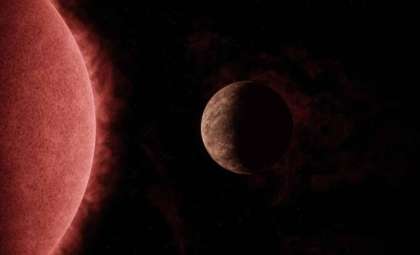
Scientists have identified a planet similar to Earth orbiting a white dwarf star located nearly 4,000 light-years from Earth. This remarkable find may provide clues about what Earth’s fate could be as the Sun eventually transitions into a white dwarf billions of years from now.
Planetary Endurance Through a Star’s Drastic Changes
The discovered planet, measuring about 1.9 times the mass of Earth, circles its white dwarf host at approximately 2.1 astronomical units — nearly twice the distance between Earth and our Sun. Its orbit suggests the planet resided closer to the star prior to the star’s fiery expansion into a red giant, a phase capable of engulfing or destroying nearby worlds.
White dwarfs form when stars like our Sun exhaust their fuel and shed their outer layers, collapsing into dense stellar remnants. The preceding red giant phase can cause a star to balloon to hundreds of times its size, drastically reshaping planetary orbits. Earth faces a similar prospect around 5 billion years into the future when the Sun grows into a red giant, potentially swallowing the inner solar system, including Earth itself. However, this new planetary system suggests such survival may be possible under specific conditions. Lead astronomer Keming Zhang from the University of California explained, “The simplest explanation is that the planet survived through the red giant host star.”

The white dwarf in this system weighs about half the mass of the Sun and likely resembled our own star before shedding its outer layers. Now it emits faint residual heat instead of nuclear fusion. The planet’s survival through this violent transformation challenges predictions that Earth will inevitably be destroyed when the Sun expands. Zhang suggests some models “may be too pessimistic,” arguing that “Earth might narrowly escape engulfment, much like the planet we discovered.”
Microlensing: Revealing Hidden Worlds
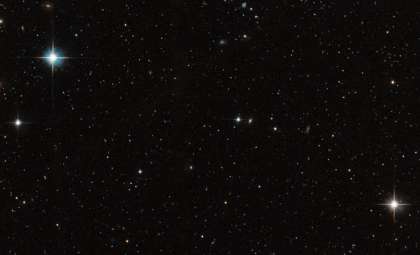
This discovery was enabled by the rare gravitational phenomenon known as microlensing, where a massive object bends and magnifies light from a distant background star. In this case, the white dwarf and its planet crossed in front of a star about 26,100 light-years away, amplifying its brightness by more than 1,000 times, allowing unprecedented analysis.

Zhang detailed the event: “The white dwarf lens nearly perfectly aligned with the distant star, producing this extraordinary magnification.” This rare alignment revealed key data about the planet’s mass, orbit, and also uncovered a brown dwarf companion around the white dwarf. The brown dwarf, weighing about 30 times Jupiter’s mass, blurs the line between planet and star. Such sub-stellar objects deepen our understanding of how planetary systems behave around dying stars.
Microlensing is proving invaluable for detecting far-off planets that remain invisible through other methods. As UC Berkeley astronomer Joshua Bloom noted, “Microlensing is opening a new frontier of exotic planetary configurations, and we stand on the cusp of many exciting discoveries.”
What This Means for Earth's Distant Future
This research carries profound implications for our solar system’s destiny. Positioned at roughly 2.1 AU, the planet’s orbit resembles where Earth might end after the Sun’s red giant phase concludes. This hints that Earth could survive the Sun's dramatic transformation, though in a drastically altered state. While maintaining life on Earth under such conditions seems unlikely, the findings raise the possibility that some form of planetary survival is feasible.
Zhang highlights ongoing uncertainties in models that debate whether Earth will be consumed or pushed outward during the Sun’s giant phase. “Uncertainties in the Sun’s mass-loss rate during the red giant stage leave room for interpretations,” he said. This new evidence offers a more hopeful scenario, suggesting planetary survival despite moving out of the habitable zone.
Though Earth's oceans will evaporate within about a billion years due to the Sun’s gradually increasing heat, survival possibilities remain. Zhang comments, “When the Sun becomes a red giant, the habitable zone shifts outward near Jupiter and Saturn, making icy moons like Europa, Callisto, and Ganymede promising candidates to host oceans and potentially life.” These moons may one day serve as refuges as conditions change in the outer solar system.
Advancing Our Understanding of Stellar Remnant Systems
Beyond this singular system, the find demonstrates the growing prowess of microlensing in probing remote exoplanets and planetary systems orbiting dead stars. The team anticipates that missions like NASA’s Nancy Grace Roman Telescope, optimized for microlensing surveys, will reveal many more Earth-sized planets around distant stars.
“There is an element of chance,” Zhang acknowledged, “since fewer than 10% of microlensing stars with planets are white dwarfs.” Nonetheless, uncovering this planetary and brown dwarf system adds critical knowledge about how planets and other low-mass companions endure the late stages of stellar evolution. This insight is vital for piecing together the life cycles of star-planet systems.
Ultimately, these discoveries provide a unique window into the distant future of our own solar neighborhood, revealing how planets might withstand the tumultuous end of their stars and offering a hopeful perspective on Earth’s long-term survival.
- Categories:
- Astronomy ,
- News ,
- Science ,
- Physics








0 comments
Sign in to Comment