
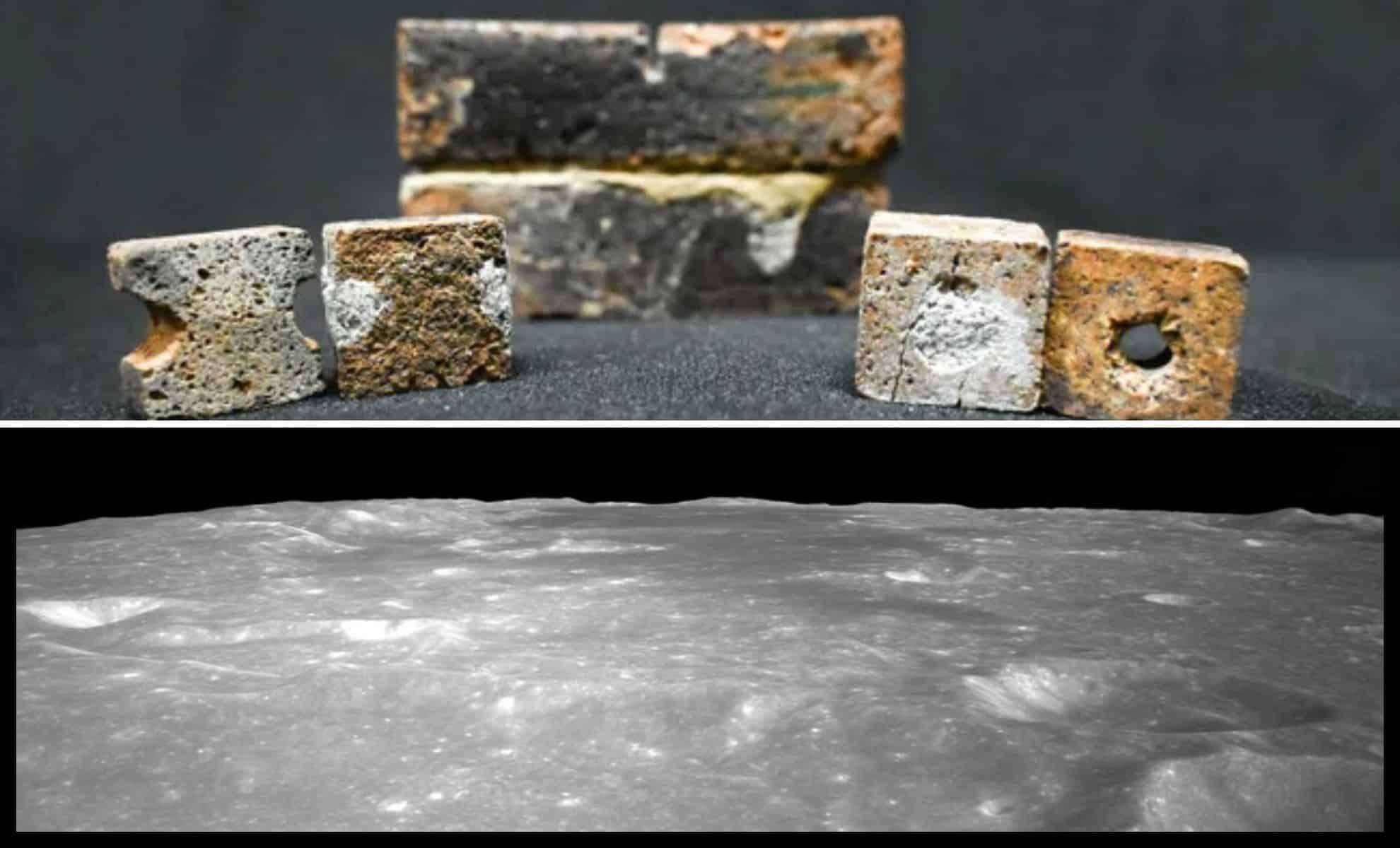
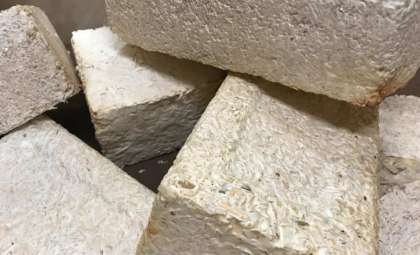
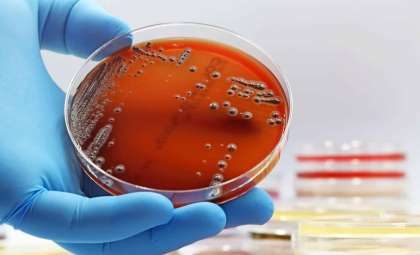
Researchers are investigating the potential of bacteria to transform building and maintenance processes on the moon, enabling the development of self-sustaining lunar habitats. According to Space.com, scientists from the Indian Institute of Science (IISc) have devised a technique using the terrestrial bacterium Sporosarcina pasteurii to both create and mend bricks composed of lunar regolith simulant, a synthetic substitute for moon dust.
Their research, published in Frontiers in Space Technologies on March 27, showcases encouraging progress towards extraterrestrial construction, with plans to test the technology during India’s upcoming Gaganyaan space mission.
Manufacturing and Fragility of Lunar Bricks
Using lunar soil for fabrication of construction materials has been a focus for decades, primarily to reduce dependency on Earth-supplied resources. Initial attempts with Sporosarcina pasteurii enabled the production of bricks by generating calcium carbonate, which acts as a binding agent for regolith particles combined with guar gum.

Subsequently, the team experimented with sintering—a process that heats regolith simulant mixed with polyvinyl alcohol to create stronger, yet brittle, bricks. This poses challenges for surviving the moon’s extreme conditions, which can fluctuate between temperatures of 121°C and –133°C, and regularly bombard surfaces with radiation and micrometeorites (source).
“Cracks can propagate rapidly, leading to structural failure,” explained Koushik Viswanathan, IISc’s lead investigator.
Microbial Repair of Lunar Bricks
To improve the durability of sintered bricks, researchers turned back to the microbial method—not for initial construction but for repair purposes. They created a mixture containing Sporosarcina pasteurii, guar gum, and lunar soil simulant. Applied to damaged bricks, the bacteria generate calcium carbonate to seal fractures and produce biopolymers that firmly attach the repair slurry to the damaged brick.
Tests showed the repaired bricks regained between 28% and 54% of their initial strength, marking a significant breakthrough. “We were uncertain if the bacteria would effectively bond with sintered bricks,” said Aloke Kumar from IISc, “but results proved the bacteria not only solidified the repair material, but also adhered well to the existing structure.”
Testing Bacterial Performance Beyond Earth
Although Earth-based experiments have yielded positive results, it remains uncertain how these bacteria will behave under the stresses of outer space, including microgravity, radiation exposure, and vacuum.
“Understanding bacterial activity in extraterrestrial environments is a major question,” Kumar stated. To explore this, the team aims to transport Sporosarcina pasteurii on the Gaganyaan mission, India’s inaugural crewed spaceflight, slated possibly for 2026. This could represent the pioneering in-space study of this bacterium.
- Categories:
- News






0 comments
Sign in to Comment