
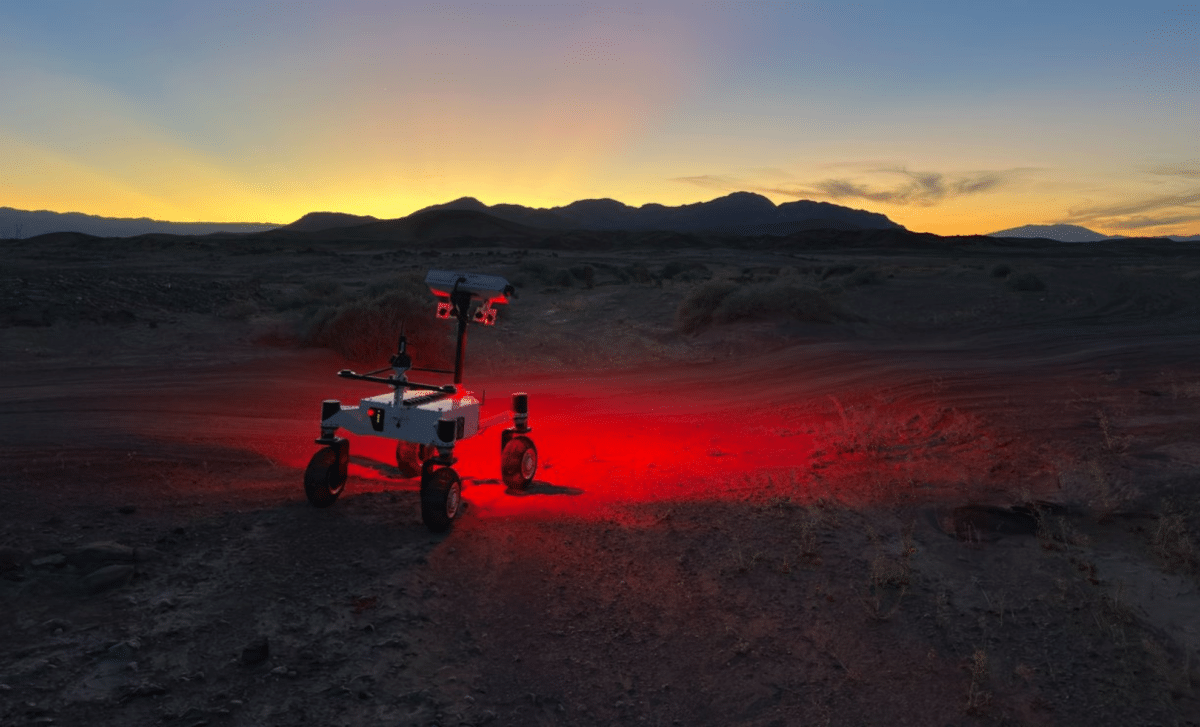
NASA’s Jet Propulsion Laboratory is advancing experimental rover technology that could transform surface travel on the Moon and Mars, as detailed in a recent NASA briefing. This prototype, called ERNEST, has showcased rapid traversal, sophisticated autonomy, and adaptive terrain navigation during desert testing, indicating a future where planetary explorers operate with greater independence and agility.
Testing a Next-Generation Rover in Challenging Earth Conditions
The ERNEST (Exploration Rover for Navigating Extreme Sloped Terrain) rover, crafted at JPL, underwent rigorous assessments in California’s Colorado Desert to demonstrate its capability to maneuver tough, irregular landscapes with minimal human intervention. Measuring approximately 1.2 meters long, this compact rover is designed to outperform existing Mars rover mobility limits and unlock new possibilities for planetary exploration on airless bodies.
Across its field exercises, ERNEST covered roughly 16 miles (26 kilometers) over difficult desert terrain using primarily autonomous controls, a milestone for verifying its navigation technologies. Its unique suspension and wheel setup enables dynamic posture adjustments to climb obstacles that would halt current rovers like Curiosity or Perseverance. These tests also simulated long-duration operation demands expected for future lunar missions requiring extensive mobility ranges.

The team collected extensive data on how the rover handled steep gradients, shifting soils, and varying surface geometries to enhance physical components and onboard autonomous decision software. This approach is part of a larger trend emphasizing rover autonomy to overcome communication delays and challenges inherent to off-world exploration.
Advancing the Pace of Exploration on Alien Surfaces
ERNEST marks a significant shift from the slow pace typical of past Mars missions by enabling higher travel speeds and versatile navigation tactics. Capable of reaching 0.6 mph (1 km/h), it surpasses the speed of current Mars rovers, highlighting potential for faster exploration on lunar terrain.
NASA notes this testing is part of preparations for future missions that need to cover large, diverse areas efficiently. The rover’s active suspension actively redistributes weight and adjusts wheel positions for terrain-responsive movement modes.
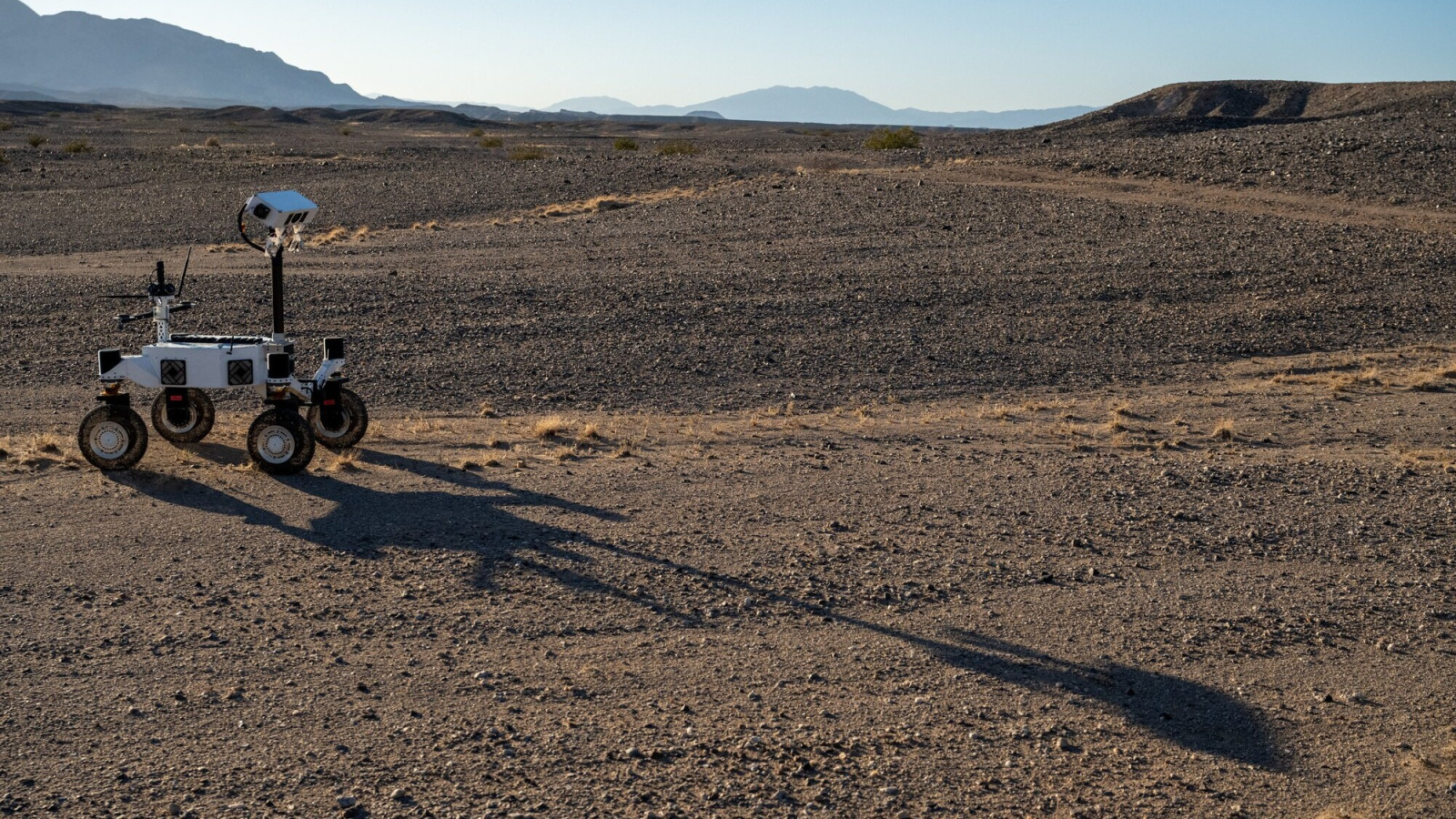
Such capabilities promise to support extended exploratory missions covering vast surface regions.
“This testing is helping us refine the mobility hardware and autonomy software to navigate extreme distances across a wide range of terrain and lighting conditions anticipated on the Moon,” said Issa Nesnas, a principal technologist at JPL who led the recent testing as head of autonomy for a NASA mission concept for a potential future long-range lunar rover.
Beyond speed, ERNEST’s design prioritizes adaptability, durability, and autonomous decision-making. The rover aims to reduce dependency on commands from Earth by enabling instant reactions to terrain challenges and scientific targets emergent during missions.
Designing a Rover That Moves Like a Living Organism
ERNEST represents a fresh take on rover mobility systems that have seen little fundamental change in three decades. Past designs like the rocker-bogie suspension prioritize stability but impose limits on responsiveness and speed.
This new prototype incorporates an active suspension allowing each wheel to move independently, opening up capabilities like sideways motion, precise obstacle negotiation, and dynamic climbing. Multiple configurations were prototyped and tested under simulated and real terrain conditions to identify optimal performance across diverse landscapes.
“You could do a science road trip across the Moon — or Mars — with this vehicle,” said James Keane, a JPL planetary scientist working on lunar missions.
Reinforcement learning algorithms are also embedded, enabling ERNEST to refine driving strategies through extensive simulated experience prior to field deployment. High-quality digital simulations allowed the rover to accumulate thousands of virtual driving hours, improving its ability to handle unexpected obstacles autonomously. Combining physical trials with advanced simulations is key to NASA’s autonomy development roadmap.
Moving from Internal Research to Mission-Ready Technology
ERNEST's journey began as a JPL internal investigation before receiving NASA funding from several exploration initiatives. Initial prototypes evaluated different suspension designs in lab conditions mimicking lunar soils to measure effects on mobility under various slopes and textures.
“We started by postulating that we could do better in designing a planetary surface robotic mobility system,” said Hari Nayar, a JPL principal technologist leading the ERNEST team. “While the rocker-bogie system has been very successful over the past 30 years, there’s been a lot of research in that time on mobility and understanding terrain interaction.”
As the rover's capabilities grew, tests extended to larger models fitted with more advanced articulation and control software. Field experiments at JPL’s Mars Yard and desert locations confirmed simulated predictions by demonstrating effective autonomous operation amid unpredictable real-world scenarios.
NASA views these developments as crucial steps toward enabling future lunar and Martian missions to reach previously inaccessible terrain with steep slopes, rocks, and long travel distances. Merging mechanical innovations with AI-powered autonomy, ERNEST represents a promising prototype for next-generation planetary rovers.
- Categories:
- News



0 comments
Sign in to Comment