

Researchers from China have introduced an innovative technique to derive water and oxygen directly from lunar soil using solely the power of sunlight. This pioneering approach could revolutionize lunar exploration by supplying vital resources like air and water, though challenges regarding its application on the moon’s surface remain.
Innovative Solar-Driven Extraction from Lunar Soil
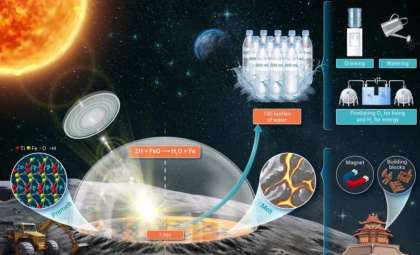
A team of scientists in China recently revealed a streamlined method to pull water and generate methane fuel from moon dust. The method involves heating the regolith to approximately 392°F (200°C) through sunlight, causing embedded water molecules to evaporate. This vapor can then react with carbon dioxide, a typical byproduct of human breathing, facilitated by the lunar soil’s inherent catalytic properties. Consequently, this process yields methane suitable for fuel and oxygen necessary for life support.
Traditionally, producing fuel by combining water-derived hydrogen with carbon dioxide required multiple stages. This new technique, called photothermal catalysis, leverages the natural characteristics of lunar dust combined with solar energy, reducing equipment complexity. Lu Wang, a chemist at the Chinese University of Hong Kong, remarked, “The remarkable success of this all-in-one process exceeded our expectations.”

Lunar Dust as a Key to Sustainable Moon Habitats
A significant benefit of this approach is its low demand for additional materials. Moon dust not only acts as a catalyst but also contains embedded water and vital minerals essential for human survival. Utilizing sunlight to activate this material makes the process more efficient and affordable compared to previous extraction techniques.
Sending essentials like water from Earth is exorbitantly expensive, with estimates reaching $83,000 per gallon. For astronauts who might require up to 4 gallons daily on lunar missions, this technique could significantly cut down logistical costs and help create a more self-sustaining lunar environment — potentially making the moon a more viable home base for exploration.
Technical Obstacles and Environmental Hurdles
Lunar regolith has exceptional insulating properties, which complicates heating the soil sufficiently and uniformly to vaporize water efficiently. Philip Metzger, a planetary physicist at the University of Central Florida, explains, “Because the heat doesn’t penetrate deeply, the water yield over time is limited.”
One proposed fix involves mechanically mixing the soil to distribute heat evenly, but this would add mechanical complexity to operations. Moreover, the moon suffers from drastic temperature swings between -250°F at night and 250°F during daylight, presenting further challenges for maintaining optimal processing conditions.
Prospects for Supporting Human Lunar Settlements
Despite such difficulties, the Chinese researchers are hopeful their solar-powered extraction method could underpin sustainable lunar colonization by providing water, oxygen, and methane on-site. This would reduce reliance on Earth-based supply shipments and promote independence for future moon outposts.
Still, opinions vary among experts. While Metzger recognizes the innovation behind this research, he remains cautious, stating, “These findings are intriguing, but we need further studies to verify if this technology can be economically viable in actual lunar scenarios.”
Nonetheless, this advancement marks a crucial stride toward enabling humans to utilize extraterrestrial resources effectively—the lunar equivalent of living off the land.
- Categories:
- News









0 comments
Sign in to Comment