

The escalating deployment of satellites into Earth's orbit is complicating astronomers’ efforts to study far-off galaxies. With the sky becoming increasingly illuminated by these orbiting objects, space-based observatories such as the Hubble Space Telescope face growing challenges in producing unobstructed views. As companies like SpaceX continue to launch constellations like Starlink, this issue is intensifying.
The ballooning satellite population has raised significant concerns among scientists. New research reveals that this burgeoning number of satellites is interfering with the observations of critical space telescopes, including Hubble. Projections estimate there could be as many as 100,000 satellites orbiting Earth by 2030, underscoring the urgent need for space governance. Without effective regulation, astronomers warn that our ability to explore and understand the universe could be severely compromised.
A Sky Crowded with Satellites: The Accelerating Pace of Launches
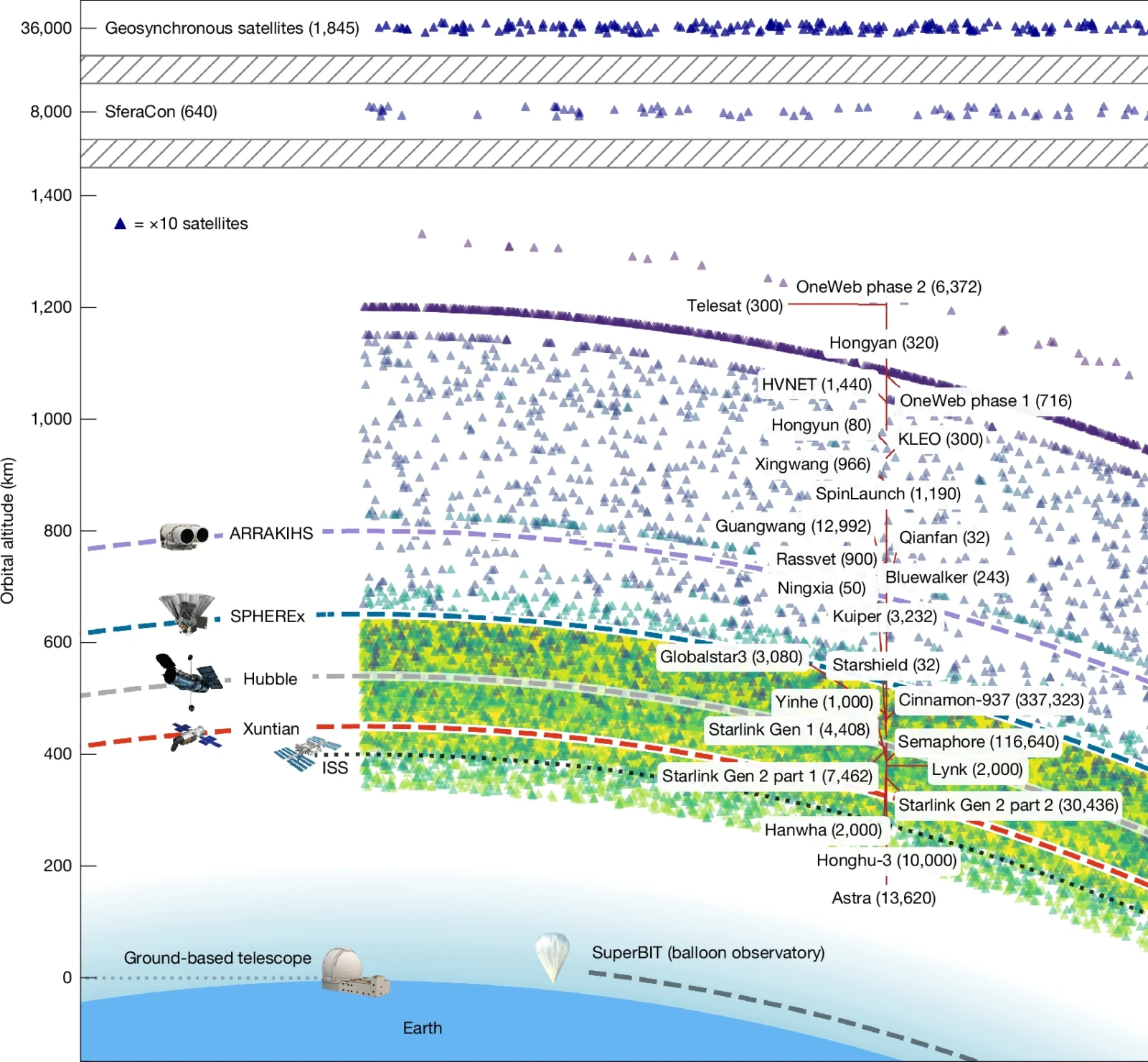
The rate at which satellites are being sent into orbit is unprecedented. Major players like SpaceX and Amazon are deploying vast networks of satellites aimed at expanding global internet coverage. This influx is forecasted to cause a steep rise in the total number of satellites, potentially exceeding 100,000 by 2030. However, this surge brings a downside: increased light contamination that hampers telescopic observations of faint cosmic signals.

“An alarming increase in the rate of satellite trails is being detected in telescopes of all types,” said NASA researcher Alejandro Serrano Borlaff, co-author of the research published in Nature on Wednesday. “[Our] forecast should be seen as a worst-case scenario and as a cautionary warning for the scientific community.”
Space telescopes like Hubble, orbiting close to Earth, are particularly susceptible to these disruptions, complicating efforts to gather precise astronomical data.
The Impact on Space Exploration and Research
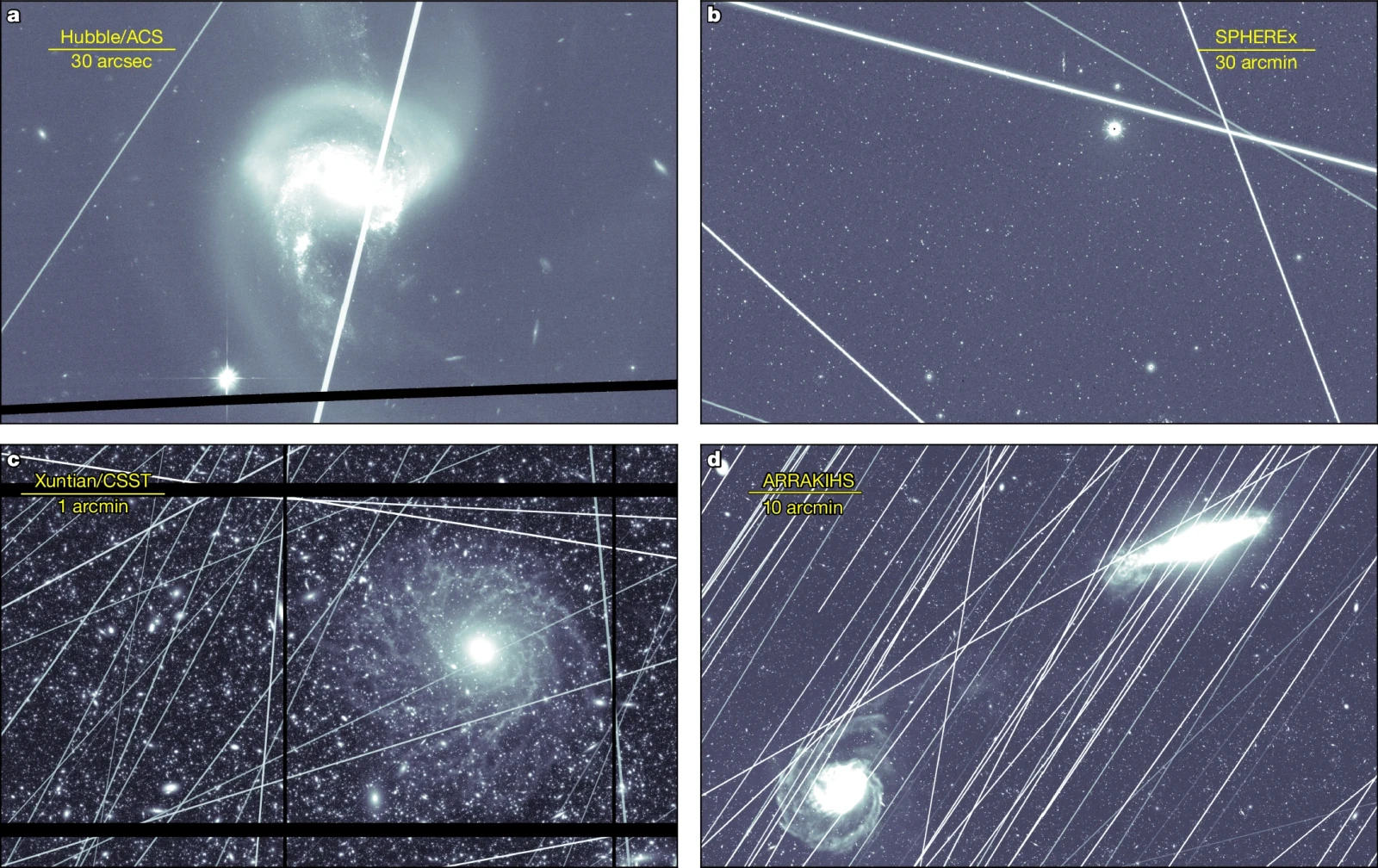
The key challenge posed by this satellite expansion is its interference with vital astronomical data collection. According to NASA’s simulations, if 100,000 satellites occupy orbit, nearly 20% of Hubble’s observations could be compromised. Other missions, such as NASA’s SPHEREx and China’s Xuntian telescope, may see their data suffer contamination in up to 96% of images due to satellite glare.
This problem extends beyond cosmetic damage to photos. Jeff Grube, physicist at King’s College London, emphasizes that this phenomenon is effectively “destroying crucial astronomical research”. The brightness and light scatter produced by satellites obscure the faint signals from distant celestial objects such as galaxies, stars, and dark matter. Astrophysicist Noelia Noël summed it up:
“They add noise, scattered light and saturation that can wipe out the very faint signals we care about.”
Regulating Our Shared Orbital Environment
Currently, there is a lack of comprehensive guidelines controlling the proliferation of satellites or addressing their impact on astronomical research. David Clements, an astrophysicist at Imperial College London, stresses:
“What is needed is a proper regard of low Earth orbit as a commons for all humankind to share, with proper oversight and regulation with teeth, rather than a resource to be strip-mined for short-term corporate and nationalistic profit.”
The absence of clear, enforceable international space policies is a growing worry. Robert Massey of the UK Royal Astronomical Society cautions that the rapid pace of satellite deployment is outpacing regulatory capabilities. Without timely interventions, the future of space-based astronomy—and our cosmic knowledge—may face irreversible harm.
- Categories:
- Space





0 comments
Sign in to Comment