
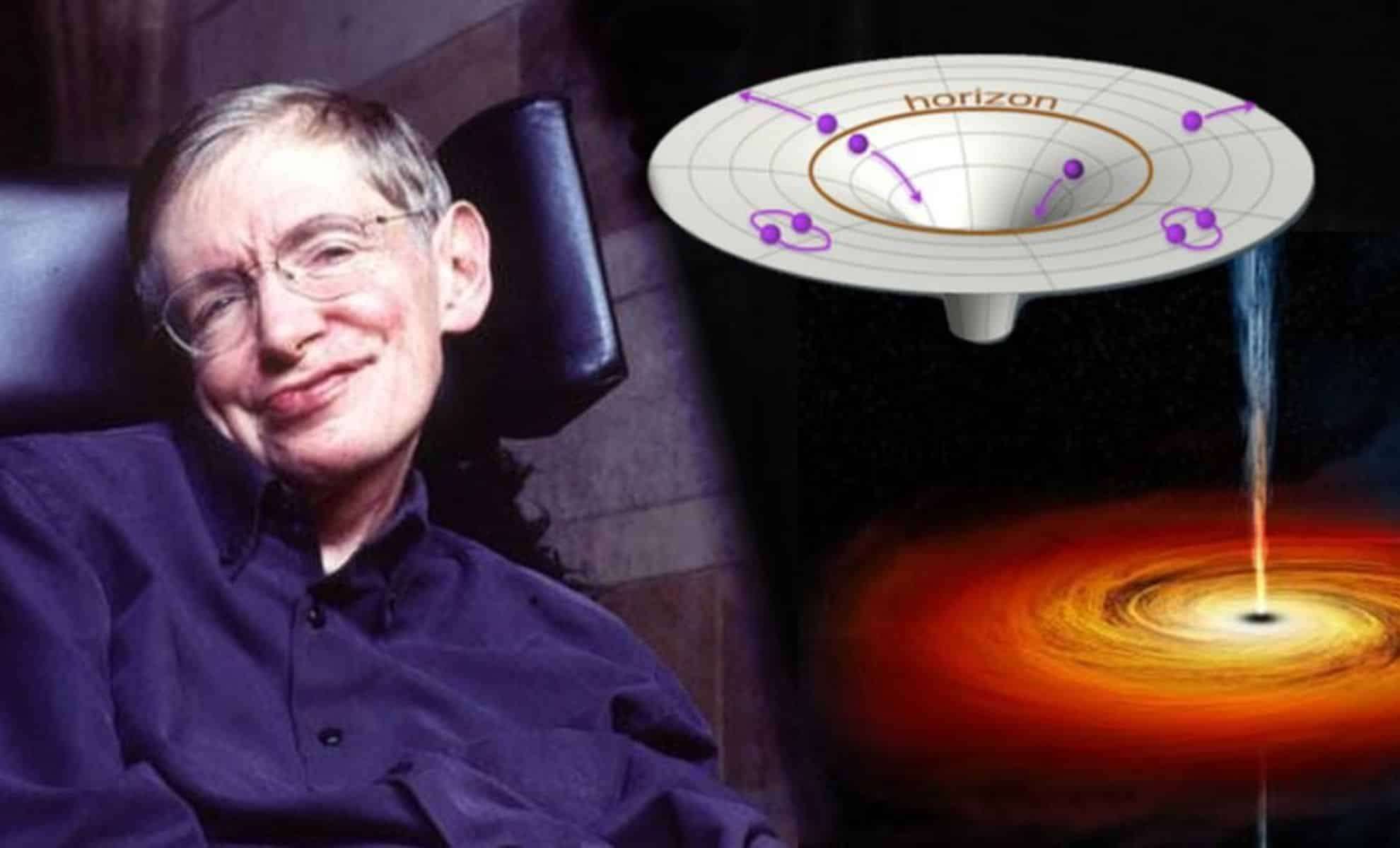
Breakthroughs in telescope technology now bring us closer to directly observing Hawking radiation, the theoretical emission from black holes predicted decades ago.
Since Stephen Hawking first proposed this phenomenon in 1974, the faint radiation arising from black holes has remained undetected. Yet, a team of European scientists believes that current observational platforms may soon reveal this elusive signal.
Understanding the Hunt for Hawking Radiation
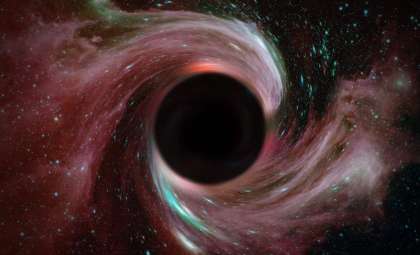
Hawking radiation theorizes that black holes can emit particles, contrary to their reputation for only absorbing matter. This effect stems from quantum processes near a black hole’s event horizon, where particle-antiparticle pairs spontaneously emerge. One particle falls inward while its counterpart escapes, creating the illusion that the black hole is emitting radiation.

The theory intertwines quantum mechanics with Einstein’s general relativity, describing how quantum fluctuations at the edge of a black hole can generate particle pairs. Instead of annihilating each other immediately, one particle gets trapped by the black hole’s gravity while the other manages to break free, resulting in a gradual loss of mass and energy from the black hole.
According to Hawking, this radiation means black holes aren’t entirely dark but slowly evaporate over time. Detecting such radiation is challenging due to its faintness, especially around massive black holes. Yet, smaller black holes jettisoned during cataclysmic events like mergers might emit detectable levels of Hawking radiation.
Emission Processes Explained
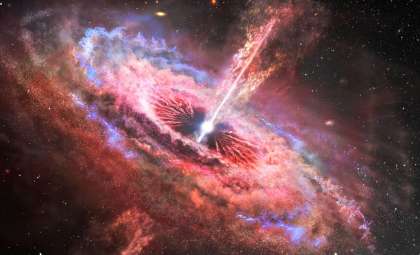
When colossal celestial bodies such as black holes or neutron stars collide, they produce gravitational waves—ripples in spacetime traveling vast distances. These violent interactions can create tiny black holes, sometimes called black hole morsels, that emit bursts of gamma rays as they evaporate via Hawking radiation.
The researchers employed computational models revealing that these gamma-ray bursts have unique signatures. Such signals can be captured by Cherenkov telescopes designed to detect the flashes of light generated when high-energy gamma rays strike Earth’s atmosphere.
Cutting-Edge Instruments Paving the Way
Currently, four prominent Cherenkov telescope arrays are capable of observing these gamma rays: High Energy Stereoscopic System (HESS) in Namibia, Major Atmospheric Gamma Imaging Cherenkov Telescopes (MAGIC) and First G-APD Cherenkov Telescope (FACT) in the Canary Islands, along with Very Energetic Radiation Imaging Telescope Array System (VERITAS) in Arizona. Their detection range spanning 50 GeV to 50 TeV makes them ideal for identifying energetic radiation from black hole morsels.
Significance of Detecting Hawking Radiation
The identification of Hawking radiation would represent a landmark achievement in astrophysics. It would provide tangible proof of black holes’ quantum traits and open doors to physics beyond current models, such as supersymmetry, extra spatial dimensions, or novel particle types influenced by strong interactions.
“Confirming this phenomenon would revolutionize our conception of black holes,” explained Giacomo Cacciapaglia, lead researcher at Université Lyon Claude Bernard 1. Plans are underway to partner with observatories to analyze archival data for signs of Hawking radiation with these advanced telescopes.
Advancing Multimessenger Astronomy
This study exemplifies the growing significance of multimessenger astronomy, which synthesizes data from gravitational waves, electromagnetic signals, and neutrino detectors. Adding Hawking radiation to this repertoire would profoundly enhance our capacity to probe black holes.
The imminent possibility of detecting Hawking radiation with existing instruments marks an exciting leap forward in unraveling the mysteries of black holes. As observations progress, new discoveries are anticipated that will deepen our knowledge of the cosmos.
- Categories:
- Astronomy ,
- News ,
- Space







0 comments
Sign in to Comment